Scaling Smart: How to Hire PHP Developers Who Drive Real Results

Scaling Smart: How to Hire PHP Developers Who Drive Real Results

how-to-hire-php-developers

You’re not alone if you think PHP is underrated. This versatile tech stack doesn’t always get the love it deserves. Yet, it quietly powers over 75% of websites on the internet, from Facebook’s early days to modern enterprise platforms running mission-critical systems.

Hiring the right PHP developer can mean the difference between a platform that performs flawlessly under pressure and one that crumbles the moment traffic spikes.

But the wrong hire? That’s how you end up with code that looks like it was written during the Jurassic period and breaks every time traffic hits 10k users.

Whether you’re a startup racing to MVP or an enterprise modernizing legacy systems, scaling smart starts with the right people. The language isn’t the issue. Finding developers who know how to make it shine is.

So, if you want your next release to fly instead of crash, here’s your ultimate guide to hire php developers who actually drive results.

Let’s break down how to find and hire PHP programmers who don’t just write code, but drive real business results!

Step 1: Define What You Actually Need

Before you post that shiny “We’re hiring PHP developers” ad, stop. Take a deep breath. Ask yourself: What’s the mission?

Are you:

Most companies skip this step. They rush into hiring with a vague idea like, “We just need a good PHP guy.” 

That’s how you end up with someone great at WordPress when what you actually needed was someone who could build APIs seamlessly or specializes in optimizing high-traffic Laravel applications.  

Let’s make it simple: 

If you’re a startup, you probably need a generalist: someone who can juggle backend logic, tweak frontend templates, and maybe even set up a server or two. They’re scrappy, adaptable, and thrive in chaos.

Alternatively, in case of PHP developers for enterprises, you’re likely after a specialist: a developer who knows large-scale systems, clean architecture, and how to integrate PHP with legacy infrastructure without breaking everything else in the process.

Next, list your stack.

php-development-frameworks

You’d be surprised how often hiring managers can’t answer half of that. And if you can’t, your next developer definitely can’t help you scale.

Pro Tip: Write a one-paragraph “mission statement” for your PHP role before you even draft the job post.

For Instance, say something like: 

"We need a PHP developer to modernize our existing Laravel backend, improve performance by 40%, and integrate payment systems for global scaling."

This one sentence can save you hours of interviewing the wrong people.

Step 2: Craft a Compelling Job Description That Attracts the Right Talent

Your job post isn’t a grocery list of skills. It’s a sales pitch. 

Most job descriptions sound like someone copy-pasted them from a decade-old HR template. You know the type:

“We’re looking for passionate, self-motivated rockstar PHP/Laravel developers for hire who thrive in a fast-paced environment.”

Here’s how the developers see it: “We have no idea what we actually want, but we hope you figure it out after joining.”

If you want serious talent, you have to write a serious job post. Not stiff. Not fluffy. Just real.

The best PHP developers don’t scroll job boards looking for “rockstar” roles. They look for impact, clarity, and technical challenge.

So, your job description has to answer three questions fast:

  • What will they build?
  • What stack will they use?
  • Why should they care?

Here’s how to structure it:

a. Start With Purpose, Not Tasks

Don’t lead with “You’ll write clean, maintainable code.” That’s a given.

Instead, Lead with the why — 

“You’ll build and scale a platform that helps 100,000 users book appointments in under 3 seconds.”

The Reason? — Impact sells better than responsibility.

b. Get Specific About the Stack

Vague posts attract vague candidates. If you want to hire PHP developers the right way, list your tech clearly:

PHP 8+, Laravel 10, MySQL, Redis, REST APIs, AWS

Bonus points if you mention your development workflow: CI/CD pipelines, testing frameworks, or deployment tools.

php-developer-requirements

c. Sell Your Culture, Not Just Your Benefits

Perks are nice, but culture is magnetic. Developers want to know how they’ll work, not just what they’ll earn.

For instance,

“We’re a remote-first team that values deep work, async communication, and code reviews that improve, not intimidate.”

Avoid clichés like “rockstar developer” or “fast-paced environment.” Developers hate those. They want clarity, not buzzwords.

d. Add One Real Challenge

Top developers are wired to solve problems. Give them one worth solving. Let’s say: 

“Our back-end handles millions of API calls daily — we’re looking for someone who can help us cut response time by 40%.”

And here’s a secret: don’t try to sound too corporate. A conversational tone stands out more than a robotic one. Something that says, “Hey, we know what we’re doing, and we’re building something that matters.”

Pro Tip: End your job post with a clear call to action. Skip the generic “Submit your resume here” line.

Try this instead:

“Think you can build scalable systems that actually perform under pressure? Show us what you’ve built — we’d love to talk.”

That’s how you filter for confidence and attract developers who care about what they create, not just where they work.

Step 3: Source Smart — Go Beyond Job Boards

Here’s the truth no one admits: the best PHP developers are rarely the ones applying. They’re too busy building stuff that actually works.

So if your hiring strategy starts and ends with “Let’s post on LinkedIn,” you’re already missing half the talent pool.

You need to go where good developers hang out, not where everyone else is looking.

Let’s break it down. Here are some of the best platforms to find and hire PHP developers:

A. GitHub is Your Goldmine

The world’s best PHP developers leave digital fingerprints everywhere.

Posting on LinkedIn or Indeed is fine, but the best PHP developers often aren’t actively hunting jobs. They’re usually deep in GitHub commits or answering Laravel questions on Stack Overflow.

So, browse GitHub projects, search Laravel or Symfony repositories, and look at who’s contributing valuable commits. If someone’s pushing clean, well-documented code at midnight; that’s your guy.

B. Hunt Developer Communities and Platforms

Reddit’s r/PHP, Stack Overflow, and Discord channels are full of people who genuinely care about their craft. Watch how they discuss problems, give feedback, or optimize code. Those who explain well usually code well too.

Platforms like Toptal, Gun.io, and Arc.dev vet developers before listing them. They cost more than your average job board, but you’re paying for skill, not luck.

php-developer

C. Leverage Your Own Network

Ask your existing engineers who they’ve worked with before. Developers respect peers’ recommendations far more than recruiter messages. 

A strong referral often lands you better talent faster than any posting. Remember, good devs usually know other good devs.

D. Partner With a Specialized Hiring Firm

If you don’t have time to sift through hundreds of profiles, work with a partner who already has a curated network of PHP developers.

But where to find pre-vetted PHP developers for hire, you might ask. Great question. 

Inument, for example, helps startups and enterprises find pre-vetted PHP experts who can hit the ground running. Whether you want to hire dedicated php developer team or part-time individual freelancers, Inument can help you every step of the way. 

Pro Tip: When you reach out, skip the generic “We came across your profile…” message.

Try this instead:

“We’re scaling a Laravel platform that handles 1M+ users and looking for someone who’s obsessed with clean, scalable code. Your open-source work caught our eye, let’s chat.”

Because at the end of the day, sourcing isn’t only about finding the best PHP developers for your startup or enterprise It’s about attracting the right ones.

Step 4: Screen for More Than Just Syntax

Anyone can Google their way through a PHP test. That doesn’t make them a great developer.

You’re not hiring someone who can only write PHP code. You’re hiring someone who can build reliable, scalable systems that won’t collapse when your app finally goes viral.

So, when evaluating php developers for hire, skip the textbook questions like “What’s the difference between include and require?” (They can answer that in 0.3 seconds, and probably have ChatGPT open on the other tab.)

You need to dig deeper.

Here’s how:

a. Test How They Think, Not What They Memorize

 Give them a real-world problem, something your team actually faced last month.

“Our API response time jumped from 200ms to 800ms after a new release. How would you diagnose it?”

You’ll immediately see who thinks in systems and who’s just regurgitating theory.

A strong developer will talk through logs, performance metrics, caching layers, and database queries. A weak one will just say, “I’d Google it.”

Don’t forget, you’re not testing memory. You’re testing how they break down chaos.

php-developer-hiring-test

b. Look for Architectural Awareness

Any developer can patch together functionality. But can they — 

  • Design a system that won’t collapse under scale?
  • Navigate Laravel or Symfony architecture cleanly?

Here’s how to evaluate PHP developers’ skills before hiring: Ask how they’d structure a scalable PHP app, refactor a bloated Laravel controller, or develop a new Laravel module

Listen for words like decoupling, dependency injection, repository pattern, scalability, maintainability.

If they mention “it depends on the context”, that’s a green flag. Real engineers know there’s no one-size-fits-all solution.

Remember, good developers talk about separation of concerns, and test coverage. Mediocre ones talk only about getting it to work.

c. Evaluate Debugging and Optimization Skills

This one separates professionals from code hobbyists. Every developer can code, but the great ones debug like detectives. A great PHP developer doesn’t just fix bugs. They hunt the root cause.

 Ask questions like:

  • How do you debug performance issues in production?
  • How would you optimize a slow SQL query?

Evaluate how they approach performance bottlenecks, memory leaks, or query optimization. Watch their logic.

Do they jump to assumptions or think methodically?

Their answer should include profiling tools, indexing, caching, and version control context; not “I’d add print_r() everywhere.”

What-makes-a-good-php-developer

d. Test Communication; It’s Non-negotiable

Communication isn’t a mere soft skill. It’s a survival skill, especially if you’re managing a dedicated global development team across cultures. 

If your developer can’t explain why something failed in plain English, you’ll spend half your time decoding their Slack messages. Even the best coder can derail a project if they can’t communicate clearly.

Instead, have them explain a complex process. Say, ”Laravel’s middleware flow”; as if they were teaching a junior dev.

If they can teach it, they truly understand it. Communication, accountability, and adaptability matter — especially if you want to hire php developers remotely.

Clear communication = Clear thinking.

e. Don’t Underestimate Attitude

Skills get you hired. Attitude is what keeps you employed. 

You want someone curious, not cocky. Developers who ask smart questions about your goals, metrics, and workflows are the ones who’ll actually care about outcomes.

The best PHP developers are curious and humble. They ask smart questions about your business goals, not just your codebase. They care about why they’re building something, not just what they’re building.

If a candidate’s only questions are about salary or office snacks, that’s your red flag.

And please, no endless whiteboard interviews, or 10-hour take-home projects. You’re not hiring a walking syntax manual. You’re hiring a problem solver, collaborator, and system thinker. So, give them a short, paid assignment that reflects your real challenges.

Pro Tip: Give a Real Test, Not a Trick

For example:

“Here’s a small Laravel app with performance issues. Optimize it and explain your reasoning.”

This way, you’ll be able to evaluate their code style, reasoning, and whether they document properly — all in one go.

A truly great PHP developer doesn’t just know syntax. They understand systems, trade-offs, and impact. They think like engineers, and that’s exactly who you want on your team.

At the end of the day, you want a php developer one who writes code that lasts. You don’t need a PHP textbook. What you need is a problem solver.

Step 5: The Final Evaluation: Culture and Commitment

By now, you’ve found candidates who can code, debug, and think like engineers. Great. 

But there’s one last step that separates a short-term hire from a long-term asset: Cultural fit. 

Now, look for alignment. A developer can be brilliant, but if they don’t align with your team’s rhythm, you’ll spend months cleaning up after miscommunication and burnout.

Here’s how to make sure your next PHP hire clicks, not clashes:

A. Test for Business Understanding

Ask questions that reveal whether they grasp the bigger picture. For Instance, 

“How would you approach building this feature if our goal was to reduce customer churn by 20%?”

If they talk about performance, UX, and measurable outcomes — you’ve got a keeper. If they just say, “I’ll code it according to requirements,” they’re still thinking in silos.

You want someone who connects technical effort with business impact.

B. Gauge Their Ownership Mindset

Great developers don’t wait for instructions, they take initiative. Ownership shows up in small things: writing documentation, reviewing peers’ code, or improving deployment scripts.

Ask about a time they spotted a problem and solved it before anyone asked.

If you find someone who cares about the end result, not just the ticket they’re assigned, that’s the person who’ll make your system better over time.

how-to-ensure-culture-fit-for-hiring-remotely

C. Evaluate Team Compatibility

The ideal dedicated development team should operate like orchestras; different instruments, same tune.

If your company thrives on async communication, a developer who needs constant in-person discussion won’t last. If you’re agile and iterative, avoid people who expect waterfall-style perfection before they write a line of code.

Match personality to how your team actually works, not how you wish it worked.

D. Don’t Overlook Long-Term Potential

You’re not just hiring for today’s backlog. You’re hiring for where your product is heading.

Ask what they want to learn next. If they talk about API design, system architecture, or leading a team; that’s great. They’re thinking ahead.

Someone focused only on “what’s in the ticket” will eventually slow your growth. A developer who’s technically sharp but culturally off will create silent friction.

On the flip side, a developer who fits your rhythm will amplify your entire team’s output.

Pro Tip: Trust Your Team’s Gut. After all the interviews and tests, ask your team one simple question: “Would you want to work with this person every day?” If the answer isn’t a confident yes, keep looking.

Remember, skills can be trained. Culture cannot. Hire for skill, but seal the deal with culture. That’s how you build teams that last.

Common Hiring Pitfalls (and How to Dodge Them)

Even the smartest companies mess this up. They hire fast, skip structure, and end up wondering why the “experienced PHP dev” broke production on day three.

Here are the traps you’ll want to avoid, and how to sidestep them before they cost you time, money, and sanity:

I. Don’t Rush the Process

Too many teams operate in panic mode: they lose a developer, scramble to fill the seat, and repeat the same rushed cycle six months later.

From our experience managing numerous augmented teams across the globe, we think this is the biggest hiring sin. 

It’s not like we don’t understand the pressure you’re in: You’re short on time, a project’s burning, and you grab the first person who can spell “Laravel.”

However, this is the most common outcome: Two months later, your codebase looks like a digital crime scene. 

Hiring fast usually means hiring twice. So, take time to define your needs, evaluate skills properly, and run a short paid test. Hiring slow saves you from firing fast. 

II. Avoid Prioritizing Cost Over Competence

Cheap developers aren’t really that cheap. They just transfer the cost to your future self in bug fixes, rewrites, and sleepless nights.

Focus on value, not hourly rate. A $50/hour developer who finishes the job in a week costs less than a $15/hour one who takes a month and leaves messes behind. For instance, great code won’t save a bad communicator.

Remember, hiring isn’t a one-time task. Great companies don’t stop when they fill a role. They build pipelines of talent ready for the next stage of growth.

Keep nurturing your talent network. Maintain contact with promising candidates, freelancers, or former employees. Future you will thank the present you.

php-developer-hiring-mistakes

III. Don't Ignore Cultural Fit

You can’t build a high-performing team if your developers don’t click.

The problem is, most companies treat it like a side note. They focus on technical assessments and forget to check if the candidate will actually work well with the team. Then a few months later, you’ve got tension, slow reviews, endless back-and-forth on Slack, and burnout spreading like wildfire.

A brilliant developer who can’t collaborate becomes a liability.

However, culture fit doesn’t mean hiring people who think or act the same. It means hiring people who share the same values, work ethic, and communication rhythm.

If your team thrives on async communication, a developer who insists on daily calls will feel suffocated.

On the contrary, if your culture rewards autonomy and accountability, a candidate who needs constant handholding will drag everyone down.

Here’s how to move past this issue: Involve your core team in interviews. Observe how candidates communicate and handle criticism. Have them ask situational questions like:

  • What do you do when a teammate disagrees with your approach? or
  • How do you handle feedback on your code?

You’ll see instantly if the candidate is collaborative or combative. Whether you want to hire PHP developers in USA, or let the join the team from Philippine, cultural fit is a must!

The goal isn’t to find someone who just fits in. It’s to find someone who elevates the culture without disrupting it.

IV. Never Hire Without Context

This one’s sneakier than it looks. You hire a talented PHP developer, hand them a list of “urgent” tasks, and expect magic. A month later, you realize they built exactly what you asked for, but nothing you actually needed.

That’s what happens when you skip context. Many teams hire top php developers without explaining the why. They dump requirements without business goals, and then get shocked when developers build something that doesn’t align with strategy.

Developers aren’t mind-readers. They’re problem-solvers. But to solve the right problems, they need to know your why: your product goals, customer pain points, and long-term roadmap.

Don’t get me wrong. If all they see is a ticket like “Add search filtering,” they’ll do it. But if they understand the business goal ( say, improving user retention) they’ll design smarter filters, improve query speed, maybe even cache results to make searches lightning-fast.

So, treat developers like partners, not task-takers. Especially If you want to hire php developers for custom solutions, explain what success looks like in business terms before onboarding. Share the product vision, target users, and key metrics.

When developers understand your mission, they make technical decisions that align with your business strategy, not just the codebase.

V. Don't Skip on Post-Hire Onboarding

You did the hard part: found the perfect developer. Then day one hits, and they’re greeted with… chaos. 

No documentation, no clear access, and three different people giving conflicting instructions.

Congratulations, you just turned your best hire into a confused freelancer.

Poor onboarding kills momentum faster than bad coffee. A dev who only builds for “today” can’t help you grow tomorrow. This is why onboarding outsourced talent is harder than you think. 

Even the most talented PHP developer will struggle without clear direction. They need to know:

  • What your architecture looks like.
  • How your deployment pipeline works.
  • Who to talk to when something breaks.
  • What your team expects in code quality, reviews, and testing.

Here’s how to dodge this: create a lightweight onboarding plan. A shared doc with project goals, system architecture, key contacts, clear workflows, code guidelines, and business context is enough to start.

Also, assign a “buddy” or senior dev to help them navigate the first two weeks.

Remember: the first 30 days set the tone for performance, confidence, and retention. A smooth start builds ownership. A chaotic one breeds doubt.

The truth is, hiring PHP developers isn’t about luck; it’s about discipline, clarity, and patience. Avoid these mistakes, and you’ll save yourself from most of the pain companies face when scaling their tech teams.

What Smart Hiring Really Costs (and Why It’s Worth It)

Let’s talk money: the topic everyone avoids until it becomes uncomfortable.

Hiring PHP developers isn’t just another expense on your balance sheet. It’s an investment in your scalability, speed, and sanity

The right hire doesn’t just ship code; they prevent future chaos, technical debt, and expensive rewrites.

But before you lock in a number, you need to understand three critical variables that shape what you’ll pay and what you’ll actually get back: engagement model, geography, and spending strategy.

Let’s dig a little deeper: 

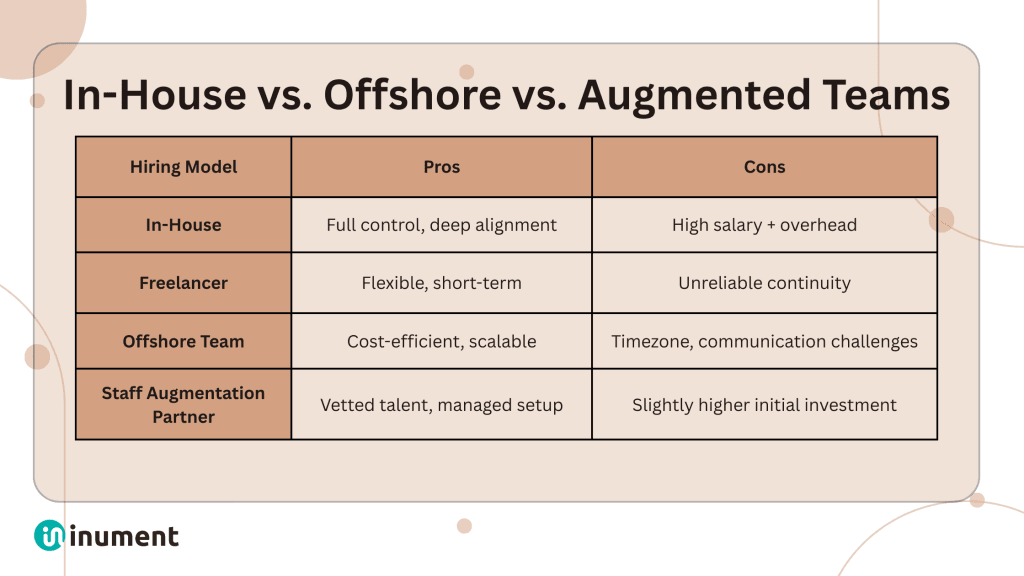
1. Engagement Models That Actually Make Sense

When it comes to hire dedicated php developers, there’s no one-size-fits-all approach. The right model depends on your goals, timeline, and technical maturity.

Here’s what you need to keep in mind while you’re busy with PHP developer recruitment: 

a. Full-Time In-House Developers

Best for long-term, core product teams. You get total control, cultural alignment, and immediate collaboration. 

The downside? 

It’s the most expensive route; not just in salary but also in recruitment, benefits, and overhead.

b. Dedicated Remote Developers (Staff Augmentation)

This model is the sweet spot for most startups and mid-sized enterprises. You hire pre-vetted PHP developers, freelancers, or independent contractors through a trusted staff augmentation partner (like Inument), and they integrate directly into your workflow.

This way, you get top-tier expertise, full-time availability, and zero HR headaches. Perfect for scaling fast without scaling payroll complexity.

php-developer-hiring-model

c. Project-Based Teams

Ideal for short-term builds, migrations, or MVPs. You pay for deliverables, not hours. The team handles planning, execution, and delivery end-to-end. This method is predictable, measurable, and efficient.

Pro Tip: Early-stage startups often save 30–40% by starting with a small dedicated remote team before transitioning to full-time hires. This way, you stay agile, validate faster, and minimize fixed costs.

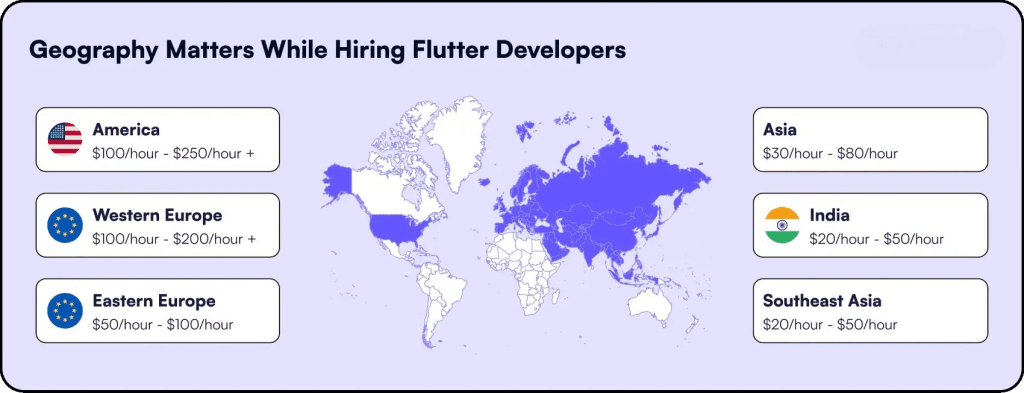
2. How Region Impacts Cost

Where your developer sits can double or halve your cost; not because of quality, but because of market economics.

Here’s a rough global breakdown for mid to senior PHP developers (monthly cost):

  • North America: $8,000–$15,000+
  • Western Europe (UK, Germany, France): $6,000–$11,000
  • Eastern Europe (Poland, Ukraine, Romania): $4,000–$7,000
  • South Asia (Bangladesh, India, Pakistan): $2,000–$5,000
  • Africa (Nigeria, Kenya, Egypt, South Africa): $2,500–$5,000
  • Australia & New Zealand: $7,000–$12,000

The real difference? Vetting and communication. The cost to hire freelance PHP developers in the US or across Europe is significantly more expensive than hiring freelancers from Asian or African countries. 

For instance, a seasoned PHP developer from Dhaka or Warsaw can outperform a mediocre Silicon Valley dev for a third of the cost — only if you hire smart.

Pro Tip: Don’t chase cheap regions; chase capable developers. The goal isn’t to find the lowest bidder, it’s to find the best value-to-skill ratio.

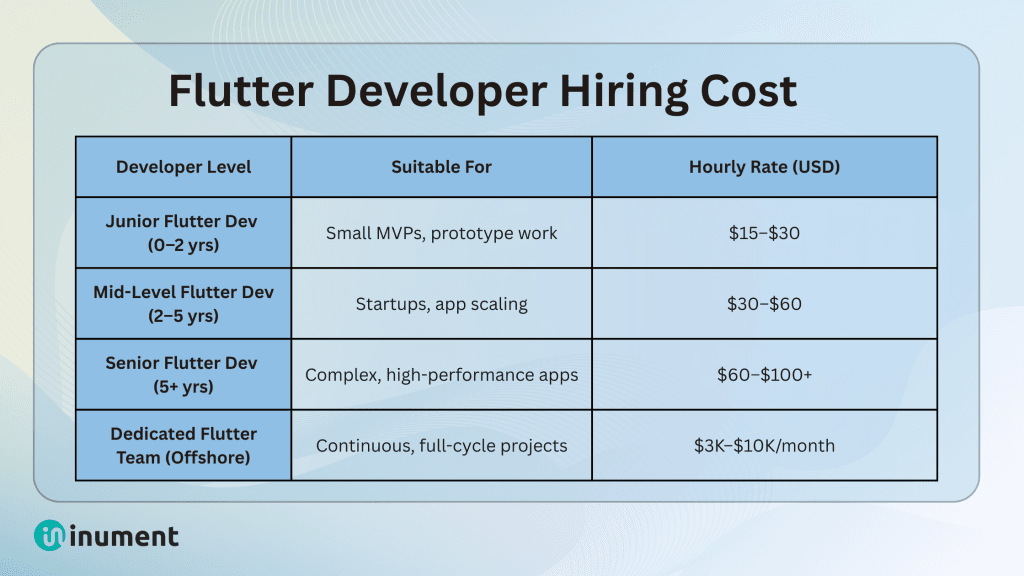
3. What Each Level of Developer Costs

Here’s how developer experience typically translates into cost and capability:

a. Junior Developers

Good for small projects, bug fixes, or maintaining existing systems. They work best under strong supervision. Don’t expect them to handle large-scale optimization or architectural planning. 

Hiring a junior php developer can cost you anywhere from $4,000–$6,000 per month across the US. However, you can skim that cost by almost half ($1,500–$3,000/month) with carefully vetted offshore/outsource developers.

b. Mid-Level Developers

This is the sweet spot for most startups and growing companies. They can build new features, refactor existing code, and keep up with sprints. They need direction but can work independently once aligned.

This is your best balance of cost and capability. To hire an intermediate level php developer, you’ll need to spend around $3,000–$5,000/month offshore, $6,000–$9,000/month, if you hire onshore.

c. Senior Developers

These are your architects and problem solvers. They don’t just code. They think strategically about performance, scalability, and long-term maintainability.

A great senior developer can save you six months of rework and countless gray hairs. However, they’re usually the most expensive ones.

Hiring a senior level php developer can cost you $9,000–$15,000/month or even higher onshore. If you choose offshore php development, that cost will be around $5,000–$8,000/month.

Pro Tip: If you’re scaling fast, build blended teams. One senior developer for architecture and reviews, supported by mid-levels for execution. You’ll get elite quality without elite payroll.

php-developer-hiring-cost-per-hour

4. How to Spend Smarter, Not Just Less

Please, don’t fall for the cheapest option. Every “bargain hire” who breaks production will cost you three times more in damage control.

The goal isn’t to find cheap developers. It’s to spend intelligently.

Here’s how:

  • Hire for impact, not headcount — One strong PHP engineer can outperform three average ones.
  • Invest in onboarding — A structured first month increases productivity and retention by up to 50%.
  • Avoid turnover roulette — Constant rehiring kills velocity. Work with vetted developers and keep them engaged long-term.
  • Use clear metrics — Track code quality, delivery speed, and scalability improvements; not just hours billed.

Think of every dollar you spend on the right developer as compounding interest. Clean, well-structured code scales effortlessly, reduces downtime, and speeds up releases.

In short, you’re not paying for “coding hours.” You’re paying for fewer bugs, faster delivery, and future-proof systems.

5. The Real Value: Peace of Mind

The smartest teams don’t necessarily spend less — they spend better.

Because what you’re really buying isn’t just development time. You’re buying consistency. You’re buying stability. You’re buying the freedom to scale without fear that the foundation will crack.

So before you cut corners on hiring, ask yourself: What’s the cost of hiring wrong?

Spoiler: it’s a lot higher than you think.

From Search to Scale: How Inument Simplifies PHP Hiring

Let’s be honest: hiring PHP developers shouldn’t feel like playing roulette. Yet, for most companies, it feels exactly like a risky gamble.

You post a job, drown in generic resumes, interview for weeks, and still end up rolling the dice on whether the person you hire can actually deliver.

That’s exactly why Inument exists.

We help startups and enterprises build reliable, high-performing PHP teams or extend their existing ones; minus the hiring chaos, and HR red tapes. 

Every developer we recommend has been handpicked, technically vetted, and tested on real-world projects, not just theoretical quizzes. We focus on engineers who understand scalability, business logic, and product ownership, not just syntax.

hiring-php-developer-skills-to-look-for

Inument’s approach is simple: no fluff, no random resumes, just pre-vetted developers who’ve already proven they can build and scale.

And we don’t just place talent and walk away. We stay involved to ensure a smooth integration, consistent performance, and measurable impact from day one. It’s not staffing. It’s a partnership, with accountability built in.

Tired of guessing games, missed deadlines, and inconsistent code quality? 

Let’s fix that. Talk to Inument today, and hire full stack php developers who make performance, reliability, and results look effortless.

Wrapping Up: Hire PHP Developers for The Impact, Not The Headcount

Hiring PHP developers isn’t about filling a technical gap. It’s about building momentum: finding the people who can turn your ideas into scalable, reliable, high-performing products.

Smart hiring isn’t about luck. It’s about clarity: knowing what you need, how to evaluate it, and where to find it. You can spend months trying to figure that out, or you can partner with a team that already has.

That’s where Inument comes in.

We’ve helped startups scale from scrappy prototypes to stable products and guided enterprises through complex digital transformations: all powered by top-tier PHP talent that delivers, not just deploys.

So if you’re ready to scale smarter, faster, and with fewer hiring headaches, stop scrolling job boards and start building with the right team. Use this PHP developer hiring guide to find the right talent, seamlessly. 

Need help matching budget to outcomes?

Reach out to our experts today and get matched with seasoned PHP developers who make performance, reliability, and results look effortless.

Let’s Build Your Dream Team, Together!
About The Author

admin

admin

Want to Build Your Dream Tech Team? Hire Now!

Hiring a Front-end Engineer: A Step-by-Step Guide for Start-ups and Enterprises

Hiring a Front-end Engineer: A Step-by-Step Guide for Start-ups and Enterprises

11 November 2025

|

IconInument

Icon Icon Icon
Hiring a frontend engineer

The user interface is the part of your app or website that customers actually see and interact with. This means your front-end engineer is the face of your product, literally.

As a result, the quality of your front-end team directly impacts user experience, retention, and ultimately revenue. One bad hire, and your app’s user experience can crumble before it even launches.

Startups need engineers who can move fast, experiment, and iterate on an MVP, while enterprises need engineers who can maintain large, scalable applications without introducing technical debt. 

The hiring process can feel overwhelming, but with the right approach, you can attract top talent, evaluate skills effectively, and onboard engineers who truly fit your business needs.

In this guide, we’ll break down the step-by-step process to hire the ideal front-end engineer for your business: covering everything from defining your needs and crafting a compelling job description to sourcing candidates, conducting interviews, and finally onboarding effectively.

Ready to hire a front-end engineer who elevates your product instead of slowing it down? 

Let’s dive right in!

Understand the Role: What a Frontend Engineer Actually Does

A frontend engineer acts as the bridge between your product’s vision and what users actually experience. The JD of a frontend engineer goes beyond visuals.

They don’t just write code; they craft interfaces, optimize performance, and ensure every click, swipe, and scroll feels seamless. They also integrate with backend systems, handle API connections, and make sure features are fast, accessible, and bug-free. 

In startups, they often wear multiple hats: UI designer, JavaScript wizard, and problem solver all in one. In enterprises, they focus on scalability, maintainability, and cross-platform consistency, ensuring large applications perform smoothly for millions of users.

In short, a frontend engineer is the face and first impression of your product, and hiring the right one can make or break your user experience. Choosing someone who understands both design principles and technical constraints ensures your product is not just functional, but also delightful to use.

How to Hire a Frontend Developer: Step-by-step

Hiring the right frontend developer doesn’t have to be a guessing game. By following a structured, step-by-step approach, you can identify top talent, evaluate skills effectively, and onboard developers who fit seamlessly into your team. 

Here’s how you can choose the best frontend engineer that fits your specific business needs:

Step #1: Define Your Needs Before You Hire

Before posting a job or reviewing resumes, you need a clear understanding of what your project actually requires. 

Are you building a fast-moving MVP, scaling a web platform, or enhancing an enterprise application? 

The scope of your project will determine the level of experience, skill sets, and expertise your frontend engineer needs.

Start by identifying the technical skills required: HTML, CSS, JavaScript; specific frameworks like React, Angular, or Vue; and tools/platforms like Figma, GitHub, AWS, GPTs, VS Code, and Grunt are crucial for a modern-day front-end engineers.  

Don’t forget accessibility, performance optimization, and responsive design as these are critical for delivering a seamless user experience.

Next, clarify the role expectations. Will your engineer work independently on features, collaborate closely with designers, or integrate heavily with backend developers? 

Deciding on full-time, contract, or remote arrangements upfront will save headaches later.

Step #2: Crafting the Job Description That Attracts Top Talent​

Next, you’ll need to craft a crystal clear Job Description (JD) for the role. A job description is more than a list of Frontend developer skills. It’s your first impression with potential candidates.

Done right, it draws the right people in; done wrong, it wastes time attracting unqualified applicants. 

Start by breaking down the role clearly. List essential technical skills and explain why each skill matters. 

For example, React might be needed for fast MVP iterations, while Vue could suit smaller projects requiring quick prototyping. Include soft skills in the JD too: problem-solving, communication, and collaboration are critical for remote or cross-functional teams.

Next, outline responsibilities and deliverables. Clarify whether the engineer will own features end-to-end, integrate with backend APIs, or work closely with UX/UI designers. This sets expectations and ensures candidates understand what success looks like in your team.

Frontend Engineer Job Skills

Don’t forget company culture and growth opportunities. Highlight your team’s values, mentorship programs, or chances to work on exciting projects. 

Engineers want to see how they can grow, learn, and make a real impact, not just write code.

Once the JD is polished, distribute it through the right channels. Post on LinkedIn, Stack Overflow, GitHub Jobs, AngelList, and relevant developer communities. 

Remember, a well-crafted JD isn’t just about listing requirements. It sells your team, sets expectations, and attracts candidates who can truly deliver. 

You can also leverage employee referrals and consider Staff Augmentation Companies if you need to reach hard-to-find, specialized candidates.

Tailoring the distribution to where frontend engineers spend their time dramatically increases the quality and quantity of applicants. Let’s exp[lore more about them in the next section.

Step #3: Sourcing Candidates: Where to Find Top Frontend Engineers

Here’s the truth: Hiring a frontend engineer is anything but simple. Finding top-tier frontend engineers can feel like hunting for unicorns

But it doesn’t have to be!

The key is knowing where to look and how to evaluate talent efficiently. Tech company owners have several avenues to source quality candidates, each with its own benefits and best practices. 

First, there’s the traditional job boards and online platforms. LinkedIn is still king for pinpointing candidates with the exact skills you need. Stack Overflow and GitHub Jobs are gold because you can see developers’ actual work: contributions, projects, even coding style. 

For start-ups hunting for agile, innovative engineers, AngelList connects you with talent who thrive in fast-paced environments. 

Whether you are hiring frontend talent for start-ups, or trying to extend your enterprise team with the right talent, there are numerous remote hiring platforms where you can find pre-vetted professionals. 

Next, don’t underestimate the power of community and networking. Tech meetups, hackathons, online forums, and employee referrals often lead to high-quality, motivated engineers who aren’t just looking for a paycheck, but also are passionate about what they build.

For companies seeking rapid, reliable access to pre-vetted talent, partnering with a trusted provider can save time and reduce hiring risk. If you want to skip the legwork and get pre-vetted, ready-to-go talent, Inument is your secret weapon.

Inument specializes in curating top-of-the-shelf frontend engineers and dedicated development teams who integrate seamlessly with your team, align with your culture, and hit the ground running. 

No guesswork, no wasted time; just skilled professionals ready to deliver.

This multi-channel approach increases your chances of finding a frontend engineer who can hit the ground running, deliver impact fast, and help your product shine.

Step #4: Screening Candidates Effectively

You’ve found some great candidates, but now the real work begins: screening. This is where you separate the good from the great and ensure you’re not wasting time on mismatched profiles.

Start by reviewing their portfolio or GitHub. A strong frontend engineer doesn’t just talk the talk, they’ve got a portfolio full of live projects and code that speaks for itself. Check for responsiveness, quality of work, and whether they’re following best practices (like accessibility and performance).

Then, dive into their soft skills. 

Sure, they might be a wizard with React, but

A frontend engineer is just as much about team fit as they are about technical skills.

Finally, watch out for red flags. If they can’t articulate how they solved a tough problem or avoid talking about past projects, that’s a warning sign. A good frontend engineer should be able to showcases their contributions, not just the outcome.

Interview Questions That Actually Work. Once you’ve narrowed down your list of candidates, the interview process becomes key to uncovering the full picture. 

Here are a few frontend engineer interview questions that help you evaluate both technical and soft skills:

  1. Can you walk me through a project where you optimized the performance of a frontend application?  — To test their problem-solving skills and ability to balance performance and user experience.
  2. How do you approach debugging a frontend issue? — To evaluate their analytical thinking and how they handle real-world problems in coding.
  3. Tell me about a time when you had to collaborate with backend engineers. How did you ensure smooth integration? — How well they communicate with cross-functional teams and navigate the integration process.
  4. How do you stay up-to-date with the latest frontend technologies and trends? — To check if they are committed to continuous learning and staying relevant in the rapidly changing frontend landscape.
  5. Can you explain a complex technical concept to someone who isn’t a developer? — To test their communication skills and ability to convey technical information clearly.

These interview questions will help you not only assess technical proficiency but also understand how well candidates will fit into your team dynamic. 

A skilled frontend engineer should be able to communicate clearly, solve problems independently, and collaborate effectively. 

Remember, coding skill is important, but so is critical thinking and teamwork.

Step #5: Final Evaluation and Onboarding

After narrowing down your candidates and putting them through the paces of interviews and assessments, it’s time for the final evaluation: a small but powerful assessment test before making your decision. Remember, onboarding outsourced talent is harder than you think.

So, instead of just relying on a portfolio, give your candidate a small project or coding test that’s aligned with the type of work they’ll be doing. This can range from solving a UI/UX challenge, improving the performance of a demo application, or integrating a simple feature. But don’t make it too long.

Keep the test focused on real-world tasks that’ll give you a glimpse of how they think and problem-solve. Look for clean, efficient code and how they approach scalability.

This test gives you one last chance to confirm that the candidate not only has the skills but can also apply them in a real-world scenario.

The goal is to evaluate:

  1. Technical skills: How well do they write clean, maintainable code?
  2. Problem-solving abilities: How do they approach challenges and optimization?
  3. Speed and efficiency: Can they work within deadlines while maintaining quality
  4. Attention to detail: Are they thorough in their approach and follow best practices?

Onboarding the Right Way: How to Extend your Frontend Team

Once you’ve made your hire, the real work begins: Incorporating that talent into your internal environment. A structured and effective onboarding process helps the new engineer understand your company culture, tools, and workflow, making the transition smooth and setting them up for success. 

Here’s how to approach frontend developer onboarding the right way:

  • Introduce them to the team and culture: Take time to introduce your new hire to the team, share your company’s values, and explain how you collaborate as a remote team. This is key to making them feel like part of the family right away.
  • Provide all necessary tools and resources: Make sure they have access to your project management tools (like Jira or Trello), code repositories (GitHub, GitLab), and any other platforms you use to ensure they hit the ground running.
  • Define clear expectations: Set the tone by explaining the first 30, 60, and 90-day goals, so they know exactly what’s expected. Make sure they understand how their work aligns with the team’s broader objectives.
  • Assign a mentor: Pair them with a senior team member who can guide them through initial tasks and act as their go-to person for any questions. This helps them get up to speed faster and creates a smoother integration into your team.

A successful onboarding process isn’t just about filling out forms and setting up accounts. It’s about making the new hire feel welcome, supported, and invested in the team’s success.

With a well-planned assessment test and a thorough onboarding process, your new frontend engineer will be ready to deliver quality work, contribute to the team, and integrate seamlessly into your company’s culture.

Common Pitfalls to Avoid When Hiring a Frontend Engineer

Hiring a frontend engineer sounds simple enough, right? 

But make one wrong move, and you could end up with a mismatch that costs you both time and money.

 Let’s break down the common mistakes that can derail the hiring process, and how to avoid them.

1. Getting Fixated on Technical Skills

It’s easy to get caught up in technical skills and forget about culture. Misalignment of values and communication styles can create tension, slow down decision-making, and increase turnover.

Don’t get me wrong, technical expertise is a must; but front-end engineers also need to be strong communicators, problem-solvers, and creative thinkers. 

A frontend engineer might have the perfect technical qualifications, but if they don’t fit into your team dynamic, they’re going to struggle with collaboration and communication. A developer who can write perfect code but can’t communicate effectively with designers or backend teams will become a bottleneck.

So, during interviews, assess not only their technical expertise but also their soft skills: how they collaborate, communicate, and solve problems within a team environment. Ask for real-life examples of how they’ve worked across teams to solve problems.

2. Rushing the Hiring Process

We get it: finding the perfect candidate can feel like a race against time, but rushing the process can lead to hiring someone who’s just not the right fit. 

You may find yourself in a situation where you have to re-hire in a few months, costing you both time and money. This will result in wasted resources, dropped deadlines, and a disruptive cycle of hiring and firing.

To avoid this issue, give yourself time to evaluate candidates thoroughly, from technical tests to in-depth interviews. Be sure to check references and validate their experience.

3. Not Testing Practical Skills

A candidate might have a killer resume and great answers in interviews, but without seeing their skills in action, you won’t know if they can really deliver on your project needs. 

Hiring someone who can’t execute the way they claim, leading to rework, slowdowns, and frustration on both sides.

Here’s how to solve this: give candidates practical coding tests or test projects that mirror real tasks they’ll face on the job. This helps you see how they approach problem-solving and how they write maintainable, high-quality code.

4. Ignoring Long-Term Growth Mindset

Front-end engineering isn’t just about getting things done quickly. It’s about building something sustainable, scalable, and adaptable as your business grows. Hiring based on short-term needs might lead to hiring someone who can’t grow with you.

A team member who doesn’t evolve with your business can cause technical debt and be a drag on scalability in the long run.

So, look for growth potential: is the candidate willing to learn, adapt, and scale with the company? Discuss their career trajectory and how they see themselves contributing to long-term goals.

The Takeaway? Don’t settle for just any developer. Build a team that truly aligns with your goals. Contact Inument today to find pre-vetted frontend engineers who fit seamlessly into your team and deliver exceptional results.

Wrapping Up: How to Hire the Right Frontend Engineer with Confidence

Hiring the right frontend engineer doesn’t have to be a gamble. With the right process in place, you’ll be able to identify top talent who fits seamlessly into your team. The process includes components like clearly defining your needs, crafting a compelling job description, and screening candidates carefully. 

Remember, it’s not just about technical skills. The best frontend engineers not only bring technical expertise, but also have the soft skills to collaborate, innovate, and grow with your business.

Cultural fit, problem-solving abilities, and clear communication are just as important for success.

Inument specializes in connecting companies with top-tier, pre-vetted frontend engineers who integrate smoothly into your team, whether you’re building an MVP, scaling a product, or optimizing a large web platform. 

Our engineers don’t just build; they help you achieve your business goals, innovate faster, and deliver quality results on time.

Ready to stop guessing and start building with the best frontend talent? 

Reach out to Inument today and let us help you hire the right frontend engineer who will elevate your product and help your team thrive.
About the author

admin

admin

Want to Build Your Dream Tech Team? Hire Now!

Communication Without Borders: How to Build and Manage Strong Global Teams Across Cultures

Communication Without Borders: How to Build and Manage Strong Global Teams Across Cultures

4 November 2025

|

IconInument
Icon Icon Icon
Communication Without Borders: How to Build Strong Global Teams Across Cultures

Picture this: you’re a tech entrepreneur, buzzing with excitement about your brilliant product idea.

You’ve lined up everything from the development to the launch, but then comes the biggest challenge: 

Your team is scattered across the globe. 

Your developers are in Sydney, marketing team in Singapore, and your investors are in New York. 

The Result? The time zones don’t match, the languages don’t always align, and cultural differences seem to pop up in unexpected ways. 

Communication is key, but how do you overcome these borders?

Effective communication can mean the difference between innovation and stagnation, between growth and slowdown. 

Founders, partners, and investors in global businesses often face the same dilemma —

"How do we communicate across cultures and make sure we’re all aligned on goals and expectations?"

In this blog, let’s uncover how to tackle these cross-cultural communication challenges and build strong global teams that drive results.

Here goes!

Key Challenges in Cross-Cultural Collaboration

The biggest barrier to successful remote team management isn’t the technology or tools you use, it’s the way people communicate. 

In today’s fast-paced, globalized business world, collaboration is no longer confined to a single office or even time zone.

Entrepreneurs, founders, partners, and investors often find themselves working with teams scattered across continents, each bringing their own cultural influences into the mix. 

While this diversity can be a huge asset, it also presents a unique set of challenges; especially when it comes to global business collaboration.

Global Team Management Challenges

Imagine trying to manage a distributed team where each member has a different approach to communication. 

Perhaps one team prefers detailed emails, while another thrives in quick, real-time chats. 

Maybe cultural differences cause a simple feedback session to feel like a minefield, where certain feedback is seen as harsh in one culture but constructive in another. 

As a result, misunderstandings arise, productivity suffers, and your vision begins to feel a little more fragmented. 

A recent study shows that a staggering 86% of employees cite ineffective communication and poor communication skills for workplace failures.

Let’s dive into the most common communication challenges in global teams and explore how these issues can impede growth, collaboration, and even relationships between partners and investors:

1. Cultural Misunderstandings

We’ve all been there: trying to get a point across, only for it to land completely wrong. 

In a multicultural environment, this happens more often than you’d think. What you say and how you say it, can have wildly different meanings depending on where someone’s from.

For example, in some cultures, a direct “no” is seen as rude or aggressive. But for others, it’s just being straightforward. 

In the US, it’s common to “cut to the chase,” but in Japan, you may need to soften your approach to avoid offending anyone. 

These subtle differences in communication styles are easy to overlook, but they can lead to big misunderstandings. 

What might seem like a minor slip-up can end up derailing progress, especially when it’s repeated over time. 

Imagine trying to give constructive feedback in a video call, and it’s taken as an attack because of cultural differences.

That’s a problem. And one that, if left unchecked, can harm relationships and stifle productivity. This is why developing cultural intelligence in business is so important. 

Pro Tip: The best way to tackle cultural misunderstandings is to talk about them openly with your team. Create a safe space for everyone to share how they prefer to communicate. 

2. Time Zone Troubles

Ah, the dreaded time zone game. It’s like trying to solve a puzzle where the pieces are constantly shifting. 

When your team is spread across the globe, finding a time that works for everyone is like playing an endless round of “who’s available now?”

And let’s be honest: no one really loves 6 AM meetings (except maybe those early birds who enjoy a strong coffee before the sun rises).

The problem isn’t just about syncing calendars, it’s about managing expectations. A 9 AM call in New York is someone else’s 11 PM in Tokyo.

Trying to accommodate everyone’s schedule without sacrificing your personal life or productivity can lead to burnout, fast! 

And if you’re constantly scrambling to arrange meetings at odd hours, things can get chaotic, with important discussions getting delayed or miscommunicated.

What’s worse, as your business grows, so do the complexities. 

Suddenly, it’s not just New York and Tokyo. Now you’re adding Sydney, London, and São Paulo to the mix. 

Every meeting becomes a game of “who can attend” rather than “what needs to be discussed.” 

This lack of synchronization can create gaps in cross-cultural collaboration, slow decision-making, and ultimately harm your business’s growth.

Pro Tip: Use Asynchronous communication tools like Slack, Trello, or email to keep things moving when everyone can’t meet at the same time.

3. Language Barriers

Even when everyone speaks “the same language,” things can get… lost in translation. 

English might be the global business lingua franca, but let’s face it; words don’t always pack the same punch across cultures. 

Language barriers can feel like an invisible wall, preventing seamless communication and slowing down progress.

One person might be fluent, while another might be working with a second or third language, leading to potential misinterpretations.  And it’s not just about vocabulary; it’s also about tone, idioms, and even humor.

Think about it: you drop a simple “let’s touch base” in a meeting with someone whose first language isn’t English. 

They might be thinking, “Wait, what exactly does ‘touch base’ mean? Should I go find a baseball?”

Or consider those subtle cultural nuances: sarcasm, while totally fine in some cultures, might be taken at face value in others. What you intended as a joke could leave your colleague wondering whether they missed a memo.

Even worse, some important technical terms or industry jargon can be a minefield if not everyone is on the same page.

A feature that seems “obvious” to you might not be understood the same way by someone else on the team; leading to confusion, mistakes, and delays.

This is why overcoming language barriers in business is such an important factor. 

Pro Tip: Encourage clarity and simplicity in all communications. Avoid idioms, slang, and unnecessary jargon, and always check if everyone’s on the same page, especially when working on complex projects. 

The Real Cost of Poor Communication

Poor communication isn’t just a minor inconvenience. It’s a silent productivity killer. 

Even if you ignore the occasional hiccups, poor communication can have a profound impact on your business’s bottom line and growth potential.

Imagine this: a crucial decision gets delayed because team members couldn’t understand each other’s points, or an urgent project is derailed because feedback was misinterpreted. 

These aren’t just small hiccups. They’re costly setbacks that can set you back months.

Let’s have a detailed look at how poor communication costs your business: 

1. Financial Impact

Every delay caused by miscommunication is a missed opportunity to move the needle forward. 

Whether it’s extending your product launch or postponing client meetings, these delays add up, translating into real financial losses.

When communication fails, timelines stretch, budgets swell, and resources get misallocated. 

A project that’s stalled for weeks due to unclear expectations can quickly burn through your budget, not to mention the lost revenue from waiting longer to hit the market.

2. Team Morale

Let’s face it: constant miscommunication can wear down even the most resilient team. 

When employees or partners feel like they’re not on the same wavelength, frustration sets in and ultimately challenges building trust in cross-cultural teams. 

It becomes hard to stay motivated when your ideas aren’t being communicated properly or when deadlines slip because of misunderstandings. 

This ongoing tension can erode trust and cause unnecessary stress, affecting the overall performance of your team.

For instance, when developers in Singapore feel their ideas are being overlooked by the marketing team in Sydney, or when investors can’t follow a product demo because of miscommunication, trust breaks down. 

And remember, trust is the foundation of any high-performing team.

3. Damaged Partnerships

Poor communication doesn’t only affect internal teams. It can also lead to cracks in external partnerships, especially with investors or other key stakeholders. 

When communication falters, relationships with key stakeholders like investors and partners can sour quickly.

Investors want to see clear progress, not a team that’s constantly scrambling to clarify things. 

If partners feel their input is being lost in translation, trust begins to erode. And once trust is compromised, rebuilding it is no small task.

Investors may pull back if they don’t understand the vision or progress. Partners may become disillusioned if their input is ignored due to miscommunication. 

And the result? Strained relationships that can ultimately hurt your growth prospects. 

The cost of poor communication isn’t just in the dollars and cents. It’s in the invisible toll it takes on your team’s energy, morale, and relationships. 

Now, let’s move onto the ways you can minimize the communication gap with your internal team, stakeholders, and investors. Capiche?

How to Bridge Communication Gaps in Global Teams

Building a global team is exciting, but managing one successfully takes more than just great tech and talent. 

It takes intention. Clear communication doesn’t happen by accident; it’s something you design, practice, and constantly refine.

If you’re running a distributed team with members across continents,

here’s the truth: Miscommunication is inevitable, but confusion isn’t.

You can build systems and habits that turn cultural and time-zone differences from obstacles into strengths. 

But how? 

Here’s how — 

Let’s dive deeper into how you can solve these communication challenges and build a cohesive, efficient global team.

1. Establish Clear Communication Protocols

When working across cultures, clear expectations are critical. Think of communication as the operating system of your business. 

Without a clear structure, you’ll end up with chaos: too many messages, missed updates, and plenty of “I thought you meant…” moments.

If you don’t set the stage for how and when communication should happen, you’ll quickly find yourself juggling multiple messages, misunderstandings, and missed deadlines.

Here’s how you can fix this:

  • Decide on Communication Channels: Use communication tools for global teams to create a seamless (like Slack for quick updates, Zoom for meetings, and email for formal documentation) system where everyone knows where to go for what type of communication.
  • Set Response Time Expectations: Agree on when and how quickly to respond to messages. This helps everyone stay on the same page and reduces frustration when waiting for replies. 
  • Create a Collaboration Calendar: Use tools like Google Calendar to schedule meetings across time zones. Even though time zones differ, being upfront about availability ensures that everyone can make the most of their workday.

And finally, document everything. A well-kept digital trail saves countless hours of guesswork.

Pro Tip: The fewer tools you use, the clearer your communication becomes. Simplicity reduces noise and boosts accountability.

2. Build Cultural Intelligence into Your Team

Cultural awareness isn’t a soft skill, it’s a business advantage. Teams that understand how culture shapes communication are more adaptable and resilient.

Remember, culture isn’t just about food, festivals, and customs. It’s also about how people communicate, think, and work. 

It’s important to recognize these differences and adjust your communication style to make collaboration smoother.

Here’s how you can do this:

  • Training on Cultural Differences: Organize regular sessions that focus on cultural awareness. Teach your team how to interpret context, tone, and silence differently. This will help your team understand each other better and avoid mistakes due to cultural misinterpretations.
  • Encourage Empathy and Open Conversations: Encourage employees to share their cultural backgrounds and experiences. When people feel safe to express how they prefer to communicate, the team automatically becomes more efficient.
  • Embed it into Your Workflow: Cultural awareness shouldn’t just be a one-time workshop. It should be integrated into the daily working rhythm. Encourage open conversations about cultural norms.

Pro Tip: Celebrate cultural diversity instead of trying to “standardize” it. The goal isn’t uniformity. It’s understanding.

3. Leverage Technology for Seamless Communication

Technology is your bridge when time zones and geography pull you apart. Use it smartly. 

It’s not just about scheduling meetings; it’s about using the right tools to enhance collaboration and reduce miscommunication.

Here’s how you can leverage technology for better communication across your distributed team:

  • Use Asynchronous Communication: Platforms like Slack, Trello, and Jira allow teams to share updates, ask questions, and resolve issues even if not everyone is online at the same time. This removes the time zone barrier, ensuring continuous progress.
  • Leverage AI for Smart Scheduling: AI tools like Doodle and Microsoft Outlook’s Time Zone Helper can automatically find optimal meeting times for global teams. This saves time and ensures no one is left out.
  • Real-Time Translation Tools: Tools like Google Translate and Microsoft Translator can help break down language barriers. It’s not a perfect solution, but it goes a long way in making sure everyone feels included.

Pro Tip: Video messages beat long paragraphs. A two-minute Loom update often saves a 30-minute meeting.

how to overcome communication challenges in remote teams

4. Prioritize Transparency and Trust

No communication tool will fix a culture built on silence or fear. Transparency builds trust, and trust powers collaboration. 

All the leading tech entrepreneurs managing distributed teams know this, and that’s why they foster a safe environment where everyone can raise their concerns freely. 
Encourage your team to over-communicate rather than under-communicate. Share project updates proactively, and make decisions visible to everyone involved. 

When people know what’s happening, even if it’s not perfect so that they stay aligned and engaged.

Pro Tip: Transparency doesn’t mean oversharing every detail. It means making sure everyone has access to the information they need to do their best work.

5. Engage Your Remote Team Beyond Work

Finally, remember that great communication isn’t only about tasks, it’s about people. 

When your team feels connected as humans, collaboration naturally improves.

Host virtual coffee chats, celebrate birthdays, and encourage casual Slack channels where teammates can share weekend stories or hobbies. 

These small touches make a big difference in creating emotional connection, especially across cultures.

Pro Tip: A team that laughs together collaborates better. Build those informal spaces where people can bond, not just report.

How Inument Solves These Challenges
At Inument, we’ve learned that technology alone doesn’t build great teams, communication does. That’s why our approach to staff augmentation goes beyond skill-matching. 

Our Staff augmentation solutions are built on transparency and trust. We don’t just deliver updates; we keep you connected. 

From sprint planning to deployment, every milestone is clearly communicated, documented, and tracked in real time. 

Every engineer we onboard is pre-vetted not only for technical excellence but also for communication strength and adaptability. 

They’re trained to work seamlessly across time zones and cultures, ensuring that founders, partners, and investors never face the dreaded “lost in translation” moment.

The result? A distributed team that feels unified, runs efficiently, and collaborates without borders. 

Inument doesn’t just help you scale your team; we’re here to also help you scale communication, trust, and productivity across every culture and time zone. 

We believe —

When communication is seamless, geography stops mattering.

With Inument by your side, you’re no longer managing “offshore teams”. You’re leading one unified team working toward the same vision.

Wrapping Up: From Global Teams to Unified Vision

Global teams aren’t just the future, they’re the present.

But having a global team and having a connected team are two very different things. 

The real magic happens when founders, partners, and investors learn to communicate beyond time zones, language, and cultural filters. 

When that happens, innovation moves faster, decisions get sharper, and everyone feels aligned toward a shared purpose. Cross-cultural collaboration isn’t about eliminating differences, it’s about using them as an advantage. 

The best teams don’t avoid friction; they learn to communicate through it. And that’s exactly where growth begins.

At Inument, we believe that with the right people, the right tools, and the right approach, collaboration knows no borders. That’s why Inument aims to turn distributed teams into unified ones.

Ready to bridge the communication gap in your business? 

Get in touch with us today to see how we can help you build a team that thrives, no matter where they’re located.

About the author

admin

admin

Want to Build Your Dream Tech Team? Hire Now!

How to Build and Manage Dedicated Development Teams: The Key to Scalable and Efficient Software Projects

How to Build and Manage Dedicated Development Teams: The Key to Scalable and Efficient Software Projects

10 September 2025

|

IconInument

Icon
Icon
Icon

how-to-build-a-dedicated-development-team

Let’s be honest: from scrappy startups to Fortune 500s, every business now lives or dies by the quality of its software. Whether you’re launching the next big app or streamlining internal systems, the demand for development horsepower has exploded.

And with that surge comes a new reality: building software isn’t a one-and-done project anymore. It’s an ongoing, evolving process that needs the right team behind it.

Here’s the kicker: speed and scalability aren’t just nice-to-haves in this game. They’re survival tools. Your competitors aren’t waiting, your customers aren’t slowing down, and your tech stack won’t forgive you for cutting corners. 

That’s where dedicated development teams come in. They’re not just extra hands on deck; they’re your growth engine. The secret sauce that helps you build, iterate, and scale without the hiring headaches or burnout. 

But how do you actually build and manage one of these dream teams without turning it into a logistical nightmare? 

That’s exactly what we’re diving into. This guide will dive deep into the why, the how, and the what now of building and managing dedicated development teams. 

You’ll learn how to assemble a powerhouse squad, keep them aligned with your business goals, and create a scalable framework that doesn’t just deliver software; it delivers long-term growth.

Without any further ado, let’s jump right in! 

Why Dedicated Development Teams Are a Game-Changer

Modern projects aren’t static: they evolve, pivot, and scale in ways traditional hiring models struggle to keep up with. In today’s software-driven world, hiring a few developers and hoping for the best just doesn’t cut it. 

Efficient, scalable development is the difference between “we’ll get there someday” and “we’re leading the market.” That’s where dedicated development teams flip the script.

benefits-of-dedicated-development-teams

Source: TechMagic

A dedicated team isn’t just a group of coders rented by the hour. It’s a fully focused, long-term extension of your company, aligned with your vision, goals, and processes. 

Think of them less like “outsourced help” and more like a branch of your own in-house team; minus the recruiting grind, onboarding delays, and overhead costs.

Here’s why businesses are doubling down on this model:

  1. Laser Focus: Dedicated teams aren’t juggling ten other clients. They work on your product, living and breathing its roadmap, quirks, and future potential.
  2. Scalability Without the Stress: Need to ramp up quickly? Or scale back once a major release is out? Dedicated teams flex with you, giving you resources that adapt to your business lifecycle.
  3. Efficiency Meets Expertise: These teams often come pre-packed with a range of skills—frontend, backend, DevOps, QA—all ready to sync with your workflows. You skip the “let’s find the right talent” phase and jump straight into building.
  4. Cost Control With Quality: Hiring in-house can burn through budgets, especially if you’re competing for top-tier tech talent. Dedicated teams give you access to experienced developers without the full-time payroll pressure.

Bottom line? A well-managed dedicated development team doesn’t just deliver code. They give you the ability to innovate, pivot, and scale without being chained to traditional hiring bottlenecks.

Key Benefits of Building a Dedicated Development Team

Let’s be honest: this isn’t just about convenience. It’s about competitive edge. Building a dedicated development team gives your business more than just bandwidth; it gives you control, flexibility, and momentum. 

Whether you’re a startup racing to MVP or an enterprise managing complex systems, here’s what you stand to gain:

  • Full Alignment with Business Goals — Unlike freelancers or short-term contractors, a dedicated team gets to know your product, your users, and your long-term roadmap. 
  • Faster Time-to-Market — Dedicated teams are ready to hit the ground running, and because they’re fully focused on your product; you get features shipped faster, and smarter.
  • Deep Domain Knowledge — The longer a team sticks with your project, the deeper their understanding becomes. That means fewer handoffs, better architectural decisions, and a more consistent product experience across every release.
  • Streamlined Communication & Workflow — Most dedicated teams come with a defined structure: team leads, project managers, QA engineers, and developers who already know how to work together. This reduces friction, boosts accountability, and keeps your project on rails.
  • Tech Diversity and Flexibility — You’re not locked into one language, stack, or skill set. Whether you need a React wizard today and a DevOps pro tomorrow; A good dedicated team setup lets you swap roles and expand skills as your project evolves.

When to Choose a Dedicated Development Team

Spoiler alert: not every project needs a dedicated team. But when you hit certain growth stages or project complexities, this model becomes less of a luxury and more of a necessity. 

So how do you know it’s time to make the switch?

Here are the tell-tale signs:

1. You’re Building a Long-Term Product

If you’re not just shipping a quick prototype but planning to iterate, expand, and support a product over time, a dedicated team gives you the consistency and focus you need to grow with confidence. 

If you’re building complex software solutions like enterprise applications or SaaS platforms, getting a dedicated development team is the wiser choice. 

2. Your In-House Team Is Stretched Thin

Let’s face it: your internal team is talented, but they’re not superhuman. If they’re juggling maintenance tasks, feature requests, firefighting bugs, and trying to keep up with technical debt… something’s gotta give.

A stretched-thin team can’t innovate, they’re just trying to survive.

A dedicated development team steps in to take over entire modules, backlogs, or even entire product lines. This gives your in-house team breathing room to focus on what they do best: strategy, innovation, and product leadership. Think of it like giving your core team a jetpack instead of piling on more bricks.

3. You Need Specialized Skills

Need a machine learning engineer, DevOps specialist, or mobile app wizard? Instead of hunting unicorns for every new task, a dedicated team gives you access to a pool of diverse skill sets; without permanent commitments.


when-to-choose-a-dedicated-software-development-team

Source: Top Developers

4. You Want to Scale Without the HR Headaches

Hiring great developers takes time, effort, and a lot of coffee-fueled interviews. Then comes onboarding, team integration, retention strategies, performance reviews: the whole HR circus.

Dedicated development teams skip all that.  A dedicated team lets you scale up without getting buried in resumes, interviews, and onboarding chaos.

You get access to pre-vetted engineers who are already working as a cohesive unit. No lengthy hiring process, no hunting for talent in a saturated market, no dealing with sudden resignations. It’s plug-and-play scalability, without the internal admin drama.

5. You Expect Ongoing Iterations

If your project requires continuous updates and maintenance, you might consider hiring a dedicated team. Projects with frequent updates, user feedback loops, or evolving roadmaps thrive with a dedicated team that understands the context and can move fast without relearning everything every sprint.

6. You Want Predictable Budgets

Let’s talk money. One of the biggest hidden costs in software development? Unpredictability. Freelancer rates fluctuate. Hourly contracts creep up. Scope creep becomes budget creep.

With a dedicated team, you typically get a fixed monthly cost that covers a full team’s time, tools, and output. This lets you plan ahead with confidence, avoid unexpected overages, and align your tech spending with business goals; without sweating every sprint or invoice.

To sum up, If your project demands speed, stability, and long-term thinking, a dedicated team isn’t just a good idea. It’s the smarter investment for streamlined/reduced IT costs

How to Build a Dedicated Development Team

So, you’ve decided a dedicated team is the way to go. Great choice! But now comes the real challenge: developing/hiring a team that doesn’t just exist, but performs. 

Building a dedicated team isn’t a single “aha!” moment. It’s a strategic process. If you want a team that’s aligned, accountable, and high-performing, you need to build it with intention from day one.

This isn’t about throwing a bunch of developers into Slack and hoping for the best. It’s about assembling a crew that fits your culture, understands your goals, and delivers like clockwork.

Here’s a step-by-step breakdown of how to do it right:

Step 1: Start with the “Why”

Before writing a single job description or talking to an outsourcing partner, pause and zoom out. You need to get crystal clear on why you need a dedicated team. Define your project scope and needs by validating these types of questions: 

  • Are you scaling a SaaS product? 
  • Kicking off a major redesign?
  • Launching a new app? 
  • Offloading maintenance? 

Your goals should shape the team’s structure, skill sets, and workflow. Don’t just say “I need developers.” Get into the specific details, like: 

  • What kind of roles do you need? Backend, frontend, full-stack, QA, DevOps, PMs?
  • What tech stack are you using (or planning to use)?
  • Do you need a team that works in your time zone, or are you okay with async collaboration?

This clarity helps you build the right team. Write a short “project brief” that includes your product vision, roadmap, current challenges, and team structure. It’ll be gold when you start talking to vendors or hiring managers.

So, before you start building your dedicated team, just like Simon Sinek Sayes, “Start with the “Why””. 

Step 2: Find the Right Partner for Staffing

Now that you know what you need, it’s time to find the people who can actually deliver.

You’ve got a few paths to choose from:

  • In-house hiring: High control, but slow and expensive. Great if you want to build long-term internal capacity.
  • Freelancers: Quick and affordable, but not ideal for large-scale or ongoing projects.
  • Staff augmentation agencies: Flexible and scalable. You plug in extra hands to your existing team.
  • Dedicated development partners: End-to-end service. You get a pre-vetted team that works like an extension of your company.

What matters most here is alignment: on culture, communication, time zones, and technical expertise.

Here’s what to look for in an ideal partner:

  • Do they have relevant case studies or success stories?
  • How do they handle onboarding and project kick-off?
  • What happens if a team member needs to be replaced?
  • Are they proactive in communication and project ownership?

Remember, you’re not just hiring skillsets, you’re also hiring a mindset.

how-to-build-a-dedicated-development-team

Source: SPD Technology

Step 3: Onboard and Integrate Your Team

Here’s where most companies fumble. They hire a great team… and then leave them in a Slack channel with no context. Don’t do that.

A smooth onboarding process should include:

  • Product walkthroughs: What are you building and why?
  • Architecture deep dives: What’s under the hood? Where are the dragons?
  • Team intros: Who’s doing what on your side?
  • Communication norms: What’s async vs. real-time? Who to ping for what?

Onboarding isn’t a one-day affair. The first few sprints are a trust-building phase. Be available, be clear, and give feedback early and often.

Also, treat them like part of your company, not just some offshore unit. Loop them into product discussions, celebrate wins, and make them feel invested. Ownership breeds performance.

Step 4: Set Clear Expectations and Communication Channels

You’ve got the people. Now make sure they know how to work.

This one’s big. If you treat your dedicated team like outsiders, they’ll act like outsiders. Bring them into product discussions. Celebrate wins. Share long-term vision. When they feel ownership, they build like owners.

The fastest way to kill momentum? A chaotic handoff. Whether you’re replacing another vendor or expanding an internal team, make sure documentation, access credentials, and onboarding materials are ready to go.

Smooth starts = faster output.

Be clear about:

  • Who owns what
  • What success looks like
  • How decisions are made
  • How performance is measured
  • How blockers are reported and escalated

Additionally, a well-equipped team is a productive team. Don’t wait until sprint one to figure out tooling. Decide on your stack:

  • Communication: Slack, Teams, Zoom
  • Project Management: Jira, Trello, Asana
  • Source Control: GitHub, GitLab
  • Documentation: Notion, Confluence

Appoint a project lead or product owner on your side to act as the main liaison. This approach avoids misalignment and ensures nothing slips through the cracks.

Done right, building a dedicated development team feels less like hiring a vendor, and more like building a second office full of top-tier engineers who just happen to work remotely.

Challenges and Best Practices for Managing a Dedicated Development Team

Managing a dedicated development team comes with huge upside, but let’s not sugarcoat it, there are challenges too. Time zones, cultural gaps, unclear communication, and shifting priorities can turn even the most promising collaboration into chaos. 

The good news? 

With the right practices, you can turn those challenges into advantages.

Challenge #1: Communication Gaps

Different time zones, languages, and work styles can lead to misalignment or delays. So, establish clear communication rhythms (e.g., daily standups, weekly demos), use shared tools (Slack, Jira, Loom), and document everything: from decisions to meeting notes.

Challenge #2: Lack of Clarity on Goals

If your team doesn’t know the bigger picture, they’ll build features; not products. Share product roadmaps, success metrics, and business objectives. Empower the team to ask “why” before jumping into the “how.”

Challenge #3: Integration with In-House Teams

Dedicated teams can feel like outsiders, causing friction or misalignment. Treat them like full-time on-site teammates. Include them in planning meetings, retros, and even Slack banter. Culture is contagious.

tips-to-manage-a-dedicated-development-team

Source: BigScale

Challenge #4: Managing Quality Across Sprints

Without tight oversight, quality can dip, especially in long-term projects. Implement CI/CD pipelines, code reviews, and automated testing. Regular retrospectives help catch process issues before they become blockers.

Challenge #5: Scaling and Adapting the Team

Your needs evolve, but the team might not. This will lead to skills mismatch or overload. So, continuously reassess team structure and capacity. Work with a partner that can help you scale up or pivot without starting from scratch.

In short, dedicated teams thrive on clarity, consistency, and connection. Master those three, and you’ve got a high-performing machine that delivers beyond the brief.

How to Scale Your Dedicated Development Team as Your Business Grows

Scaling a dedicated development team isn’t just about adding more developers to a Zoom call, it’s about scaling smart. 

As your product matures and your roadmap stretches into new territory, you’ll need more than just hands on keyboards. You’ll need the right mix of talent, structure, and strategy to maintain momentum without losing focus.

The key insight here? Don’t scale reactively; scale intentionally. That means looking beyond headcount and thinking in terms of capabilities. 

So, ask yourself: 

  • What new skill sets will I need three months from now? 
  • How will my architecture evolve? 
  • Will I need QA automation? DevOps? Product management support? 

Building cross-functional pods around feature sets or business areas often leads to faster delivery and better ownership than simply growing a monolithic team.

Also, resist the urge to centralize everything. As your team expands, decentralizing decision-making can unlock serious speed. However, you need to keep the big picture clear so the project don’t end up going south.

Give autonomy, but maintain alignment through shared values, clear documentation, and regular roadmap syncs.

dedicated-development-team-roles

Source: Orient Software

This is exactly where a partner like Inument can make your life easier. We don’t just throw bodies at a project. We help you anticipate scaling needs, curate skill-diverse teams, and evolve your development processes without disruption. 

From early MVPs to complex enterprise builds, we’ve helped fast-moving companies scale with confidence, and without chaos.

So if you’re growing fast and wondering how to scale your dedicated team without breaking your product (or your budget), feel free to reach out to our seasoned professionals who are ready to guide you every step of the way. 

Wrapping Up: Is a Dedicated Development Team Right for Your Business?

At the end of the day, building a dedicated development team is a strategic move. If your in-house team is overstretched, if your project demands long-term commitment, or if you’re tired of the hire-fire-repeat cycle of freelancers, then yes, a dedicated team might just be your golden ticket.

But it’s not just about having a team. It’s about having the right team. One that understands your product, integrates seamlessly with your culture, and evolves with your business.

That’s why this guide tried to cut through the noise and give you the real picture: what a dedicated team is, why it works, when it’s worth the investment, and how to build and manage one that drives actual results.

Ready to scale smarter?

If you’re ready to turn your product roadmap into a scalable reality, Inument is here to help. From MVPs to enterprise platforms, we build dedicated teams that feel like your own; minus the hiring headaches. 

Whether you’re starting from scratch or scaling an existing product, we can help you assemble a dedicated team that fits your vision, your workflow, and your ambition.

Contact us today, and let’s build something exceptional together!

0 Comments


Leave a comment

Your email address will not be published. Required fields are marked.


Want to Build Your Dream Tech Team? Hire Now!

No-Code vs. Custom Development: A Smart Guide for Your Next Software Decision

No-Code vs. Custom Development: A Smart Guide for Your Next Software Decision

8 September 2025

|

IconInument

Icon Icon Icon
no-code-vs-custom-development

Businesses are constantly looking for ways to develop and deploy software quickly, cost-effectively, and with minimal hassle. The rise of no-code platforms has made it easier than ever to build applications without needing to write a single line of code. 

However, as businesses scale and their needs grow more complex, custom development often becomes the go-to solution with all its flexibility and scalability.  

But how do you decide which path to take? Should you go for no-code solutions for faster deployment and lower costs, or invest in custom development for a tailored, scalable product that meets your unique business needs?

In this guide, we’ll explore the key differences between no-code and custom development, their pros and cons, and help you decide which approach aligns best with your business objectives, project requirements, and long-term growth.

Let’s dive in and find the perfect solution for your next software development project!

What is No-Code Development?

Imagine being able to build your own app or website without needing to know a single line of code. With no-code development, that’s exactly what you can do. No-code development refers to the practice of creating software applications using a visual interface without the need for writing any code. 

no-code-development-features

Source: Locus Tec

Instead of writing complex code, you can simply drag, drop, and customize pre-built components to create a fully functioning application. These platforms typically offer pre-made modules and features (e.g., forms, databases, user authentication) that can be customized with just a few clicks.

From non-technical entrepreneurs to business managers, no-code development allows absolutely anyone to design and deploy their own applications quickly and without a deep understanding of programming languages.

No-code platforms like Bubble, Webflow, Adalo and more deliver intuitive drag-and-drop builders and pre-built templates that allow users to create websites, mobile apps, and even complex workflows without needing to rely on developers. 

No-code platforms also include integrations with other services like Stripe for payments, Google Sheets for data storage, or Zapier for automation, enabling users to build sophisticated applications with minimal effort.

Pros and Cons of No-Code Development

No-code development is a fantastic option for many businesses, especially those in the early stages or those with limited budgets. It’s a fast, cost-effective solution to get your ideas off the ground without the need for an extensive development team. 

However, like any tool, no-code platforms come with their own set of advantages and limitations. Let’s break them down:

Pros:

  • Cost-Effective: Significantly cheaper than hiring full-time developers or a development agency.
  • Lower Maintenance: Most platforms offer automatic updates, reducing ongoing technical debt.
  • Rapid Prototyping: Quickly test ideas and features before investing in a more complex build or heavy financial commitment.
  • User-Friendly: No coding experience required, allowing non-technical teams to take charge.
  • Faster Time-to-Market: Build and deploy applications in weeks, not months.

no-code-development-benefits

Source: Kellton

Cons:

  • Limited Customization: Complex features or unique workflows might be difficult to implement.
  • Scalability Issues: As your needs and traffic grow, no-code solutions can become restrictive and hard to modify.
  • Vendor Lock-In: You rely on the platform provider, which means limited control over your app’s future.
  • Security Risks: Some no-code platforms may lack advanced security features needed for sensitive applications.

In short, no-code development is a great solution for quick, lightweight apps or prototypes, but for complex, large-scale projects, custom development may be a better fit.

What is Custom Development?

Custom development is the process of creating software from scratch according to specific business needs, workflows, and goals. 

Unlike no-code platforms, which use pre-built templates and modules, custom development involves writing code to create a solution that is uniquely tailored to your specific business requirements.

custom-software-development-process

Source: RedixCode 

In custom development, you work with a development team (internal or outsourced) to build a highly personalized application that meets your precise requirements; whether it’s a mobile app, enterprise software, or a complex web platform. 

It works something like this: The process starts with gathering requirements to understand exactly what the software needs to achieve. Next, the design phase creates user-friendly interfaces and experiences tailored to your business goals. 

Then, the development team writes custom code to bring the design to life, building out the necessary functionality and features. After development, the software undergoes testing to ensure it performs as expected and meets your requirements. 

Once everything is finalized, the solution is deployed and made live. Ongoing maintenance and updates are then provided to keep the software aligned with evolving business needs and industry standards.

Custom development provides the highest degree of flexibility, but it comes with a higher cost and longer timeline compared to no-code solutions. It’s perfect for businesses that need tailored solutions, complex functionalities, or long-term scalability.

Pros and Cons of Custom Development

Custom development offers businesses the flexibility to create exactly what they need but also comes with its own set of challenges. Understanding the pros and cons can help you decide if it’s the right choice for your next project.

So, here goes: 

Pros:

  • Tailored to Your Needs: Built specifically for your business’s unique requirements and workflows.
  • Scalability: Easily scales to meet growing business demands and user requirements.
  • Complete Control: Full ownership of features, security, and software updates.
  • Competitive Advantage: Offers unique features that differentiate you from competitors.
  • Long-Term Investment: Reduces long-term costs by eliminating recurring fees and limitations.

benefits-of-custom-software-development

Source: Gigster

Cons:

  • Higher Initial Cost: Requires a larger upfront investment compared to pre-built solutions.
  • Longer Development Time: Building from scratch takes more time than using ready-made platforms.
  • Ongoing Maintenance: Requires regular updates and maintenance to keep the software running smoothly.

To sum up, custom development offers the flexibility and control needed to create a truly unique solution. While the upfront cost and time may be higher, the long-term benefits make it an investment worth considering for businesses with specific needs and growth ambitions.

Key Differences Between No-Code and Custom Development 

When it comes to developing software, businesses face a crucial decision: should you opt for the speed and convenience of no-code platforms, or the full flexibility and scalability of custom development? 

Both have their strengths, but they cater to different needs and project goals. 

In this section, let’s break down the key differences between no-code and custom development, helping you understand which approach aligns best with your business needs, budget, and long-term vision.

1. Development Speed 

Development speed is a major factor. With no-code, you can quickly deploy apps or prototypes, often within hours or days, which is ideal for businesses needing fast experimentation or MVPs. The pre-built templates and drag-and-drop functionality significantly speeds up the development cycle. 

In contrast, custom development tends to take longer, often spanning weeks or even months, especially when dealing with complex or large-scale projects. The process is slower but more deliberate as it involves custom coding and thorough testing. While no-code delivers fast results, custom development provides a deeper, more robust solution.

2. Cost Implications

When it comes to cost, no-code development is generally less expensive upfront. You don’t need to hire a full development team, but there are ongoing subscription fees for the platform. 

On the other hand, custom development requires a higher initial investment, as you’re paying for experienced developers, designers, and project management, but this can be a more cost-effective long-term option as it eliminates recurring platform fees.

3. Scalability and Flexibility

While no-code platforms allow you to create apps based on templates and predefined features, you’re often limited in what you can truly customize. Especially when it comes to large, complex applications; this approach may struggle with customization beyond predefined templates.

Scalability also plays a major role in decision-making. No-code is great for small-scale apps or early-stage prototypes, but it can struggle when handling larger volumes of data or more complex workflows.

Custom development, by contrast, offers the ability to scale infinitely as your business grows, ensuring that your software can handle increased demand without sacrificing performance.

This approach also offers complete flexibility to build anything from the ground up, tailored precisely to your business’s unique needs and processes. Scalability and customization are areas where custom development clearly outshines no-code.

4. Technical Accessibility

In terms of technical expertise, no-code development is incredibly accessible. Anyone can build an app with a simple drag-and-drop interface, making it ideal for businesses without dedicated development teams. However, this simplicity comes with limitations. 

low-code-no-code-vs-custom-development

Source: Scalable Path

Custom development, on the flip side, requires a skilled technical team with coding expertise to handle more sophisticated projects, but it opens the door to creating highly personalized solutions.

5. Customization Limitations

One of the key factors businesses often consider when choosing between no-code and custom development is customization. No-code platforms offer limited flexibility when it comes to customizing features or workflows. 

While you can adjust templates and drag-and-drop elements, you’re still constrained by the platform’s pre-built structures. If your business requires highly specialized features or complex integrations that go beyond what the platform offers, no-code might fall short. 

On the other hand, custom development gives you unlimited customization options; from tailored features and unique design elements to integrating with specialized tools and systems. You can design the system, architecture, and functionality exactly as required.

However, this flexibility comes with its own cost, as building truly custom solutions requires careful planning, development expertise, and more time. 

The trade-off between the simplicity of no-code and the power of custom development is essentially a question of how specific and scalable you want your solution to be.

6. Ownership and Control

Lastly, in terms of long-term ownership, no-code platforms often come with vendor lock-in, meaning you rely on the platform’s future decisions regarding pricing, features, and availability. If you need to pivot mid-project, you might be subject to changes in pricing or terms.

With custom development, you retain full ownership of the code, giving you the flexibility to evolve your product as you see fit, without being at the mercy of third-party providers.

In conclusion, no-code is perfect for businesses that need to quickly test ideas, build prototypes, or create simple applications without significant investment. On the other hand, custom development is ideal for businesses that require tailored solutions, scalability, and long-term flexibility to meet complex needs and ensure growth.

No-Code vs. Custom Development: Which One to Choose? 

While no-code development offers a fast and budget-friendly solution, custom development delivers a fully tailored solution for complex needs. That’s why choosing the right development approach is essential for successfully building your software and aligning with your business goals. 

Here’s how to decide which approach is best for your business:

When to Choose No-Code Development

No-code development is perfect for businesses that need to quickly launch an app or validate an idea without a large upfront investment. It’s an ideal choice for startups or small businesses that want to build and test an MVP (Minimum Viable Product) without waiting for months of development. 

If your requirements are simple, such as building a basic website, an internal tool, or a landing page, no-code platforms can get you up and running in no time. Additionally, if you lack a technical team and need to build something rapidly, no-code is a cost-effective and fast solution.

However, if your product is likely to grow and require complex functionalities or scalability in the future, no-code may not be the best long-term choice.

When to Choose Custom Development

On the other hand, custom development is the best choice if you need a unique solution that is tailored to your specific business requirements. For complex projects that require advanced functionality, integrations, or scalability, custom development is a must. 

If your product has a long-term roadmap and you anticipate growth, a custom solution will allow for continuous improvement and adaptation without being restricted by the limitations of no-code platforms.

Custom development is the go-to option for businesses needing full control over their software, data security, or compliance requirements. It’s ideal when your project requires unique business logic, specific integrations, or must align with industry standards that no-code platforms can’t provide.

At the end of the day, both no-code and custom development have their place, and the best choice depends on your project’s scope, time-to-market, budget, and future growth plans.

Wrapping Up: Choosing the Right Path for Your Software Project

Whether you’re aiming for speed and cost-efficiency with no-code, or the flexibility and scalability of custom development, the best approach depends on your business needs, project complexity, and long-term goals.

Remember, no-code is great for fast MVPs and simple applications, while custom development offers tailored solutions and greater control for more complex, scalable systems. 

If you’re still unsure about which approach fits your project or need expert guidance to kickstart your software journey, Inument is here to help. Let’s discuss how we can guide you to the perfect solution tailored to your unique needs.

Ready to build the right solution for your business?

Reach out to us today to schedule a free consultation, or explore more insights in our other blogs to make an informed choice!

Let’s build something that works for you.

3 Comments

  • marcus baker

    6 February 2026

    “.Thanks for this clear comparison of no-code vs custom development! I really appreciated how you outlined the strengths and limitations of each approach — from the speed and ease of no-code platforms that help non-technical founders prototype quickly, to the scalability, flexibility, and performance control that come with custom development. It’s great to see practical guidance that helps teams decide which path fits their business goals, complexity requirements, and long-term vision without glossing over the trade-offs involved.On a related note, I have read a similar blog on https://mobisoftinfotech.com/services/golang-consulting-development where the focus is on custom golang development services and how professional support can help teams build scalable, efficient backend applications using Go — a useful complement if anyone is exploring the custom development side of technology choices alongside no-code options.Great article — thanks for sharing these helpful insights!”

    IconReply
  • marcus baker

    6 February 2026

    “.Thanks for this clear comparison of no-code vs custom development! I really appreciated how you outlined the strengths and limitations of each approach — from the speed and ease of no-code platforms that help non-technical founders prototype quickly, to the scalability, flexibility, and performance control that come with custom development. It’s great to see practical guidance that helps teams decide which path fits their business goals, complexity requirements, and long-term vision without glossing over the trade-offs involved.On a related note, I have read a similar blog on https://mobisoftinfotech.com/services/golang-consulting-development where the focus is on custom golang development services and how professional support can help teams build scalable, efficient backend applications using Go — a useful complement if anyone is exploring the custom development side of technology choices alongside no-code options.Great article — thanks for sharing these helpful insights!”

    IconReply
  • Vincent S. Quintero

    19 February 2026

    “This article presents a fair comparison between both approaches. https://mobisoftinfotech.com/services/software-development-company Businesses that outgrow no-code tools often move toward custom software development services for deeper integrations and performance control. Nicely balanced analysis.”

    IconReply

Leave a comment

Your email address will not be published. Required fields are marked.

Want to Build Your Dream Tech Team? Hire Now!

How to Choose the Right Outsource Development Team for Streamlined Success

How to Choose the Right Outsource Development Team for Streamlined Success

28 August 2025

|

IconInument

Icon Icon Icon
how-to-choose-the-right-outsource-development-team

Whether you’re building your next product, scaling quickly, or just trying to ship faster without overloading your in-house team, outsourcing development can be a game-changer. It offers access to top-tier global talent, faster delivery, and the flexibility to grow without growing overhead.

But let’s be real, not all outsourcing stories have happy endings.

While some businesses gain a strategic edge by tapping into global talent, others end up stuck with missed deadlines, miscommunication, and code that needs to be rebuilt from scratch.

The right outsourced team can help you scale faster, cut overhead, and deliver better products… without blowing your budget or burning out your core staff.

The difference between success and frustration? Choosing the right development partner from the very start.

In this guide, we’ll break down:

  • Why outsourcing works (when done right),
  • The criteria to look for in a reliable development partner,
  • Mistakes to avoid, and
  • How to set your business up for long-term success with a lean, high-performing external team.

If you’re planning to outsource your next software project, this is the clarity check you need before signing the dotted line.

Ready to dive in?

Benefits of Outsourcing Your Development Team

So, let’s clear the air first: is outsourcing a good or bad thing? Let’s find out!

Outsourcing isn’t just about reducing your IT costs anymore. Nowadays, it’s about gaining leverage. With the right team, outsourcing lets you build faster, tap into global expertise, and focus your internal efforts where they matter most. 

When done right, it can dramatically enhance your team’s capabilities, reduce pressure on internal resources, and give you a competitive edge in product delivery.

Here’s a deeper look at why businesses from startups to enterprises  are turning to outsourced development teams:

1. Access to a Global Talent Pool

Why settle for the best developers in your zip code when you can choose from the best in the world? 

Outsourcing removes geographical limits and gives you access to global expertise across every major language, framework, and domain. 

You’re no longer confined to local hiring cycles or inflated salaries. You can tap into world-class developers, designers, and product thinkers from around the globe. This opens up access to specialists in every major stack or niche you need.

Whether you need a React expert, a DevOps consultant, or a team that’s fluent in fintech compliance; there’s someone out there who’s already done it. This level of access is nearly impossible to replicate in-house without long, expensive hiring cycles.

2. Faster Time-to-Market

In a competitive market, speed is leverage. Outsourced teams are often ready to deploy from day one, no need for months of recruitment, onboarding, or ramp-up. With pre-assembled teams that already follow agile processes, you can move from planning to execution in days instead of weeks.

This speed is invaluable when entering a competitive market, racing toward a funding milestone, or trying to validate your MVP fast. With a dedicated, pre-assembled team, you skip the months of recruiting and onboarding.

Outsourcing lets you hit the ground running, often reducing your product launch timeline by up to 30–50%.

benefits-of-outsourcing-development

Source: Neontri

3. Cost Efficiency Without Compromise

Hiring senior developers, designers, QA testers, and project managers in-house can burn through budgets quickly. Outsourcing offers the same (or better) expertise at a fraction of the cost, particularly when working with nearshore or offshore partners.

And it’s not just about salaries, you save on:

  • Payroll taxes
  • Office space
  • Additional utilities
  • Hardware/software licenses
  • Training and retention programs

It’s a flexible, scalable way to stretch your budget further without sacrificing quality. In outsourcing, you get senior-level work, minus the overhead.

4. Flexibility to Scale Up or Down

Outsourcing gives you the flexibility to ramp up resources for a major release, and scale back during quieter periods, without the awkwardness or cost of layoffs.

  • Need to ramp up quickly for a product release? 
  • Or scale down during slower quarters? 

Outsourcing makes it easy to adjust your development capacity on demand, without the stress of full-time headcount decisions. This elasticity is especially valuable for product-based companies or agencies managing variable project loads.

You can add:

  • 3 developers for a high-priority sprint
  • A UX designer for one product release
  • A dedicated QA team during launch week

Then dial back when the job’s done; no strings attached.

5. Focus on Core Business Priorities

Let your in-house team focus on strategy, customer relationships, and growth while your outsourced team handles the technical heavy lifting. It’s a smart way to keep your team lean and focused, without bottlenecks.

By handing off build execution to a trusted external team, your internal leaders can focus on higher-value tasks: customer acquisition, investor relations, product strategy, and long-term vision. It’s about working on the business, not just in it.

Instead of spending hours tracking bugs or managing dev tickets, your CTO can lead innovation, while your product team focuses on what users really need.

pros-and-cons-of-outsource-development

Source: TopTal

6. Operational Expertise and Proven Process

The best outsourcing partners don’t just code, they bring battle-tested processes, agile methodologies, and devops workflows. That structure can seriously boost your overall efficiency and project visibility.

Alongside bringing niche talents, established outsourcing partners also bring process maturity, devops automation, QA protocols, agile methodologies, and software development best practices that keep your workflow smooth and transparent.

For teams that don’t have internal systems in place, this operational layer is a massive bonus. Outsourcing development team reducing miscommunication, missed deadlines, and technical debt.

Here are the things you can expect from your outsourced team:

  • Sprint planning
  • Daily stand-ups
  • Code reviews
  • QA pipelines
  • Version control
  • Transparent reporting

In short, outsourcing delivers everything you’d expect from an elite product team, without having to build it in-house. When done right, outsourcing isn’t a compromise, it’s a catalyst.

Next, let’s explore what goes wrong when companies don’t choose the right partner.

Common Mistakes Companies Make When Outsourcing

Outsourcing your development can unlock serious value, but only if you approach it with clarity and intention. Too many businesses jump in without the right prep and end up with half-finished code, poor communication, or teams that disappear when things get tough.

To help you avoid costly missteps, here are some of the most common outsourcing mistakes, and how to steer clear of them:

1. Prioritizing Cost Over Competence

Yes, cost savings are part of the appeal. But choosing the cheapest team often leads to buggy code, misaligned expectations, and endless rework. A low hourly rate doesn’t matter if you have to redo everything later.

So, focus on value, not just price. Look at track record, process, and communication before you make the final decision. 

2. Vague Project Requirements

When your brief is unclear, even the best team will struggle. Ambiguity around deliverables, timelines, or priorities creates confusion, scope creep, and delays. To avoid this, spend time upfront on a clear scope, user stories, and success metrics. Good documentation saves time, effort, and money.

3. No Dedicated Point of Contact

When there’s no one managing the relationship internally, outsourcing becomes chaotic fast. Updates get lost, blockers go unresolved, and expectations diverge. To solve this, assign an internal project owner or product manager, even if part-time. They’ll keep things aligned and moving.

common-outsourcing-mistakes

Source: Score.org  

4. Skipping Communication Process Setup

Some teams think weekly emails will cut it. Disclaimer: they won’t. Without structured standups, shared tools, and async channels, feedback loops break down and misalignment grows.

Here’s how to mitigate this issue: align early on tools (Slack, Jira, Trello, Notion), meeting cadence, and escalation paths.

5. Ignoring Cultural & Time Zone Differences

Delayed responses = delayed delivery. Even great devs can feel disconnected if they don’t understand your working style or overlap with your timezone. So, look for nearshore or overlapping time zone teams, and test cultural fit with a pilot sprint before scaling.

6. No Exit or Handoff Plan

Many teams forget to think beyond the build phase. Ensure you retain IP, get clean documentation, and have a clear path for support or transition.

Clear these issues before you recruit any outsource development agency: 

  • What happens after the project ends? 
  • Who owns the code? 
  • How will knowledge transfer happen? 

Sorting these issues means less friction, fewer surprises, and a much smoother outsourcing experience. The next step? Knowing what to look for in a great partner.

What to Look for When Choosing the Right Outsourced Development Team

Now, let’s dig deeper into what makes a good development team.

Finding an outsourced development team isn’t hard, there are thousands of agencies, freelancers, and platforms out there. But finding the right team is where most businesses go wrong. You need a team that’s aligned with your business goals, tech stack, workflow, and quality standards.

But how do you pick the right outsource development partner?

Here’s what truly matters when evaluating a potential outsourcing partner:

1. Technical Expertise That Matches Your Stack and Vision

Your ideal partner should have deep experience in your core technologies. Whether it’s Python, React, Node.js, AWS, or a legacy system, the right development partner will be able to understand your business goals and tailor your system to your specific needs. 

However, tech skills alone aren’t enough. They also need to understand how to translate business goals into scalable solutions. So, look for portfolio examples, GitHub contributions, and architecture discussions, not just a bullet list of languages.

2. A Solid Track Record and Relevant Case Studies

Experience is everything. A partner who has built similar platforms (or tackled similar challenges) can anticipate roadblocks, suggest smarter workflows, and shorten your learning curve.

With the right outsource team in place, instead of starting from scratch, you benefit from a playbook that’s already been tested. This reduces risk and increases delivery confidence. Bonus points if they’ve worked in your industry or solved challenges like yours.

So, ask them questions like: 

  • Does the team have experience building similar platforms? 
  • Can they share client case studies, before-and-after results, or live demos?

3. Clear Communication and Project Management Process

Even the best developers can’t succeed if they’re not aligned with your goals. Poor communication leads to delays, missed feedback, and misaligned priorities.

But, you shouldn’t have to chase updates.

A trustworthy partner will set clear expectations, run regular standups, and provide updates without you having to chase them. Using agile delivery, weekly demos, shared tools, and clear documentation, they keep you in the loop, even when things change.

So, ask them to walk you through their sprint process, planning tools, and how they handle blockers. Don’t forget, great communication keeps everything transparent and collaborative, even across time zones.

outsourced-development-skills

Source: SoftKraft

4. Time Zone Compatibility and Cultural Alignment

If you’ve ever waited 18 hours for a reply to a simple Slack message, you already know why this matters.

When your outsourced team’s clock is completely out of sync with yours, even small decisions drag out. And culturally, little things like feedback styles or work habits can snowball into miscommunication.

Proximity matters, especially when speed is a priority. Nearshore or hybrid teams often hit the sweet spot between affordability and availability.

But it’s not just about clocks. Cultural alignment matters too. Different work styles, expectations, or  even how feedback is handled can either make collaboration smooth or painfully awkward.

So when choosing a team, ask: Can we actually work together in real-time when it counts? Do we vibe on things like communication style, ownership, and pace? 

You want a team that overlaps with your workday and communicates clearly in your preferred language and style. That’s what turns outsourced into in-sync.

5. Flexible Team Structure and Scalability

Let’s be real: projects don’t stay the same size. Needs change, and fast. One month you’re in maintenance mode, the next you need a full squad for a big product push.

A rigid team setup traps you: either overpaying for people you don’t need, or scrambling when demand spikes. That’s why flexible team structure is a big deal. 

The right partner should offer a mix of senior and mid-level talent and lets you scale up or down as your business needs change; without drama and delays.

Ask upfront: How easy is it to add or drop resources when needed? Ask about team availability, onboarding timelines, and how they manage sudden pivots or scope changes. Flexibility today saves you headaches tomorrow.

6. Security, Compliance, and IP Protection

You wouldn’t hand over your house keys to just anyone, right? 

The same logic applies to your code and business data. Your app idea, customer data, proprietary code: this stuff isn’t for public sharing. But not every outsourcing partner treats security like a priority.

Especially in B2B or regulated industries, you need more than working code. You need to know your data is safe, your app is compliant, and your IP belongs to you.

A legit outsourced team takes security seriously: encryption, NDAs, GDPR compliance, regular security audits, and clear policies around data handling, everything baked in. 

You need more than verbal promises. Not just claims, actual processes and documentation. Ask: How do you protect client data? How is IP managed? A trustworthy partner will have a straight answer, and processes to back it up.

when-to-choose-software-outsourcing

Source: Coconut Lab

7. Transparent Pricing and No Hidden Surprises

The last thing you want is to hit milestone three and find out your budget’s been blown. Nobody likes getting hit with surprise costs halfway through a project. 

Some teams lure you in with a “cheap” hourly rate, only to sneak in extra fees or stretch timelines unnecessarily. One minute the price looks good; the next, you’re staring at a bill that wasn’t part of the plan.

Good outsourcing partners are upfront: hourly rates, flat fees, what’s included, what’s extra. Everything is clear before work begins. 

If someone’s dodgy about money, talk early on. That’s a red flag. Ask: How do you handle billing? What happens if the scope changes? Understand their approach to scope changes, revisions, and long-term support before you start.

Because let’s face it: great work isn’t just about code. It’s about trust. And transparent pricing is part of that.

Choosing the right outsourced team isn’t about finding the flashiest pitch, it’s about finding a reliable, communicative partner who understands your goals, builds smart, and treats your product like their own.

Red Flags to Watch Out For

Choosing the wrong outsourced development team isn’t just a minor inconvenience. It can drain your budget, burn time, and stall your entire project. Even the slickest pitch decks and polished portfolios can hide trouble.

Here are some common red flags that should make you pause (or run):

  • Vague or Over-Promised Timelines — If everything sounds “easy” and “fast” without specifics, there’s probably no real plan behind it.
  • No Clear Process or Methodology — If they can’t explain how they manage projects: sprints, standups, and reviews. That’s a sign of disorganization.
  • Lack of Transparency Around Pricing — Dodgy or unclear cost breakdowns almost always lead to “unexpected” charges later.
  • Outdated Tech Stack — If they’re suggesting tools or frameworks that feel ancient, they may not be staying current, or worse; they’re cutting corners.
  • Unclear Communication — Delayed responses, confusing updates, or inconsistent availability = headaches down the road.
  • No Focus on Security or Compliance — If security feels like an afterthought in their pitch, that’s a big problem—especially in sensitive industries.
  • One-Size-Fits-All Approach — If they treat every project like it’s identical, you won’t get the tailored solutions your business actually needs.

When in doubt, trust your gut. If something feels off during the first few conversations, it usually is.

How to Evaluate & Shortlist Your Ideal Partner

Once you’ve filtered out the obvious no-go’s, it’s time to get serious about choosing who actually makes the cut. This isn’t about luck. It’s about asking the right questions and spotting the teams that don’t just talk a good game but actually deliver.

how-to-choose-the-right-software-development-partner

Source: Acropolium

Here’s how to separate the solid partners from the smooth talkers:

  • Step 1: Start with a Deep-Dive Call: Beyond email pitches, get them on a video call. Pay attention to how they explain things, how transparent they are about challenges, and whether they ask smart questions about your project.
  • Step 2: Review Case Studies & Past Work: Don’t just skim a portfolio. Ask for specific case studies that match your industry or tech stack. Bonus points if they can walk you through real-world results.
  • Step 3: Check References or Client Reviews: No credible reviews or references? That’s a red flag. Reach out to past clients if possible and ask about communication, reliability, and delivery quality.
  • Step 4: Clarify Pricing, Contracts, and Scope Upfront: Make sure you get everything in writing. Fixed costs, hourly rates, scope of work, IP ownership; it should all be spelled out before anyone writes a single line of code.
  • Step 5: Run a Small Test Project: Before committing long-term, give them a mini project or trial sprint. It’s the fastest way to see their actual workflow, speed, and problem-solving approach.
  • Step 6: Evaluate Cultural & Time Zone Fit: After the initial onboarding, make sure their team isn’t completely out of sync with yours time-wise; and that their work style matches your expectations.

Engagement Models You Can Choose From

Not all outsourcing setups work the same way. How you engage with a development partner depends on your project’s size, speed, and flexibility needs. 

Here are the most common engagement models to consider, and when each one makes sense:

engagement-models-for-software-outsourcing

If you’re unsure which model fits your needs, think about two things first:

  • How clear is your project scope?
  • How involved do you want to be in day-to-day management?

That usually points you in the right direction. Want help figuring it out for your specific situation? Feel free to reach out to our seasoned professionals any time. 

How Inument Helps You Outsource Smart, Not Blind

At Inument, we don’t believe in one-size-fits-all outsourcing. Anyone can hand over a team and wish you luck, but that’s not how we operate. 

We start by actually understanding your business: your goals, your product vision, your internal processes. From there, we help you figure out the right engagement model, team structure, and roadmap; not just what looks good on paper. 

Whether you’re scaling fast or building long-term, we focus on flexibility, transparency, and clear communication from day one. Faster feedback, quicker results, and zero black-box mystery. You’ll always know what’s happening, when, and why.

tips-to-mange-outsourced-development-team

Source: Neontri

Inument offers fully vetted teams matched to your specific needs, no random talent pool roulette. Our process is fully transparent, from scope and pricing to progress tracking. Combined with agile execution, that means we move fast without breaking things.

Security and compliance? Baked in. No hidden fees or “gotcha” invoices halfway through. Plus, we keep our teams aligned with your time zones and workflows so it feels less like outsourcing and more like an extension of your in-house crew. 

That’s the difference between just hiring developers and building a partnership that actually moves your business forward.

Wrapping Up: Before You Sign That Contract…

Outsourcing isn’t just a box to check. It’s a long-term play that can shape how fast and how well your business grows. The wrong team will cost you more than just money: wasted time, lost momentum, even reputation damage if things go sideways.

That’s why before you sign on the dotted line, it’s worth pausing to look beyond the surface.

Ask yourself:

  • Is this team structured to grow with us, or will we outgrow them in six months?
  • Do they understand not just our tech stack, but our business goals and market?
  • Is their process clear enough that we won’t be micromanaging or chasing updates?
  • Are they proactive about things like security, compliance, and scalability; or just reactive?

At the end of the day, outsourcing should feel less like hiring outsiders and more like adding an extension to your core team. It’s about trust, communication, and shared momentum.

If you want to know more about staff augmentation, outsourcing, and custom software development, feel free to dive into our info-reach blog section. And if you’re ready to get more specific about your next project, we’re always up for a real conversation.

Whether you’re outsourcing for the first time or rethinking your current setup, Inument is here to help you build something great; on your terms, with the right team.

Schedule your discovery call today. Together, let’s figure out what “smart outsourcing” looks like for your business.

1 Comments

  • AnnaMoroz AnnaMoroz

    8 November 2025

    Great guide! Choosing the right outsource development company is crucial for project success. Partnering with experienced teams can help businesses access specialized expertise, scale efficiently, and ensure timely delivery of high-quality solutions. This article provides valuable tips for making the right selection: https://www.cleveroad.com/blog/outsourcing-software-development-companies/

    IconReply

Leave a comment

Your email address will not be published. Required fields are marked.

Want to Build Your Dream Tech Team? Hire Now!

The Complete Beginners Guide to B2B Custom Software Development

The Complete Beginners Guide to B2B Custom Software Development

25 August 2025

|

IconInument

Icon Icon Icon
b2b-custom-software-development

Imagine trying to run a growing B2B business using only spreadsheets, duct-taped tools, and a CRM that barely speaks your language.

Sound familiar? 

You’re not alone. At some point, every ambitious B2B team hits the wall where off-the-shelf software just doesn’t cut it anymore; and that’s where custom software development steps in like the hero your tech stack never knew it needed.

But let’s be real: “custom software development” sounds expensive, complicated, and like something only enterprise giants can pull off. Right? 

The truth? It’s more accessible, scalable, and ROI-driven than most businesses realize, but only if you approach it the right way. 

This is why more and more tech founders, CTOs, ops teams, and digital leads are choosing custom software development over rigid off-the-shelf tools that force them to adapt their processes instead of empowering them to innovate.

Whether you’re a founder juggling workflows with Zapier and prayer, or a product manager itching to build a platform that actually works the way your business does, this guide breaks down everything you need to know; in plain English and without the fluff.

We’ll walk you through:

  • What custom B2B software development really is (and what it isn’t),
  • When it makes sense to build a custom system,
  • What are the steps of developing a custom B2B software from scratch,
  • How to get from “idea” to “launched” without blowing your budget or your mind, 
  • Debunking some of the common myths and misconceptions,
  • What are the real of benefits of developing a custom solution, and
  • How to choose the ideal development partner for your specific business needs,

Without any further ado, let’s dive right in!

What Is Custom Software Development in the B2B Arena?

B2B custom software development is the process of building tailor-made digital solutions designed specifically to meet the internal needs, workflows, and goals of a business; rather than relying on generic, off-the-shelf software.

Imagine a New York-based mid-sized logistics company struggling to manage inventory, deliveries, and partner coordination across regions. They’ve tried three different SaaS tools but none of them integrate well, and employees are juggling spreadsheets and manual updates.

They can team up with a custom software development agency in New York, and develop a custom solution that has a centralized dashboard that tracks real-time shipments, syncs with vendors, automates client notifications, and connects directly to their internal ERP; all in one place, designed around their process.

The-rise-of-software-marketplaces

Source: IOT Analytics

But Why Are B2B Brands Switching to Custom? Here’s why: 

Off-the-shelf software:

  • Tries to serve too many use cases at once
  • Often forces businesses to adapt their processes to the tool
  • Lacks integration with internal systems
  • Can become more expensive over time as teams pay for features they don’t use

On the flip side, custom software is:

  • Purpose-built for your internal operations
  • Flexible enough to scale and evolve with your business
  • Easier to integrate into your ecosystem
  • A long-term asset you own and control

Think of it like a suit. Off-the-rack might fit okay, but custom tailoring gives you exactly what you need, where you need it, and nothing you don’t. The same logic applies to your software stack.

When Do You Need a Custom B2B Solution?

Custom B2B software development isn’t about reinventing the wheel. It’s about building the exact tool your team needs to move faster, work smarter, and scale with confidence.

Let’s get one thing clear: Not every business needs custom software on day one. 

However, as your business grows, so will the complexities of your operations. The cracks in generic tools start to show. What once felt “good enough” begins to create friction, inefficiencies, and frustrating workarounds.

Custom software development is preferable when:

  1. You’re drowning in spreadsheets and manual workarounds — If your team is juggling five tabs, three tools, and a whole lot of copy-pasting just to complete a routine task; it’s a red flag. When your tools become the bottleneck, it’s time to upgrade. Custom software can automate repetitive workflows and connect the dots in one place. It can also reduce tool fatigue and let your team focus on impact, not admin.
  2. Off-the-shelf tools don’t integrate with your stack — Your CRM won’t talk to your billing system. Your inventory software doesn’t sync with your sales dashboard. If your tools are siloed, custom software can bridge the gaps with seamless integrations.
  3. You’re bending your business to fit the software — Are you adapting your process just to match a feature limitation? That’s backwards. Custom software lets you build around your workflows, not compromise them.
  4. You’re paying for bloated software you barely use — Why spend thousands annually on features you never touch? A tailored system gives you only what you need, with no unnecessary overhead.
  5. You’re handling complex logic or industry-specific needs — Whether it’s logistics automation, regulatory compliance, or niche reporting; your business isn’t one-size-fits-all. Your software shouldn’t be either.

If two or more of these signs are hitting a little too close to home, you’re not alone; and most importantly, you’re not stuck. The reality is, most high-performing B2B teams eventually outgrow their patchwork of tools. 

But what about off-the-shelf solutions? Well, here’s a visual comparison highlighting custom software development vs off the shelf solutions so you can choose the ideal solution for your business.

custom-software-vs-off-the-shelf-software

Source: XB Software

Custom software isn’t just for tech giants anymore. It’s a strategic move for businesses that want systems built around how they actually work. 

The good news? With the right partner and a smart roadmap, it’s more achievable than ever. Let’s now look at what that roadmap really involves.

Key Steps of Developing a Custom B2B Software from Scratch

Building custom software from the ground up might sound intimidating, but when broken into clear steps, it becomes a manageable, strategic process.

Whether you’re building a lightweight internal tool or a full-scale platform, here’s how a typical custom B2B software development journey unfolds: 

Step 1: Discovery & Scoping 

This is your foundation, meaning this is where you define the “What and Why” behind the project: What problem are you solving? Who are the users? What does success look like? and more. 

The goal here is to understand the business problem, who the users are, and what the ideal solution looks like. It involves stakeholder interviews, workflow audits, user research, and competitive analysis. This is also where you uncover hidden requirements that might affect technical decisions later.

At this stage, you’ll map out workflows, identify pain points, and start translating business goals into functional KPIs for success. A product owner or business analyst often leads this process.

The primary outcome here is a requirements document or user story map that everyone agrees on before design or development starts.

Step 2: Planning & Scoping the MVP

Once the goals are clear, it’s time to decide what you’re actually building, and how much of it needs to be built now. This phase includes breaking features down into must-haves (MVP), nice-to-haves, and future phases.

Here, you’ll prioritize core features (MVP), define the scope, create technical documentation, choose the engagement model (in-house, outsourced, offshore, augmented, or hybrid) and align on timelines and budget. This is also when you choose your tech stack and team structure.

This step will give you a clear project roadmap, technical architecture overview, timeline, and cost estimates.

Step 3. UI/UX Design

This step brings your software to life visually, but it’s about much more than looks. Before a single line of code is written, designers create wireframes and prototypes to ensure the solution is intuitive, user-friendly, and aligned with your brand. 

Good UX is especially important in B2B, where complex workflows need to be simple and efficient. In B2B software, even small UX decisions can dramatically affect productivity. 

UX/UI design ensures the product is easy to use, logical to navigate, and tailored to how your users actually work. Expect to see wireframes, clickable prototypes, user flows, and design systems. Properly done, you can expect approved designs, clickable mockups, and a blueprint for developers to follow.

Step 4. Development (Frontend & Backend)

Now the real build begins. Here’s where ideas turn into working software. Developers begin building the product in agile sprints, with regular demos, testing, and iteration. Teams often work in 2–3 week cycles with frequent standups and feedback loops.

Front-end developers handle the interface that users see and interact with (buttons, forms, dashboards), while backend developers build the infrastructure, databases, logic, and integrations behind the scenes. 

By the end of this stage, you’ll have functional modules built and delivered incrementally, ready for testing and review.

the-phases-of-custom-software-development

Source: WillDom

Step 5. Testing & QA 

Before launch, every component must be thoroughly tested for bugs, performance, and security. To make sure your app doesn’t just work, but works well; QA engineers test everything for functionality, bugs, edge cases, performance, and security. 

This includes manual and automated testing, unit tests, integration tests, User Acceptance Testing (UAT), and more. For B2B platforms, especially those with complex workflows, solid QA is crucial to avoid downtime or bad UX. The earlier testing is integrated into the process, the smoother your launch will be.

The focus of this step is to give you a bug-free, stable product that meets business and technical requirements.

Step 6. Deployment & Go-Live

Once the app is stable and approved, it’s deployed to your live production environment. This may include cloud hosting setup (like AWS or Azure), containerization, CI/CD pipelines, infrastructure tools (Docker or Kubernetes), and basic monitoring tools. 

This phase also includes setting up monitoring, analytics, backups, and access controls. A good development partner ensures your infrastructure is scalable, secure, and easy to maintain. All of this will result in a live, secure, scalable app that’s ready for real users and real feedback.

Step 7. Post-Launch Support & Iteration

Your job isn’t done at launch, it’s just getting started. The first version is rarely the final version. Once real users get their hands on your product, you’ll gather feedback, fix issues, and release improvements. 

After go-live, you’ll need to monitor user feedback, track performance, patch issues, and roll out new features. This is where a dedicated support plan and continuous delivery model keeps your software competitive, scalable, and aligned with business needs.

Whether it’s scaling up, adding new features, or optimizing UX; software is a living product, and continuous improvement is key. This will give you an evolving product with an active feedback loop and a roadmap for future growth.

Cost Factors & Budgeting Tips

One of the biggest questions businesses ask when exploring custom B2B software is: “How much does custom software development cost?”,  and the most honest answer is: “It depends.” 

But that doesn’t mean you can’t budget smartly. The cost of custom software development varies widely based on scope, complexity, region, and who you hire. 

For instance, the cost to build custom SaaS for fintech startups will be significantly higher than developing simple eCommerce apps. A simple admin portal? Low effort. An enterprise-grade CRM integration for logistics with multi-user roles, entity recognition, live data sync, and AI recommendations? That’s a bulky build.

However, by understanding the key cost drivers and applying a few budgeting principles, you can avoid surprises and make confident decisions.

Average-cost-of-custom-software-developers-across-the-globe

Source: Simform

Here are the key cost factors to consider when developing a custom B2B software: 

  1. The more features, modules, or integrations you need, the higher the cost. Start with an MVP. Focus on solving one core problem well, then iterate.
  2. Not all features are created equal. A single “automate invoice approval” button could take days if it has multi-step workflows, user permissions, and external system integrations. Ask your development partner which features drive the most complexity and cost.
  3. Need to connect with ERPs, CRMs, payment processors, or legacy databases? Every integration adds time, risk, and testing overhead. Prioritize integrations that directly impact core operations or revenue.
  4. Hiring local senior developers costs more than working with nearshore or offshore teams. U.S. and Western Europe rates average $80–$150/hr, while Eastern Europe, LATAM, and Asia range from $25–$75/hr. Look for a hybrid model (onshore PM + offshore devs) to balance quality and cost.
  5. Beautiful, intuitive interfaces require design time, especially if you’re building dashboards, data visualizations, or customer-facing portals. Don’t skip UX as poor usability can kill even the most powerful tools.
  6. If you’re working in industries like healthcare, fintech, or legal; expect added costs for encryption, secure storage, audit trails, and compliance (e.g., HIPAA, GDPR, SOC 2). Ask your provider early about compliance experience and protocols.

So, how to budget your B2B software development project?

Here are a few pro tips to help you get the most out of your buck: 

  • Start small, scale smart: Build a lean MVP first. Focus on must-haves, not “nice-to-haves.”
  • Document clearly: Vague requirements = scope creep = surprise bills.
  • Choose long-term partners, not short-term freelancers: Cheaper isn’t always better if it means rewriting code later.
  • Use pre-built tools: Don’t reinvent login, payments, or charts; use proven libraries.
  • Plan for maintenance: 15–20% of your budget should be reserved for updates, fixes, and scaling post-launch.

Remember, the goal of developing custom software development solutions isn’t to build the cheapest software, it’s to build the right software, within a budget that supports quality, scalability, and long-term ROI.

Common Myths, Misconceptions, and Challenges

When people hear “custom software development,” it often triggers a mix of excitement; and a little hesitation. Custom software development seems like a big leap, and with that leap come plenty of myths and misconceptions that can scare businesses off before they even get started.

The idea of building a software that’ll evolve to your needs sounds powerful; but also expensive, complex, and maybe even a little risky. And that’s because there are a lot of half-truths and outdated assumptions floating around.

In reality, many of these fears are based on myths, or bad past experiences with the wrong partners. 

The truth?

Modern custom B2B software is more accessible, agile, and ROI-friendly than most businesses realize.

That said, it’s not without its challenges. But when you know what to expect and what to avoid, you can navigate the process confidently, with fewer surprises.

Let’s clear the air and separate fact from fiction so you can move forward with confidence: 

❌ Myth 1: Custom Software is Only for Large Enterprises

Here’s the reality: many startups and mid-sized B2B companies are building lean, modular custom platforms that solve exactly what they need; without the bloated features or pricing of enterprise tools. In fact, custom often becomes the smarter option for companies that don’t want to pay per user or deal with rigid SaaS pricing.

❌ Myth 2: It Takes Forever to Build

Nothing can be further from the truth. A well-scoped MVP can be delivered in as low as 8–12 weeks; especially with agile teams, modern frameworks, and evolved tech stacks. 

However, some businesses think building an app is like flipping a switch. But it’s important to remember that development takes iteration, testing, and communication. The key isn’t how big your idea is, but how clearly it’s defined and prioritized. So, plan a buffer time, and embrace agile over “big-bang” launches.

❌ Myth 3: Custom Means Expensive

Yes, there’s an upfront investment. Custom software often gets a bad reputation for being pricey, but that’s only if you’re thinking short-term. 

Irl, custom tools can save thousands in the long-term by automating processes, reducing SaaS costs, and giving you full control over your tech stack. Plus, you own the code and avoid vendor lock-in. 

While the upfront investment is higher than paying a monthly SaaS fee, custom development starts to pay for itself over time, especially in B2B where operational inefficiencies cost far more than code.

You’re no longer paying per seat, dealing with license renewals, or stuck with features you never use. Plus, you’re not at the mercy of someone else’s pricing model; you own the platform, the data, and the roadmap.

custom-software-development-myths-and-facts

Source: Narola Infotech

Myth 4: We Have to Build Everything From Scratch

In reality, that’s not the case. Custom doesn’t mean coding every line manually or reinventing the wheel. In most cases, developers use modern frameworks, APIs, open-source libraries, cloud services, and pre-built components to accelerate the process.

You’re just assembling the right pieces in a way that fits your business perfectly. Think of it like assembling a meal with quality ingredients: you choose what to make from scratch, and what to get pre-cooked.

This hybrid approach saves time, lowers cost, and ensures your software is still tailored to your unique business needs, without rebuilding basic functionality from the ground up.

Myth 5: Custom Software is Harder to Maintain

Not Really. Poorly written custom software? Sure, that’s a maintenance nightmare. 

But well-architected, modular custom software? It’s often easier to maintain than boxed solutions, because your team controls the codebase, priorities, and release cycles.

With a good partner and clean codebase, maintenance becomes easier, because you’re not waiting on a third-party vendor’s roadmap or customer support to fix critical features. 

If something breaks or needs to be improved, your team (or your dev partner) can jump in immediately. No support tickets, no workarounds.

So, choose a partner that builds with clean code, documentation, and maintainability in mind; not just delivery speed.

Real-World Benefits of Custom Software Development for Businesses

So, what are the benefits of custom software development in the B2B context? 

Custom software isn’t just about getting a tool that “works”. It’s about getting a solution that moves your business forward, fits like a glove, and scales with you. The benefits go far beyond clean UI or cool features. 

Here’s why custom software development is important, especially for B2B brands: 

1. Tailored to Your Workflow, Not the Other Way Around

With custom software, you’re not forcing your team to adapt to someone else’s logic. Every feature, field, and function is built around how your business actually operates, which leads to faster onboarding, smoother processes, and less frustration across departments.

For instance, instead of using a generic CRM and patching it with plugins, you build a CRM that’s made for your specific sales pipeline and reporting needs.

2. Seamless System Integration and Scaling

Custom solutions connect smoothly with your internal tools, third-party services, and legacy systems. No clunky workarounds or awkward imports. Fewer silos = better visibility and smarter decision-making. This way, you get a central hub of operations instead of jumping between disconnected platforms.

In addition, off-the-shelf tools often hit a ceiling; in pricing, users, features, or flexibility. Custom software is built to grow with you. Add new features, expand infrastructure, or adapt to market shifts; all without being boxed in by someone else’s product roadmap.

With custom development, you’re not just building for today. You’re future-proofing your operations.

3. Competitive Edge to Stand Out in the Crowd

With a custom B2B development, your software becomes your secret weapon. You’re not using the same cookie-cutter tool your competitors rely on. Instead, you’re solving problems in a way that’s unique to your business. This gives you a genuine operational and customer experience advantage.

For instance, you can automate complex B2B pricing tiers or build an onboarding workflow that saves hours of client setup time.

4. Greater Data Ownership & Security

With off-the-shelf tools, your data lives on someone else’s servers, and with someone else’s rules. Custom software puts ownership and access back in your hands, with the ability to implement role-based controls, encryption, and compliance features that match your risk profile.

This is especially valuable in industries like healthcare, finance, logistics, and legal.

key-benefits-of-custom-Software-Development

Source: SolGuruz

5. Long-Term Cost Efficiency

Last but not the least, while upfront costs can be higher, custom solutions often save money over time by eliminating license fees, avoiding productivity loss from poor fit tools, and reducing dependency on multiple platforms.

You pay once to build what you need. and stop bleeding money on bloated subscriptions and inefficiencies.

At the end of the day, custom B2B software is about control, clarity, and capability. It gives you the power to run your business your way: faster, smarter, and more confidently than ever before.

How to Choose the Right Development Partner

You’ve defined the idea, weighed the pros, and you’re ready to move forward with a custom B2B solution. Now comes the make-or-break decision: choosing the right development partner.

A great partner doesn’t just write clean code. They understand your business goals, communicate clearly, and act like a true extension of your team. 

Here’s how to find one you can trust:

1. Evaluate Relevant Experience

Look for partners who have built similar B2B products or worked in your industry. Ask for case studies, demos, or references. 

A team that understands your domain will save you time, avoid rookie mistakes, and offer smarter suggestions from day one. Ask them, “Have you built something like this before, and what did you learn from it?”

2. Assess Communication & Collaboration Style

Code is important, but communication is everything. Your partner should be responsive, transparent, and fluent in agile delivery. Weekly check-ins, real-time updates, and the ability to flag risks early can mean the difference between success and scope creep.

During early conversations, notice how fast they respond, how clearly they explain ideas, and if they ask thoughtful questions.

3. Understand Their Process

Do they offer a structured process: from discovery to deployment to post-launch support? Good partners will walk you through timelines, tools, QA protocols, and change management strategies.

You should know what to expect at every stage. Ask about sprint cycles, testing routines, and what happens if priorities shift mid-project.

4. Check Tech Stack Fit

Make sure they specialize in the technology that aligns with your goals. Whether it’s Python, React, Node, AWS, Angular, or something else. They should also have devs who understand integration, scalability, and performance tuning, not just front-end polish. Ask, “Why would you choose [X tech stack] for a solution like ours?”

how -to-choose-the-right-software-development-partner

Source: Wixstatic

5. Prioritize Trust, Not Just Cost

Cheaper isn’t always better, especially when long-term stability is at stake. The right partner will align on outcomes, not just hours billed. Look for transparency in pricing, scope, and deliverables. If something feels vague or rushed, dig deeper. So, choose a partner who treats your product like a shared mission, not just a simple transaction.

In short, choosing the right development partner is an investment in your product’s success. Take your time, ask the hard questions, and trust the team that listens well and delivers consistently.

Pro Tips on Developing Your Custom B2B Software from Scratch

Even with the best roadmap, building custom software comes with twists and turns. Whether you’re working with an internal team, external partner, or hybrid squad, these real-world tips will help you stay on budget, hit milestones, and build a product that actually works.

Let’s explore a few of those: 

  • Don’t start by listing what the software should do. Start by identifying what it should solve. The best products are born from real-world pain points, not guesswork. 
  • You don’t need to build a feature-rich platform on Day 1. Focus on the smallest version that delivers real value, and then iterate. Rule of thumb: If a feature isn’t mission-critical in the first 90 days, it can wait.
  • Don’t rely on verbal instructions or assumptions. Use user stories, workflow diagrams, or even Loom videos to explain how things should work. The clearer your input, the smoother the build.
  • Custom doesn’t mean coding everything from scratch. Leverage proven tools, APIs, and open-source frameworks to save time and reduce risk. Focus custom effort where it matters most: your unique processes and logic.
  • Don’t wait until the end of QA. Build in testing checkpoints after every sprint. Early testing catches bugs faster and ensures you’re building the right thing, not just building fast.
  • Make smart decisions that won’t box you in later. Use modular code, build APIs that can evolve, and plan for growth. Use cloud-native tools (AWS, GCP, Azure) and versioned APIs from the start.
  • Keep product owners, ops, and even sales in the loop. Their feedback will make the tool more usable, which means higher adoption and faster ROI after launch.
  • You can’t improve what you can’t measure. Integrate tracking tools (like Mixpanel, Amplitude, or GA4) early so you can monitor feature usage, drop-off points, and real ROI.
  • Especially in B2B, your clients care about data handling, uptime, and trust. Implement basic security practices (SSL, MFA, RBAC, encrypted data storage) and ensure compliance with relevant standards like GDPR, SOC 2, HIPAA, etc.
  • Software is never really “done.” Business needs evolve, user feedback rolls in, and competitors shift the market. Plan for ongoing updates, feature releases, and technical debt cleanups. Allocate 15–25% of your annual dev budget for iteration and support, not just initial build.

To sum up, your software doesn’t have to be generic, and neither should your growth. Remember, custom B2B software is one of the most strategic assets your company can build, but only if it’s done with intent, structure, and a strong user focus.

How Inument Helps B2B Teams Build Smarter

At Inument, we know that a poor-fit partner (or freelancer roulette) can kill momentum in more ways you can think. That’s why we don’t just write code for the sake of it. We help growth-focused teams build fast, scale sustainably, and finally break free from the limitations of one-size-fits-all tools.

Whether you’re building from scratch, modernizing a legacy tool, or bridging process gaps with custom workflows, our approach is designed to give you speed without sacrificing quality, and flexibility without friction.

Inument specializes in aligning development with your business goals, solving real operational pain points, and helping you build what matters most. Our seasoned engineers, designers, and product managers integrate seamlessly with your existing team.

b2b-custom-software-development-services

Source: Cubix

From technical architecture to UX design, we bring deep domain expertise and plug directly into your workflows. We build custom where it creates real value, and leverage proven tools, APIs, and frameworks to save time and cost. 

The result? A smart, scalable solution that’s uniquely yours, without reinventing the wheel.

This is why B2B teams across the world, from funded SaaS startups to operationally complex enterprises, trust Inument to augment their teams or take full ownership of delivery: with quality, speed, and accountability baked in.

Wrapping Up: Make Your B2B Solution Work for You

The primary focus of developing a custom B2B software should be about building tools that reflect the way your business actually works. When off-the-shelf platforms fall short, a tailored B2B solution puts you back in control: of your workflows, your user experience, and your long-term growth.

From solving operational bottlenecks to delivering smarter customer experiences, custom B2B development is no longer a luxury. It’s a competitive necessity. And with the right development partner by your side, it’s more achievable than ever.

Ready to explore what a smarter, custom-built B2B solution could look like?

Let’s talk. Book a free discovery call or drop us a message. Inument believes that your software shouldn’t be generic. It should be a reflection of how you lead, operate, and grow.

Let’s build something that works for you, not against. 

1 Comments

  • Alex

    21 January 2026

    This post offers really useful insights for businesses looking to improve their technology setup. I’ve been exploring options for a Complete IT solution for B2b Business, and it’s helpful to see key areas laid out so clearly. For companies just starting their digital transformation, what would you say is the most important first step? Thanks for sharing such practical advice!

    IconReply

Leave a comment

Your email address will not be published. Required fields are marked.

Want to Build Your Dream Tech Team? Hire Now!

Outsourcing Vs Offshoring: Unlocking the Best Choice for Seamless Business Growth

Outsourcing Vs Offshoring: Unlocking the Best Choice for Seamless Business Growth

13 August 2025

|

IconInument

Icon Icon Icon
offshoring-vs-outsourcing

In a world where remote-first work has evolved from a trend into the new norm, businesses are no longer confined by borders, or even time zones. This shift has fueled the rapid rise of many project management models.

Today, we’re exploring two of them: outsourcing and offshoring. Though often used interchangeably, these approaches are fundamentally different, and each carries its own impact on cost, control, collaboration, and long-term scalability.

In short: Outsourcing allows you to hand off specific tasks or entire projects to an external service provider, often with quick turnarounds and minimal overhead. Offshoring, on the other hand, is about relocating business operations to another country, often to tap into specialized skills or more cost-effective labor markets.

So, how do you know which approach is right for your business?

In this guide, we’ll break down the key differences between outsourcing and offshoring, explore their unique pros and cons, and help you choose the right model based on your goals, team structure, and growth strategy.

Let’s get right into it! 

What Is Outsourcing?

At its core, outsourcing is the practice of contracting specific business functions, tasks, or projects to a third-party service provider; often outside of your organization, and sometimes even outside your country. 

Rather than building internal teams for every function, businesses “outsource” work to external experts who already have the resources, infrastructure, and experience in place.

The primary advantage of outsourcing is that this model allows companies to focus on their core competencies while offloading tasks like software development, IT support, customer service, HR, and more to specialized vendors. 

advantages-of-it-outsourcing

Source: Devox Software

For example, let’s say you have a software development company in the US, and are facing a tight deadline or talent shortage to develop a cutting-edge mobile app. You can easily outsource that project to a tech firm in Europe or Asia. 

From UI/UX to backend development, the vendor will handle the entire process while you can focus on branding, marketing, and customer acquisition in your region.

The outsourced work can be delivered on a project basis, hourly engagement, or through long-term partnerships, depending on business needs. Outsourcing is highly flexible and can seamlessly scale with your business. 

Here are the most common types of outsourcing you can try out: 

  • eCommerce Outsourcing: Product listing, Order fulfilment, Inventory tracking
  • Marketing & Creative Outsourcing: Content creation, design, SEO, social media
  • Business Process Outsourcing (BPO): Customer service, payroll, data entry, HR
  • IT Outsourcing (ITO): Software development, infrastructure support, testing, DevOps
  • Knowledge Process Outsourcing (KPO): Legal services, analytics, research, consulting
  • Engineering Process Outsourcing (EPO): Product development, Prototyping, Industrial design

Pros and Cons of Outsourcing

From building MVPs to expanding product features or accelerating delivery timelines, outsourcing has become a go-to strategy for software development. But like any strategic decision, it comes with its own set of trade-offs. Let’s explore: 

Pros of Outsourcing

  • You get access to a global talent pool with specialized expertise minus the hiring or training cost.
  • Experienced professionals can help speed up your time-to-market without adding complexity.
  • You can scale teams up or down based on your business goals; without long-term commitments.
  • Your internal team can focus on vision, strategy, marketing, or other high-impact, strategic areas.
  • Developers in lower-cost regions (e.g., Eastern Europe, South Asia, Latin America) can significantly reduce operational overhead and fixed costs.

Cons of Outsourcing

  • Unless you manage the project clearly, outsourced teams may drift from your vision or standards.
  • Working with external vendors may increase exposure to data breaches or IP theft.
  • Time zone gaps, language barriers, and asynchronous workflows can slow down feedback loops and lead to misalignment around quality, timelines, or collaboration style.

In essence, outsourcing is all about delegating execution while retaining oversight. It’s especially powerful for businesses needing speed, flexibility, and cost-efficiency; without the responsibility of managing additional employees or infrastructure.

What Is Offshoring? 

Next, let’s talk about offshoring. Offshoring is the strategic practice of relocating business operations, or parts of them, to a different country, typically where costs are lower or where there’s access to specialized talent.

Unlike outsourcing, which focuses on delegating tasks to a third-party provider, offshoring can be done either through an external vendor or by setting up your own remote team or office (called a “Offshore Development Center or ODC”).

The primary goal of offshoring is to gain economic advantage; whether that’s through reduced labor costs, 24/7 productivity via time zone differences, or tapping into deep tech talent markets in regions like India, Ukraine, the Philippines, or Latin America.

how-offshoring-works

Source: Pearl Talent

Following the previous example, let’s say your US-based company opens a development hub (ODC) in Dhaka, Bangladesh to handle all backend engineering. Your company will still hire directly and set your workflow/culture, but will benefit significantly from lower costs and a strong local talent pool.

Here are the main types of offshoring: 

  1. Production Offshoring: hardware manufacturing, assembly and distribution.
  2. Service Offshoring: Customer service, IT support, cloud management services.
  3. Process Offshoring: DevOps Operations, QA Processes, software documentation.
  4. R&D Offshoring: AI/ML Model Training, Blockchain prototypes, MVP development, A/B testing.
  5. IT/Software Development Offshoring: Product Engineering, Web/App development. 
  6. Staff Offshoring (Dedicated Remote Teams): UI/UX, engineering, and development.
  7. Hybrid Offshoring: You manage some parts of your workflow and the vendor handles the rest. 

Pros and Cons of Outsourcing 

Offshoring software development has become a strategic pillar for startups and enterprises alike. This approach enables faster delivery, wider talent access, and long-term cost control. 

However, it also brings its own set of operational and cultural challenges. Let’s break it down:

Pros of Offshoring 

  • You get access to a global talent pool with specialized expertise without the overhead. 
  • It can help slash your total development costs by up to 40–70% without sacrificing quality.
  • Accelerate your time-to-market and ensure 24/7 availability through teams in different time zones. 
  • Build larger, dedicated teams over time without the cost and compliance burden of hiring locally.
  • Develop captive centers or hybrid setups where your offshore team becomes a true extension of your core team.

Cons of Offshoring

  • Time zone differences and language barriers can slow down feedback loops, especially during agile sprints, daily stand-ups, or critical project phases.
  • Getting offshore teams aligned with your workflows, tools, and codebase takes time and effort, especially in remote-first or hybrid setups.
  • While labor is cheaper, managing distributed teams requires strong internal processes; from documentation and version control to quality assurance and stakeholder alignment.

In short, offshoring software development offers long-term ROI and scalability, especially for businesses with mature internal leadership and well-defined processes. But to succeed, you must treat your offshore team as an integral part of your product, not just a remote cost-saving function.

Offshoring vs Outsourcing: Key Differences

At first glance, outsourcing and offshoring might seem like two sides of the same coin as they both aim to reduce costs, improve efficiency, and expand access to global talent. 

But in reality, they’re distinct strategies that impact your workflow, control, and business outcomes in very different ways. 

So, what are the differences between outsourcing and offshoring?

Now that you have a solid understanding of what offshoring and outsourcing are, how they work, and their pros/cons; let’s move onto the core differences that set these two approaches apart.  

1. Cost Structure 

In offshoring, you hire directly or through a staffing partner, and the rates are usually lower than local hires and without vendor markup. Offshoring offers more cost transparency and is generally more cost-effective for long-term or ongoing development.

Conversely, in outsourcing, you typically pay a vendor for project-based or hourly work, and the cost includes vendor management, tools, infrastructure, and their profit margin. This makes budgeting predictable for fixed-scope work, but long-term outsourcing can become expensive due to markup layers.

2. Flexibility and Scalability

Offshoring lets you scale your teams up or down quickly depending on internal goals or sprint velocity. Whether building a dedicated team or hybrid squad, offshoring gives you more control over how and when to grow your capacity.

On the flip side, scaling in outsourcing typically means renegotiating contracts or onboarding a new vendor team. Vendors may not allow granular scaling (e.g., adding just 1-2 engineers mid-project). It’s less flexible once the project scope is locked.

outsourcing-vs-offshoring-examples

Source: Dreamix

3. Level of Control & Ownership

Offshore teams work under your processes, follow your tech stack, and report to your leads. You maintain full control over deliverables, quality, and velocity.

In contrast, you’re just outsourcing the outcome, not the team. The vendor controls how the project is executed, and you may have little say in tooling, coding practices, or daily decisions.

4. Cultural and Communication Factors

With dedicated offshore teams, you can train them in your culture, workflows, and communication standards. Tools like Slack, Zoom, and Notion enable real-time engagement across distributed teams.

In outsourcing, however, most communication flows through a project manager. Time zone differences, language gaps, and lack of real-time collaboration can lead to misalignment; especially in agile environments.

5. Risk and Legal Considerations

With direct offshore teams, you manage the delivery risk. However, legal exposure increases if local laws don’t strongly enforce IP or labor protections. 

Also, the political and economical instability of that country can also impact your outcome. That’s why choosing a reputable offshore partner and legal safeguards is key.

Inversely, in outsourcing, the vendor bears execution risks, but you’re still exposed to risks like missed deadlines, vendor bankruptcy, or code quality issues. Legal frameworks depend on the vendor’s country, which may offer limited recourse.

6. Data Security and Compliance

Offshoring lets you enforce your own data policies, VPNs, and access controls with offshore teams; especially if they’re dedicated. It’s easier to align offshoring with enterprise-grade security standards.

However, since vendors often use their own infrastructure and tools, you have less visibility into how data is handled. This can raise concerns with GDPR, HIPAA, or SOC 2 compliance.

7. Talent Access and Expertise

Offshoring lets you handpick engineers or build dedicated pods with the exact skill sets you need; across frontend, backend, DevOps, SQA, or AI. The team becomes an extension of your in-house capability

In contrast, outsourcing vendors plug-and-play teams with relevant experience that can have an impact from day one; but you don’t always get to choose who works on your project, and they may rotate staff between clients.

Here’s a comprehensive comparison table summarizing the key differences between offshoring and outsourcing:

outsourcing-vs-offshoring

Outsourcing or Offshoring: Which One You Should Choose

Whether you’re a startup racing to launch or an enterprise navigating digital transformation, one thing is clear: access to global talent and operational efficiency is no longer optional, it’s strategic.

But how should you go about it? Should you opt-in for offshoring, or outsourcing? 

Deciding between outsourcing and offshoring isn’t just a matter of cost. It’s a strategic choice that depends on your goals, project complexity, internal bandwidth, and long-term vision. Let’s break down the factors that’ll help you decide when to choose one over the other. 

Choose Outsourcing if —

  • You need fast delivery with minimal management overhead. For example, one-off projects, MVP development, or when you’re short on internal leadership, outsourcing gives you quick wins with vendor-led execution.
  • Your team lacks the required technical expertise. Outsourcing brings pre-assembled teams with domain-specific skills, so you don’t need to spend months hiring or training.
  • You’re working with a clearly defined project scope. When the product roadmap is stable, and deliverables are fixed, outsourcing ensures predictable timelines and costs.
  • You want to avoid HR, infrastructure, and admin responsibilities. In outsourcing, vendors manage the team, tools, payroll, and delivery. You focus on the outcomes, not on the operations.
  • You need to scale fast, temporarily. Outsourcing is ideal for short-term sprints, rapid prototyping, or seasonal spikes without long-term commitments.

Choose Offshoring if —

  • You want full control over how your product is built. Offshoring allows you to manage the team, set processes, and maintain quality standards; just like an in-house team.
  • You’re building a long-term product and need consistency. Offshoring helps you retain knowledge, reduce churn, and create continuity across product releases.
  • You have internal Project Managers (PM) or tech leads. If you can provide direction, offshore teams will integrate seamlessly and execute your roadmap.
  • You’re scaling operations and need cost-effective growth. Offshoring enables you to build a larger team without increasing local overhead or headcount.
  • You care deeply about IP, data privacy, and culture alignment. Dedicated offshore teams can be trained on your protocols, values, and tools; giving you more control and security.

To give you an example, many startups start with outsourcing to launch fast, then transition to offshoring when they’re ready to scale and take more ownership.

In today’s hyper-competitive tech landscape, how you build is just as important as what you build. Whether you choose outsourcing for speed and focus, or offshoring for control and long-term scalability, the key lies in matching the model to your business goals, internal capabilities, and product vision.

How Inument Helps You Make the Right Call

At Inument, we understand that choosing between outsourcing, offshoring, or staff augmentation isn’t just about picking a model. It’s about aligning your growth goals with the right execution strategy. And we’re here to help you do exactly that.

Whether you’re launching a product under tight deadlines, scaling an engineering team for long-term development, or bridging a short-term skill gap, Inument offers flexible engagement models tailored to your needs.

Our distributed teams bring deep technical expertise, while our leadership remains actively involved in project alignment, quality, and delivery. From scaling fast to testing and deploying MVPs, we help you choose and shift between models as your needs evolve.

From eCommerce and fintech to SaaS and AI/ML;  Inument has delivered success across industries with precision and speed. Whether you’re still weighing your options or already clear on what you need, Inument can guide you to the right strategy and deliver results you can trust.

Wrapping Up: Clarity Leads to Confidence

Today, modern businesses aren’t just outsourcing to save money. They’re doing it to move faster, stay lean, and stay competitive. And offshoring isn’t just about cheap labor. It’s about building global centers of excellence that support long-term growth.

In essence, outsourcing gives you fast execution with minimal management overhead: ideal for well-defined, outcome-driven projects. Offshoring empowers you with a cost-effective, scalable team under your direction: perfect for growing digital products over the long term.

However, no matter which route you choose, having a trusted partner makes all the difference.

That’s where Inument comes in. We help you cut through the confusion, align your strategy with your goals, and build software that scales; on your terms. 

If you’re looking for more insights on how Inument can help you scale your business, feel free to explore our in-depth blog section. Also, stay tuned for more guidelines on how to build and manage global tech teams.

Want to talk through your next move? 

Reach out today, and we can help you choose the best solution that will streamline your growth! 

Want to Build Your Dream Tech Team? Hire Now!

Staff Augmentation vs Professional Services: Which is Better for Your Business?

Staff Augmentation vs Professional Services: Which is Better for Your Business?

11 August 2025

|

IconInument

Icon Icon Icon
Staff-augmentation-vs-professional-services

In today’s fast-moving digital economy, building the right tech team at the right time can be the difference between shipping fast or falling behind.

But when internal bandwidth runs low, your business may often face a crucial choice:

  • Should you augment your in-house team with external experts?
  • or outsource the whole problem to a professional services firm?

Both Staff Augmentation and Professional Services promise to fill skill gaps, accelerate development, and reduce hiring overhead. But they serve very different purposes; and choosing the wrong model could lead to scope creep, missed deadlines, or a misaligned product.

Today’s guide aims to break down the real-world differences between these two approaches, from definitions to pros/cons and when to choose which; helping you figure out which one matches your goals, timelines, and management style. 

Without any further ado, let’s dive right in!

What Is Staff Augmentation?

Staff augmentation is a flexible hiring model that allows you to extend your existing in-house team with external talent; without the long-term commitments of full-time hiring.

Think of it as plug-and-play staffing: when you’re short on developers, designers, QA engineers, or DevOps specialists, you can bring in pre-vetted professionals from a third-party provider who work as an extended part of your team, under your direction, using your tools and workflows.

These professionals are usually hired on a contract, hourly, or monthly basis, depending on the project’s needs. You manage the project; they bring the extra hands (and brains) to execute it faster.

For example, let’s say your internal dev team is building a new SaaS platform, but your product roadmap now calls for a React Native app. Instead of hiring full-time mobile engineers (which could take 2–3 months), you augment your team with React Native developers who can start immediately and scale your output.

In short, staff augmentation gives you the flexibility of freelancers with the reliability of dedicated team members, making it a popular choice for agile product teams and fast-growing companies.

Pros and Cons of Staff Augmentation

Before you jump into this model, it’s important to weigh what staff augmentation brings to the table, and where it might fall short. The Staff Augmentation model shines when you’re scaling fast or filling urgent skill gaps, but it still requires strong internal leadership and project ownership to succeed.

Here are the pros and cons of staff augmentation you should know: 

Pros of Staff Augmentation


Staff augmentation gives you — 

  • Flexibility to Scale: You can add or reduce resources based on changing workload or project phases.
  • Faster Hiring, Less HR Hassle: Easily skip long recruitment cycles as augmented staff can join in days, not weeks.
  • Full Control Over Workflow: You manage tasks, priorities, and deadlines just like with your in-house team.
  • Access to Specialized Skills: Quickly onboard niche talent (e.g., AI engineers, DevOps, React experts) for focused needs.
  • Cultural & Process Alignment: Since the augmented team integrates into your tools and rituals, they adapt to your internal culture.

Cons of Staff Augmentation


  • Limited Long-Term Continuity: If not planned well, short-term contracts may lead to knowledge gaps after project completion.
  • Dependency on Internal Leadership: You still need to assign tasks, manage progress, and ensure quality internally. Without solid in-house leads or PMs, augmented staff may underperform or lose direction.

What Are Professional Services?

In our context, Professional services refer to a project-based engagement model where a third-party vendor or agency takes full ownership of delivering a specific outcome or solution. 

Instead of extending your team, you’re essentially outsourcing the responsibility for a defined deliverable; be it an entire app, a feature module, a system migration, or a security audit. Most professional services usually include a packaged service: implementation, consulting, migrations, audits.

For instance, let’s say your company needs to build a customer portal from scratch, but you don’t have the time or resources to manage it internally. With professional services, you’d hand off the entire project to a trusted vendor who handles everything from planning and design to development and testing.

In this model, the vendor brings in a dedicated team (often including project managers, engineers, QA, and designers), defines the process, and delivers the solution based on pre-agreed scope, budget, and timeline. 

You don’t manage the team day-to-day; they manage themselves and report progress based on milestones. The engagements here are driven by outcome, not team integration. 

Pros and Cons of Professional Services

Professional services can be a powerful solution when you need speed, structure, and hands-off delivery. But while it lifts the burden off your internal team, it also means handing over control; and that comes with trade-offs.

Let’s look at the pros and cons of professional services:

Pros of Professional Services 


In professional service —

  • From planning and resourcing to development and QA, the vendor handles everything so your team can focus elsewhere.
  • Most engagements are fixed-scope or milestone-driven, offering clear visibility into cost and delivery schedules.
  • Professional service agencies bring specialized domain experience, mature workflows, and pre-built accelerators.
  • You can offload system upgrades, integrations, compliance tooling, or other work that doesn’t require internal ownership.
  • No need to hire, manage, or integrate contractors. Just set the goals and let the vendor deliver.

Cons of Professional Services


  • You won’t manage the team directly, so decision-making may be slower or less aligned with your internal culture.
  • Changes mid-project often require contract renegotiation, delaying timelines or increasing cost.
  • If goals aren’t clearly defined up front, the final output may not fully meet expectations.

Staff Augmentation vs Professional Services: Key Differences

When deciding between staff augmentation and professional services, it’s crucial to understand how they differ across several operational and strategic dimensions. 

To help you identify the best approach for your business, here’s how these two models compare side-by-side in practice:

1. Engagement Ownership

In a staff augmentation model, you retain full ownership of the project. The augmented professionals work under your internal leadership, aligned with your goals and vision. You’re responsible for outcomes, deadlines, and decisions. 

In contrast, professional services transfer ownership to the vendor. The external team takes charge of the entire project, from planning to execution, and is accountable for delivering the final result based on agreed-upon terms.

2. Control and Management

Staff augmentation offers a high degree of control. You manage the day-to-day work, assign tasks, monitor progress, and guide quality. This is ideal for businesses that already have technical leadership and want full visibility. 

On the other hand, professional services operate autonomously. You deal primarily with a project manager or client success lead, while the vendor handles internal team management. This reduces your involvement and direct influence.

3. Cost Implications

Staff augmentation is generally billed by the hour or month per resource, giving you flexibility and visibility into individual productivity. It’s often more cost-effective for longer-term or evolving projects. 

Professional services, however, usually follow a fixed-cost or milestone-based pricing model. While this provides budget predictability, it can become more expensive if the scope changes or if vendor markups are high.

4. Scalability

Staff augmentation provides agile, on-demand scaling. You can add or reduce team members quickly based on project needs, without major renegotiations. 

On the flip side, professional services are less flexible mid-engagement. Scaling often requires contract adjustments, additional planning, or new phases; making it better suited for well-defined deliverables rather than rapidly evolving workstreams.

5. Specialized Skills

With staff augmentation, you can handpick talent for niche roles; whether it’s a React Native developer, a DevOps engineer, or a data scientist. It’s a great fit when you need specific expertise injected into your team. 

Conversely, professional services firms typically bring a pre-vetted full-stack team with varied experience, which works well for multi-disciplinary projects but may not offer deep customization at the individual level.

6. Duration of Engagement

Staff augmentation is ideal for medium to long-term engagements, especially where continuous iteration or maintenance is required. Developers can stay for months (or years), gaining context and contributing over time. 

Professional services are, however, more project-oriented with short to medium-term timelines; focusing on completing a defined objective and then offboarding.

7. Customization and Tailoring

Augmented staff work within your stack, tools, and workflows, allowing full customization and alignment with your internal standards. 

In contrast, although professional services are open to feedback, they often apply their own methodologies, tech preferences, or frameworks.  This can be efficient, but may not always match your preferences or stack.

8. Project Complexity and Scope

Staff augmentation works best when your team is managing a complex, evolving roadmap and just needs additional capacity or specific expertise. It’s ideal for agile, sprint-based development. 

Alternatively, professional services are best for clearly defined, complex projects where the outcome is known, and you want to delegate the build to a specialized team with full execution responsibility.

9. Risk Management

With staff augmentation, risk stays with your team. You control the project but must also handle any delays, quality issues, or inefficiencies. 

In professional services, much of the execution risk is transferred to the vendor; making it attractive for companies that want less operational exposure.

10. Team Integration and Dependency

Augmented staff become a true extension of your internal team. They attend meetings, collaborate daily, and follow your communication culture. This creates strong alignment, but also means they rely on your project managers and workflows. 

In opposition, professional services teams function independently, which reduces your day-to-day overhead but also limits integration and can cause silos.

Staff Augmentation vs Professional Services: Which One to Choose?

When it comes to software development approaches, there is no one-size-fits-all answer. Choosing between staff augmentation and professional services ultimately comes down to your project’s goals, internal capabilities, and how much control you want over the process.

Lets break it down: 

Choose Staff Augmentation if — 

  • You want direct control over your product’s development and quality.
  • You need to scale quickly without going through a full hiring process.
  • You prefer to build internal knowledge and retain it even after the contract ends.
  • You already have a solid internal tech team and just need extra hands or specialized skills.
  • Your project scope is evolving or long-term; such as product roadmaps, MVPs, or iterative releases.

Opt-in for Professional Services When — 

  • You’re dealing with a fixed-scope project and want a turnkey solution.
  • You’re aiming for speed and simplicity over long-term team integration.
  • You lack internal technical leadership or can’t manage the development process directly.
  • You want clear budgets, timelines, and deliverables; without micro-managing the dev process.
  • Your core team is focused on product or growth, and you want to offload delivery of side projects.

How Inument Can Help You Choose The Right Approach

At Inument, we understand that no two businesses scale the same way, and the “right model” isn’t about trends; it’s about what makes your product succeed.

That’s why we don’t just offer one-size-fits-all solutions. Whether you’re looking for the control of staff augmentation or the turnkey execution of professional services, we help you choose (and execute) the model that best fits your stage, stack, and strategic goals.

Inument delivers staff augmentation that feels in-house, end-to-end professional services, and hybrid support for growing tech teams. 

With a proven track record across SaaS, eCommerce, healthtech, fintech, and more; Inument provides vetted engineers, QA, DevOps, AI/ML specialists and UI/UX experts who seamlessly plug into your team, tools, and processes so you stay in control and scale without friction.

From ideation to launch, we take full ownership of software delivery for clients who want rapid, outcome-driven execution. Whether you want transparent collaboration, outcome-aligned approach, or seasoned advisory support, Inument is here as your reliable growth partner. 

Wrapping Up: Build with Clarity, Scale with Confidence

Whether you’re scaling a fast-growing SaaS product or executing a critical system overhaul, the way you engage talent can define your success.

Staff augmentation gives you the flexibility to scale quickly and stay in control. Professional services offer a hands-off solution when speed and execution matter more than managing day-to-day workflows.

The key? Choose the model that aligns with your team structure, internal bandwidth, project goals, and growth trajectory; not just the one that looks good on paper.

Inument helps you remove the guesswork. Whether you need a short-term boost or a full-service delivery partner, we’ll match you with the talent and model that sets you up for long-term success.

Need help figuring out which route makes the most sense for your product?

Contact us today!  We’ll audit your needs and propose the leanest, most effective way to build. You can also check out more of our insightful guides in our blog section to make better tech decisions with confidence.

Let’s build smarter, together!

2 Comments

  • Angelic Insurance

    7 October 2025

    Great article! Professional Services Insurance is essential for protecting businesses that offer expert advice or services from financial loss due to claims of negligence, errors, or omissions. Whether you’re a consultant, accountant, architect, or engineer, having the right coverage ensures peace of mind and business continuity. This type of insurance safeguards your reputation and finances while allowing you to focus on delivering quality service to your clients. Thanks for sharing these valuable insights!

    IconReply
  • AnnaMoroz AnnaMoroz

    25 March 2026

    Great comparison — it clearly highlights the differences between staff augmentation and professional services, especially in terms of flexibility, control, and responsibility distribution. Staff augmentation is often a better fit when companies want to extend their in-house team with specific expertise while still maintaining direct oversight of the development process and day-to-day operations. It’s a practical approach for scaling teams quickly and adapting to changing project requirements without long-term commitments.For a deeper understanding of how staff augmentation compares with outsourcing models, you can check this resource: https://www.cleveroad.com/blog/offshore-staff-augmentation/

    IconReply

Leave a comment

Your email address will not be published. Required fields are marked.

Want to Build Your Dream Tech Team? Hire Now!

How to Hire An Offshore Python Development Team: A Comprehensive Guide

How to Hire An Offshore Python Development Team: A Comprehensive Guide

8 August 2025

|

IconInument

Icon Icon Icon
how-to-hire-an-offshore-python-development-team-effectively

Modern-day businesses are under immense pressure to build and scale software faster, smarter, and more cost-effectively than ever. From AI-powered platforms and data-driven applications to robust web tools and process automation, Python has emerged as the go-to programming language across industries.

Naturally, this demand has created a global talent crunch. Skilled Python developers are in high demand but hard to hire locally, especially when budgets are tight or timelines are aggressive. That’s why offshore python development is no longer just a cost-saving tactic. It’s a strategic advantage.

But partnering with an offshore technology provider isn’t without its challenges. Language barriers, time zone misalignment, questionable code quality, and lack of domain understanding can turn a promising engagement into a painful one; especially if you don’t approach it right.

In this guide, we’ll walk you through the proven steps to hire offshore Python developers effectively. From identifying the right skills and engagement model to onboarding, management, and vendor selection, let’s explore it all. 

Why Choose Python

Python isn’t just popular. It’s essential in today’s tech landscape. From Silicon Valley startups to enterprise-grade systems, Python powers a vast ecosystem of applications and platforms.

But why is Python such a natural choice for offshore development?

Well, first of all, Python delivers superior readability and simplicity. Python’s clean syntax makes it easy for teams to write, read, and maintain code collaboratively. 

That simplicity is critical when working across time zones and team structures. It shortens onboarding time and reduces room for misinterpretation, especially in agile environments.

Second, Python has versatile use cases across industries. This versatile language is a true generalist with specialist potential. Whether you’re building an MVP or a production-grade app, Python can scale with you.

advantages_of_python_language

Source: WSCube Tech

Python supports a wide range of domains, including:

  • Web Development: With frameworks like Django and Flask for scalable, secure backend systems.
  • AI/ML: With powerful libraries like TensorFlow, PyTorch, and scikit-learn leading innovation in artificial intelligence.
  • Data Science & Analytics: Leveraging Pandas, NumPy, and Jupyter for everything from data cleaning to predictive modeling.
  • Automation & Scripting: Python excels at automating repetitive tasks, integrations, and data pipelines.
  • APIs & Microservices: FastAPI and Flask enable lightweight RESTful API development with rapid iteration.

And lastly, Python’s massive global community translates into rich documentation, third-party libraries, and pre-built tools; making offshore collaboration and troubleshooting faster and more efficient. 

The language also continues to evolve with growing support for cloud-native development, asynchronous programming (via asyncio), and DevOps tooling.

In short, Python is ideal for offshore development because it bridges complexity and accessibility. But to truly benefit, you need the right developers; which leads us to the next critical discussion.

Benefits of Hiring Offshore Python Development Teams

Hiring offshore Python developers isn’t just a budget decision. It’s a strategic move that helps companies scale quickly, stay agile, and stay competitive in a global tech ecosystem. 

Whether you’re building a new product, augmenting your current team, or speeding up delivery, offshore developers can help you move faster without compromising quality.

Here’s why more companies are tapping into global Python talent:

1. Cost-Effective Development Without Sacrificing Talent

One of the most obvious advantages of hiring offshore python developers is cost savings. Hiring developers in regions like Eastern Europe, South Asia, or Latin America can reduce development costs by 40–70%, compared to hiring locally in the U.S., UK, or Western Europe. 

This cost efficiency isn’t about hiring “cheap labor”. It’s about geographic arbitrage. The lower cost of living in offshore regions allows companies to hire senior-level developers at mid-level prices. These savings can be reinvested into marketing, scaling, or additional features; without compromising quality.

average-annual-remunerations-of-offshore-Python-developers

Source: Mobile Unity

The result? A whopping 70% of global companies now consider cost-reduction as the driving factor for seeking outsourcing solutions. Many offshore developers bring the same level of skill, experience, and professionalism as the ones in your city, with a significant cost saving as a bonus. 

2. Access to a Global Talent Pool

Python is used in a wide variety of applications like AI/ML, web development, automation, data pipelines and many more. As a result, the demand for skilled Python developers often outweighs supply in local markets. 

Going offshore gives you access to a broader pool of pre-vetted experts, including developers with deep experience in Laravel, Django, Flask, FastAPI, data science, or AI. 

Offshoring gives you the ability to hire the right skillset, not just the nearest. You’re no longer limited to the talent pool within a 50-mile radius. 

Instead, you can hire from thousands of experienced developers globally who specialize in exactly what you need, whether that’s Django for web apps, FastAPI for microservices, or Pandas for data science.

Many offshore technology providers/development partners even curate pre-vetted developer pools so you can skip time-consuming screening and get straight to building.

3. Faster Time-to-Hire and Delivery 

Local hiring cycles often take 4–8 weeks, or longer if you’re seeking niche skills. Offshore partners, on the other hand, usually have developers ready to deploy within a few days. That’s because they maintain active rosters of available engineers who are pre-screened, onboarded, and ready to go.

What’s more, time zone differences can be an advantage. Offshore teams can work while your local team sleeps, creating a near 24/7 development cycle.

benefits-of-offshore-development-company

Source: Fively

This way, you can speed up your time-to-market. Bugs are fixed overnight. Features are built faster. And deadlines are hit more reliably.

4. Flexible Engagement Models

  • Need a single Python developer for two months? 
  • A full-stack Django squad for a year? 
  • Or, looking just for some extra hands during a sprint-heavy launch cycle? 

Offshore hiring offers flexible contracts that adapt to your project size, duration, and scope. You avoid the burden of long-term hiring, onboarding, and HR overhead. Offshore hiring allows you to be as lean or as ambitious as you need to be.

You can scale resources up or down without the complications of local employment contracts, benefits, or long-term HR commitments. Most offshore vendors offer hourly, monthly, or project-based models; giving you total control over your resource spend.

5. Built-In Support for Scaling

  • Need two more Python developers next sprint? 
  • Or maybe a DevOps engineer to handle deployment? 

With the right partner, you can scale horizontally or vertically in weeks, not months; and without breaking your delivery rhythm.

As your project grows, you can scale your offshore team quickly without re-hiring or restructuring. Offshore vendors can ramp up resources based on sprint cycles, product phases, or release milestones; giving you the ability to grow fast without slowing down.

This flexibility is especially valuable for startups, agencies, or enterprises that run agile teams and can’t afford to slow down during hypergrowth.

Offshore Python Development: Key Challenges to Watch Out For

While hiring offshore Python developers offers many advantages, it’s not without its pitfalls. Businesses that jump in without proper planning often face setbacks that impact timelines, code quality, and even trust.

Here are the most common challenges we’ve faced, and how to stay ahead of them:

1. Communication Gaps

Working across different time zones, cultures, and languages can lead to misunderstandings, delayed responses, and lost context. This is especially problematic in agile environments where rapid iteration and feedback are essential.

To solve this, you’ll need to establish overlapping working hours for real-time check-ins. Async-friendly tools like Slack, Loom, and Notion can help keep your workflow streamlined. You should also prioritize written documentation and daily updates to make sure you have a contingency plan in motion. 

For instance, different developers may follow different coding styles, documentation practices, or testing standards; especially if they’re used to working independently or on short-term gigs.

That’s why it’s imperative to bring everybody under the same umbrella. You can do that by enforcing a clear coding standard and review process. As you’re responsible for the project management, assign a lead developer or architect to oversee consistency across channels. Tools like linters, CI/CD, and automated tests can help you streamline the process. 

2. Lack of Technical Context or Domain Understanding

Even the most talented offshore Python developers can struggle if they don’t fully understand your business logic, domain, or user goals. This often leads to features that technically “work” but miss the mark functionally.

challenges-of-hiring-offshore-developers

Source: Aglowid

You can minimize the risk by providing your python developers with detailed product briefs and use cases. You should also share your product vision and customer context, just like you do your internal hires. Include them in sprint planning, review meetings and foster a collaborative culture. 

3. Data Security and IP Protection

When working with offshore teams, your codebase, architecture, APIs, proprietary algorithms, and sometimes even sensitive user data are being accessed from another part of the world. If proper safeguards aren’t in place, this opens the door to data breaches, IP theft, or compliance violations; especially in regulated industries like finance, health, or eCommerce.

Beyond legal implications, there’s also reputational risk. A single security lapse could compromise your users’ trust or expose proprietary logic that gives your product its edge.

To mitigate risks, you can sign NDAs, IP transfer agreements, and vendor contracts with clear terms. Also, ensure your partner complies with regulations (GDPR, HIPAA, SOC 2, etc.). 

Using secure environments like VPNs, Git access controls, or cloud permission tiers will help your offshore developers only see what they need.

4. Over-Reliance on One Developer or Vendor

It’s common for startups or lean product teams to work with just one offshore developer or a small vendor. While this can work initially, it can become a liability if that person leaves, underperforms, or falls behind. 

This creates a single point of failure, where product knowledge and momentum are tied to one individual.

This risk increases if the developer isn’t sharing documentation, pushing code regularly, or participating in your broader product strategy.

When you rely too heavily on a single offshore resource without backups or documentation, you risk losing continuity if they leave or underperform.

To solve this issue, you can insist on good documentation, knowledge sharing, and shared code ownership. Work with partners (like Inument) that offer redundancy and scaling support. Also, build small squads instead of lone contractors, especially for critical developments. 

Where to Find Offshore Python Developers

Knowing you want to hire offshore Python developers is one thing. Knowing where to find the right ones; that’s where the real challenge begins. The global talent market is vast, and not all developers (or vendors) are created equal.

Here’s a breakdown of the best places, platforms, and strategies to source reliable offshore Python developers.

Top Offshore Regions for Python Talent

Some regions have become global hubs for Python development due to strong education systems, developer communities, and cost-efficiency. 

Here are the top global choices for hiring offshore Python developers:

  • India – Massive talent pool, strong STEM education, and competitive rates. Great for web apps, data processing, and automation.
  • Eastern Europe (Ukraine, Poland, Romania) – High-quality engineering, strong English, and excellent security/compliance standards.
  • Latin America (Brazil, Argentina, Colombia, Mexico) – Time zone proximity to North America, strong Python communities, and growing AI/ML expertise.
  • Southeast Asia (Philippines, Vietnam, Indonesia) – Cost-effective, improving quality, and well-suited for back-end support or staff augmentation.

Python-developers-across-the-globe

Source: UVIK

Best Platforms to Source Offshore Python Developers

Freelance Marketplaces

The easiest way to find skilled Python developers is to look for them in freelance marketplaces. If you’re searching developers for one-off tasks or short-term roles, you can use platforms like Upwork, Indeed, Freelancer.com, Guru, etc. This approach is useful for budget-sensitive, non-critical work.

If you’re seeking premium networks with rigorous vetting, you can opt-in for premium platforms like Toptal, Arc.dev, Gun.io, Lemon.io, Gaper.io, or CloudDevs. This is ideal when you need high-quality, pre-screened Python experts.

Dedicated Offshore Software Development Teams

Companies like Inument offer full-stack Python developers or dedicated teams for project-based or staff augmentation models. This is ideal if you want end-to-end support, faster ramp-up, and flexible scaling. However, It’s important to make sure that the provider’s services align with your specific business goals. 

Key Skills to Look For in Offshore Python Developers

Hiring offshore doesn’t mean lowering your standards. In fact, the best offshore Python developers bring just as much expertise as their onshore counterparts; sometimes even more. But to ensure you get the right fit, it’s critical to know what to look for beyond “just Python experience.”

Here’s a breakdown of must-have technical and soft skills to evaluate when when you intend to hire offshore Python developers:

1. Proficiency in Core Python Concepts

At the foundation, developers should have In-depth knowledge of Python fundamentals, code packaging, release, and deployment. This includes: 

  • Python syntax and best practices
  • Functional programming
  • Object-oriented programming (OOP)
  • Error handling, file I/O, decorators, and generators
  • Working with packages and environments (pip, virtualenv, poetry)

2. Framework Experience (Django, Flask, FastAPI)

Depending on your product, developers should be familiar with relevant Python web frameworks:

  • Django – Great for full-featured web apps (admin panels, ORM, authentication)
  • Flask – Lightweight for microservices, APIs, or small backends
  • FastAPI – Excellent for async APIs and performance-critical services

top-Python-development-skills-to-look-for

Source: App Inventiv

3. Testing and Debugging Skills

Reliable developers know how to write and run tests. Look for experience with:

  • Unit testing (using unittest or pytest)
  • Test coverage tools
  • Debugging with breakpoints and logging
  • CI/CD pipelines with automated testing stages

4. Database & API Experience

Your offshore Python developer should understand:

  • SQL (PostgreSQL, MySQL) and/or NoSQL (MongoDB, Redis)
  • Writing and consuming RESTful APIs
  • ORM usage (e.g., Django ORM, SQLAlchemy)
  • Authentication and security best practices

5. Familiarity with DevOps and Deployment Tools

Bonus if they’ve worked with:

  • Docker and containerization
  • Git version control workflows (branching, PRs, rebasing)
  • Deployment platforms (Heroku, AWS, GCP, Azure)
  • CI/CD tools (GitHub Actions, GitLab CI, Jenkins)

How to Hire Offshore Python Development Teams: Step-by-Step

Hiring offshore Python developers can unlock speed, flexibility, and scalability; but only when approached with clarity and structure. Below is a step-by-step guide that ensures you’re hiring the right people (or teams) in a way that aligns with your project and long-term goals:

Step 1. Define Your Project Scope, Goals, and Engagement Model

Before you even speak to candidates or vendors, get clear on what you’re building and how you want to work. Ask yourself:

  • What does success look like for this project?
  • Are you building a full product, a feature, or solving a specific problem?
  • Do you need a full team, a few developers, or a short-term specialist?

Also, choose the right engagement model:

  • Staff augmentation: You manage the project and just need extra hands
  • Project outsourcing: You want a partner to take full ownership and deliver
  • Hybrid: A mix of internal control and external delivery support

The clearer your vision, the better you can identify the right type of Python talent.

Step 2. Create a Clear Job Description

Once you’ve defined your scope and engagement model, the next step is to craft a precise and purposeful job description. 

A clear job description should outline the specific Python skills you need (like experience with Django for web apps or FastAPI for building high-performance APIs), as well as any knowledge of related tools such as databases, version control, deployment platforms, or CI/CD pipelines. 

You’ll also want to describe the nature of the project, expected deliverables, preferred working hours, time zone overlap, project timeline, engagement model, and any tools or methodologies your team uses (Agile, Scrum, Kanban, etc.). 

Being transparent about expectations and responsibilities upfront helps attract candidates who are both technically qualified and operationally aligned with how your team works. Remember, clarity attracts quality. A vague job post leads to mismatched candidates.

Step 3. Shortlist Candidates Based on Experience and Portfolio

Once you start receiving applications or vetting agencies, it’s time to look deeper than resumes or generic sales pitches. Review real project experience. Prioritize candidates or teams who’ve built solutions similar to what you need. Check the tools and frameworks they work with. 

For example, if you’re building a data-heavy backend, look for Python developers with experience in PostgreSQL optimization or API design. Don’t just rely on claims; look for tangible proof in portfolios, GitHub repos, or live product links. Ask for references, code samples, or brief walk-throughs of previous work. 

how-to-hire-offshore-development-team

Source: Up Tech

If you’re engaging a vendor, request access to the specific developers who will be working on your project, not just project managers or business reps. Your goal here is to find developers whose track record matches your project’s complexity, timeline, and tech stack.

Also, check the stability and scalability of their previous work. For long-term or complex projects, favor teams who’ve shipped production-ready applications over those who only complete short gigs.

Step 4. Conduct Technical Interviews or Assessments

A solid CV doesn’t always equal solid performance, especially in a remote or offshore setup. You need to validate technical skills early in the process. This could mean a live coding interview, a short take-home assignment, or even a system design discussion focused on your actual product needs. 

The goal isn’t to trip them up with obscure algorithm questions. It’s to evaluate how they think, write, and structure Python code in real-world situations. 

For example, how would they design a scalable API? How do they handle error logging, testing, or database interactions? 

To check their competency, give a small paid coding task related to your actual product. You can also conduct a live coding session focused on architecture and problem-solving. Don’t forget, technical validation is non-negotiable if you want long-term success.

Step 5. Evaluate Communication and Cultural Fit

Technical skills alone don’t make for a smooth engagement. Communication quality and cultural alignment can often make or break an offshore relationship. Even top-tier developers can struggle if they don’t communicate well or align with your team’s style.

During the interview process, pay close attention to how well the developer articulates their thoughts, handles feedback, and responds to open-ended or ambiguous questions. Evaluate: 

  • Are they proactive in seeking clarity? 
  • Do they show enthusiasm and ownership when discussing past projects? 
  • Can they explain technical decisions in plain language? 
  • Are they willing to align with your tools, workflows, and team rituals? 

Look for candidates who are not only fluent in English but also comfortable using collaboration tools like Slack, Jira, or Notion. Time zone alignment and responsiveness are key too. Look for someone who can reliably join standups, contribute to async discussions, and adapt to your working rhythm.

You want someone who feels like a natural extension of your team, not a distant outsider.

Step 6. Set Up Tools, Workflows, and Documentation for Collaboration

Once you’ve selected your developer or team, don’t assume they’ll “figure it out.” A smooth collaboration requires intentional setup. Ensure the developer has access to your codebase (via GitHub or GitLab), testing environments, databases, and any internal documentation. 

Set up project boards in tools like Trello, Jira, or ClickUp to track tasks, progress, and blockers. Use communication channels like Slack or Discord for quick updates, and schedule recurring check-ins (even if just 15 minutes) to ensure alignment. 

Also, provide access to product specs, API docs, UI designs, and any relevant materials. The more clarity and visibility they have, the faster they’ll become productive. Creating a simple onboarding doc that outlines your stack, deployment process, and sprint cadence can save days of back-and-forth.

To streamline the process, you can create an onboarding doc, knowledge base, or wiki that explains how your team works, who to contact for what, and where to find everything. You can also include product specs, design systems, API docs, and testing guidelines on your onboarding doc. 

Step 7. Move Onto Onboarding

Onboarding is where your offshore hire transitions from “resource” to “team member.” Introduce them to your full team, not just the person they report to. Give them a walkthrough of the current architecture and help them understand the product vision, user flows, and business logic. 

Assign small, non-critical tasks in the first few days to help them get comfortable with your codebase and review process. Check in regularly during the first week to identify blockers, clear up confusion, and establish trust. A strong onboarding process builds trust, clarity, and momentum from day one.

Also, encourage open communication and make it clear that asking questions early is better than fixing assumptions later. Offshore developers perform best when they’re treated like team members, not contractors. A strong onboarding experience sets the tone for how your developer engages with your team, your product, and your goals.

Best Practices for Managing Offshore Python Developers

Hiring offshore Python talent is only half the battle. To truly unlock productivity, quality, and long-term value, you need to manage your offshore team with clarity, structure, and trust. Remote or offshore teams thrive when they’re given structure, context, and trust.

tips-to-hire-best-python-developers

Source: Karmick Solutions

Let’s explore are some battle-tested best practices to help you lead with confidence and avoid common pitfalls:

  1. Start with a Test Project or Onboarding Task. Assign a simple feature or bug fix to help new hires understand your codebase and workflow.
  2. Set core overlapping hours. Align at least 1-2 hours of working time and regular structured daily/ weekly check-Ins to enable real-time standups, syncs, or urgent issue resolution.
  3. Use async-friendly communication tools to keep updates flowing and reduce the need for constant meetings. Also, standardize task management with Kanban or agile tools to ensure alignment and visibility into priorities.
  4. Enforce Git best practices. Use pull requests, branches, and code reviews to maintain consistency and collaboration across time zones.
  5. Automate testing and deployment. Use CI/CD pipelines and testing frameworks (like pytest) to catch issues early and accelerate delivery.
  6. Encourage proactive documentation. Ask developers to document modules, setup steps, and decisions. Future you will thank you for that.
  7. Create a clear escalation path. Make it easy for offshore devs to flag blockers, ask questions, or raise concerns without waiting.
  8. Include them in product conversations. The more context your offshore team has, the better their decisions and contributions will be.

Cost Expectations and Budgeting Tips

When hiring offshore Python developers, one of the biggest advantages is cost-effectiveness. However, it’s important to understand what drives those costs and how to budget smartly. Developer rates can vary significantly depending on the region, experience level, engagement model, and the complexity of the work involved.

For example, offshore Python developers in regions like India, Pakistan, or the Philippines typically charge between $20 to $40 per hour, while those in Eastern Europe (Ukraine, Poland, Romania) range from $35 to $70 per hour.

Latin America (Brazil, Argentina, Colombia) often falls in the $30 to $60/hour range, with the added benefit of overlapping time zones for North American companies.

However, pricing isn’t everything. A lower hourly rate doesn’t always mean a lower total cost. Developers who produce clean, testable, and scalable code often deliver faster and require less rework; saving you time and money in the long run. 

cost-to-hire-Python-developers

Source: Auxano Global Services

Likewise, a vendor who charges a bit more but offers built-in project management, QA, or DevOps support may deliver far better ROI than hiring a cheaper solo freelancer.

When setting your budget, consider more than just development hours. Factor in onboarding time, code reviews, project management, QA/testing, and any tools or software licenses the developer might need access to. 

It’s also smart to build in a 15–20% buffer for unexpected scope changes or new feature requests during development. To avoid surprise costs, align with your offshore partner early on regarding deliverables, deadlines, working hours, and billing structure (hourly vs. milestone-based). 

Some vendors offer monthly retainers or full-time-equivalent (FTE) pricing, which can be more predictable than purely hourly billing. Ultimately, cost should be balanced with value. The goal isn’t to find the cheapest developer. It’s to find someone who can help you build faster, better, and with fewer risks.

Why Choose Inument for Offshore Python Development?

We know that hiring offshore can be risky if you don’t have the right partner. That’s why our approach goes beyond resumes and rates. Inument focuses on fit, reliability, and long-term success.

That’s why Inument doesn’t just fill talent gaps. We empower businesses to build and scale with confidence by connecting them with top-tier offshore Python developers who understand both the code and the context.

Our developers are handpicked for their deep expertise in Python and related frameworks like Django, Flask, and FastAPI, as well as their experience working on real-world products across industries like SaaS, fintech, eCommerce, AI, and more. 

why_hire_a_Python_development_company

Source: Cloudinary

But what truly sets us apart is how Inument integrates seamlessly into your workflow, transforming into the extended version of your internal team. We match our engineers not just to your stack, but to your workflow, time zone, and collaboration style.

Whether you need a single developer for rapid prototyping, a dedicated backend team, or a full delivery squad, Inument offers flexible engagement models:

  • Staff Augmentation for rapid team scaling
  • Dedicated Teams for long-term product development
  • Project-Based Outsourcing for turnkey builds

Inument also provides technical onboarding, code quality oversight, and optional project management to ensure your offshore investment performs from day one.

In short, we make it easy for you to hire smarter, build faster, and scale without compromise. If you’re looking for offshore Python developers you can trust, Inument is your ideal partner.

Wrapping Up: Hire Offshore Python Developers the Right Way

Offshore development is no longer just a way to cut costs. It’s a smart, scalable strategy to accelerate product delivery, access global expertise, and build with agility. 

But success depends on more than finding the cheapest rate, or fastest hire. It’s about finding the right fit, setting the right expectations, and creating the right systems to support long-term collaboration.

Ready to hire dedicated resources and level up the way your business solves complex problems? 

Let’s talk. Reach out to Inument today, and we’ll not only match you with pre-vetted offshore Python developers, but also help you choose the smartest engagement model for your needs.

Also, feel free to check our blog section for more in-depth guidelines, and actionable insights to help you build smarter and scale faster.

Start your offshore hiring journey with Inument. Build faster, better, and with more confidence.

1 Comments

  • Jeffrey J. McClendon

    13 February 2026

    Offshore Python development can offer a lot of flexibility, but choosing the right team is definitely key. This article does a good job of highlighting what to consider, from skill assessment to communication. While reading, I also came across some helpful insights on Python consulting and development here https://mobisoftinfotech.com/services/python-consulting-development which gave another perspective on managing projects effectively. Very informative and easy to follow!

    IconReply

Leave a comment

Your email address will not be published. Required fields are marked.

Want to Build Your Dream Tech Team? Hire Now!