3 Effective Strategies for a Seamless User Experience

3 Effective Strategies for a Seamless User Experience

27 June 2024

|

IconInument

Icon Icon Icon

User Experience (UX) is a vital part that determines the success of any website or application. A seamless UX not only attracts users but also drives conversions and boosts brand loyalty. Let’s explore three powerful strategies to enhance your UX and keep users coming back for more.

  1. Optimize Loading Speed

Loading speed significantly impacts user experience and site performance metrics. According to KissMetrics 47% of consumers expect a web page to load in 2 seconds or less. This underscores the critical importance of optimizing loading speed to retain visitors and improve conversion rates.

Why It Matters:

  • Statistics: 53% of mobile users abandon a site if it takes more than 3 seconds to load.
  • Google’s Algorithm: Page speed is a crucial factor in Google’s ranking algorithm.

Actionable Steps:

  • Image Optimization: Compress images without compromising quality.
  • Minimize HTTP Requests: Combine multiple style sheets, scripts, and fonts into a single file to minimize HTTP requests.
  • Content Delivery Networks (CDNs): Distribute content across servers globally for faster delivery.
  • Enable Browser Caching: Utilize caching mechanisms to store frequently accessed data locally, reducing load times for returning visitors.


  1. Embrace Minimalism and Clarity

Minimalist design focuses on simplicity and clarity, aiming to remove unnecessary elements that can distract or confuse users. 48% of website visitors say that a website’s design is the number one factor in determining the credibility of a business. A clutter-free interface enhances usability and makes information easier to digest.

Why It Matters:

  • Attention Span: Users have an average attention span of 8 seconds.
  • First Impression: Clear, uncluttered designs create positive first impressions.

Actionable Steps:

  • Whitespace Utilization: Use ample whitespace around elements to give content room to breathe and improve readability.
  • Simplify Content: Focus on essential information and prioritize it based on user needs and goals.
  • Intuitive Navigation: Simplify menus and ensure logical flow.
  • Consistent Branding: Maintain a consistent color scheme, typography, and visual style across the website to reinforce brand identity.


  1. Personalize the Journey

Personalizing the user journey involves tailoring content, recommendations, and interactions based on user behavior, preferences, and demographics. Businesses should not make users frustrated with website content that is not personalized, highlighting the importance of delivering relevant experiences to enhance engagement and satisfaction.

Why It Matters:

  • Conversion Rates: Personalized experiences lead to 4 times higher conversion rates.
  • User Satisfaction: 74% of users feel frustrated with irrelevant content.

Actionable Steps:

  • User Segmentation: Understand user behavior and preferences.
  • Dynamic Content: Show personalized recommendations based on past interactions.
  • Tailored Communication: Address users by name and provide relevant updates.

By implementing these strategies, you’ll create a user experience that resonates, converts, and leaves a lasting impression. Remember, a seamless UX isn’t just about aesthetics; it’s about meeting users’ needs efficiently and delightfully.

0 Comments

Leave a comment

Your email address will not be published. Required fields are marked.

Want to Build Your Dream Tech Team? Hire Now!

Elements of a Production-Ready ETL Job with Apache Spark

Elements of a Production-Ready ETL Job with Apache Spark

11 June 2024

|

IconInument

Icon Icon Icon

Welcome, data engineers! Today, we’ll dive into elements of  a production-ready ETL (Extract, Transform, Load) job with Apache Spark. This ETL job will handle data ingestion from various sources, perform transformations, and manage loading tasks, all while ensuring scalability, reliability, and maintainability.

Introduction to Apache Spark ETL Jobs

Apache Spark is a powerful distributed computing framework that provides high-level APIs in Java, Scala, Python, and R. It excels at processing large datasets efficiently and offers a rich set of libraries and functions for various data processing tasks. Here, we’ll focus on important aspects of building an ETL job using Apache Spark.

Key Components of Spark:

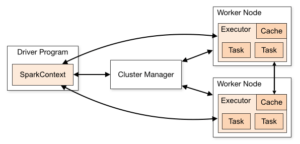
  • Spark Cluster: A Spark cluster is a collection of nodes where Spark jobs are executed. It consists of a master node that manages the cluster and worker nodes that execute the jobs. The cluster architecture allows for parallel processing and efficient handling of large-scale data.
  • Spark Driver: The Spark Driver is the central process that coordinates the execution of a Spark job. It converts the user’s code into a series of tasks that are distributed across the worker nodes. The driver also keeps track of the execution status and resource allocation.
  • Spark Executors: Executors are worker processes that run on the cluster’s worker nodes. They perform the actual computations and store the data needed for the tasks. Each executor is responsible for executing a subset of tasks and reporting the results back to the driver.
  • SparkContext: The SparkContext is the main entry point for interacting with Spark functionality. It allows you to create RDDs (Resilient Distributed Datasets), accumulators, and broadcast variables. It also provides configuration options and manages the lifecycle of the Spark application.

Common Project Structure and Dependencies

Spark project consists of several modules organized in a structured manner:

  • Common Dependencies: This module contains shared utilities, helper functions, and configuration files that are used across different parts of the project. It ensures consistency and reusability of code.
  • ETL Modules: ETL (Extract, Transform, Load) modules implement the logic for data extraction, transformation, and loading. These modules are organized into dedicated functions or classes, making it easier to test and maintain each part of the ETL process independently.
  • Environment Configuration: This component stores environment-specific configurations such as database connection strings, API keys, and file paths. It allows the ETL job to adapt to different environments (e.g., development, staging, production) without changing the code.
  • Main ETL Job Script: The main ETL job script is the entry point for executing the ETL job. It initializes the Spark context, sets up the necessary configurations, and orchestrates the execution of the ETL modules. This script is typically run using the spark-submit command.

Key Features of the ETL Job:

  • Modular Structure: The ETL job is designed with a modular structure, separating the extraction, transformation, and loading steps into dedicated functions or classes. This approach enhances testability and maintainability by allowing each part of the ETL process to be developed and tested independently.
  • Dependency Injection: Dependency injection is used to manage object dependencies within the ETL job. This practice improves modularity and testability by decoupling the creation and use of dependent objects, making it easier to swap out implementations for testing or other purposes.
  • Delta Lake Integration: Delta Lake is integrated into the ETL job for efficient data storage and management. Delta Lake provides ACID transactions, scalable metadata handling, and data versioning, which help in maintaining data integrity and enabling complex data workflows.
  • Integration with External Services: The ETL job integrates with external services such as Redis, ElasticSearch, and others, depending on your use cases. This integration allows for efficient data processing, storage, and retrieval, enabling the ETL job to interact with various data sources and sinks.
  • Error Handling and Logging: Robust error handling and logging mechanisms are implemented to ensure better visibility into the ETL job execution. Detailed logs and error messages help in diagnosing and troubleshooting issues, ensuring that the ETL process runs smoothly and reliably.

Crafting a production-ready ETL job with Apache Spark requires careful planning, design, and implementation. By following best practices and leveraging the capabilities of Apache Spark, you can create robust and scalable data processing pipelines that meet the needs of modern data-driven applications.

Remember, this blog provides a foundational overview of Apache Spark ETL jobs. Explore further, experiment with different configurations, and adapt the techniques to suit your specific use cases and requirements.

Happy data engineering! 

0 Comments

Leave a comment

Your email address will not be published. Required fields are marked.

Want to Build Your Dream Tech Team? Hire Now!

Building a Chat Application with FastAPI, Docker, OpenAI API, and Vector Database

Building a Chat Application with FastAPI, Docker, OpenAI API, and Vector Database

5 June 2024

|

IconInument

Icon Icon Icon

Greetings, developers! Are you ready to embark on an exciting journey of building a modern chat application powered by cutting-edge technologies? FastAPI, Docker, OpenAI API, and Vector Database offer a powerful combination to streamline your development process and create a feature-rich chat application that meets the demands of today’s users. Let’s dive into these technologies, explore their key concepts, benefits, and features, and understand how they come together to simplify the creation of modern chat applications.

What is FastAPI?

FastAPI is not just a web framework; it’s a game-changer for building high-performance APIs with Python. Designed for ease of use, efficiency, and scalability, FastAPI leverages Python’s asynchronous capabilities to achieve blazing-fast performance, making it an ideal choice for building real-time applications like chat applications. With automatic generation of OpenAPI documentation, support for asynchronous programming, and seamless integration with other technologies, FastAPI accelerates development and empowers developers to create robust APIs with minimal effort.

Key Benefits of FastAPI:

  • Rapid Development: FastAPI reduces development time by providing automatic generation of OpenAPI documentation, serialization, and validation of request and response data, and client library generation in various languages.
  • Asynchronous Support: FastAPI fully supports asynchronous programming, enabling non-blocking, concurrent execution of requests and optimal resource utilization.
  • Type Safety: FastAPI leverages Python’s type hinting system to provide type checking at runtime, ensuring code reliability and maintainability.
  • Integration with OpenAI API: FastAPI seamlessly integrates with OpenAI API, enabling developers to incorporate AI-powered chatbot capabilities into their applications effortlessly.

Key Features of FastAPI:

  • Automatic Generation of API Documentation: FastAPI automatically generates interactive API documentation (Swagger UI), making it easy to understand and test API endpoints.
  • Dependency Injection: FastAPI supports dependency injection, enabling better modularity and testability of applications.
  • Data Validation and Serialization: FastAPI automatically validates and serializes request and response data, ensuring data integrity and security.
  • WebSocket Support: FastAPI provides built-in support for WebSockets, enabling real-time, bidirectional communication between clients and servers.

Leveraging Docker for Containerization

Docker revolutionizes the deployment process by containerizing applications, ensuring consistency across different environments and simplifying the deployment process. With Docker, you can package your chat application and its dependencies into a lightweight container, enabling seamless deployment and scalability.

Integrating OpenAI API for Intelligent Chatbot Capabilities

Enhance your chat application with intelligent chatbot capabilities powered by OpenAI API. By integrating OpenAI API, you can provide users with personalized, natural language interactions, enhancing the overall user experience and engagement.

Leveraging Vector Database for Scalable Data Storage

Vector Database offers a modern, scalable solution for storing and querying high-dimensional data, making it ideal for chat applications that deal with complex data structures. With Vector Database, you can store chat logs, user profiles, and other application data efficiently, ensuring fast and reliable access to information.

By harnessing the power of FastAPI, Docker, OpenAI API, and Vector Database, you can build a robust, scalable chat application that meets the needs of modern users. Whether you’re building a small-scale chat application or a large-scale enterprise solution, these technologies provide the tools and capabilities you need to bring your ideas to life. So why wait? Dive into the world of modern chat application development today and unlock the full potential of these cutting-edge technologies.

Remember, this is just the beginning of your journey. Explore, experiment, and leverage the vast resources and community support available to take your chat application to new heights. Happy coding!

0 Comments

Leave a comment

Your email address will not be published. Required fields are marked.

Want to Build Your Dream Tech Team? Hire Now!