
 Let’s Talk
How to Hire An Offshore Python Development Team: A Comprehensive Guide
8 August 2025
|
 Inument


Modern-day businesses are under immense pressure to build and scale software faster, smarter, and more cost-effectively than ever. From AI-powered platforms and data-driven applications to robust web tools and process automation, Python has emerged as the go-to programming language across industries.
Naturally, this demand has created a global talent crunch. Skilled Python developers are in high demand but hard to hire locally, especially when budgets are tight or timelines are aggressive. That’s why offshore python development is no longer just a cost-saving tactic. It’s a strategic advantage.
But partnering with an offshore technology provider isn’t without its challenges. Language barriers, time zone misalignment, questionable code quality, and lack of domain understanding can turn a promising engagement into a painful one; especially if you don’t approach it right.
In this guide, we’ll walk you through the proven steps to hire offshore Python developers effectively. From identifying the right skills and engagement model to onboarding, management, and vendor selection, let’s explore it all.
Why Choose Python
Python isn’t just popular. It’s essential in today’s tech landscape. From Silicon Valley startups to enterprise-grade systems, Python powers a vast ecosystem of applications and platforms.
But why is Python such a natural choice for offshore development?
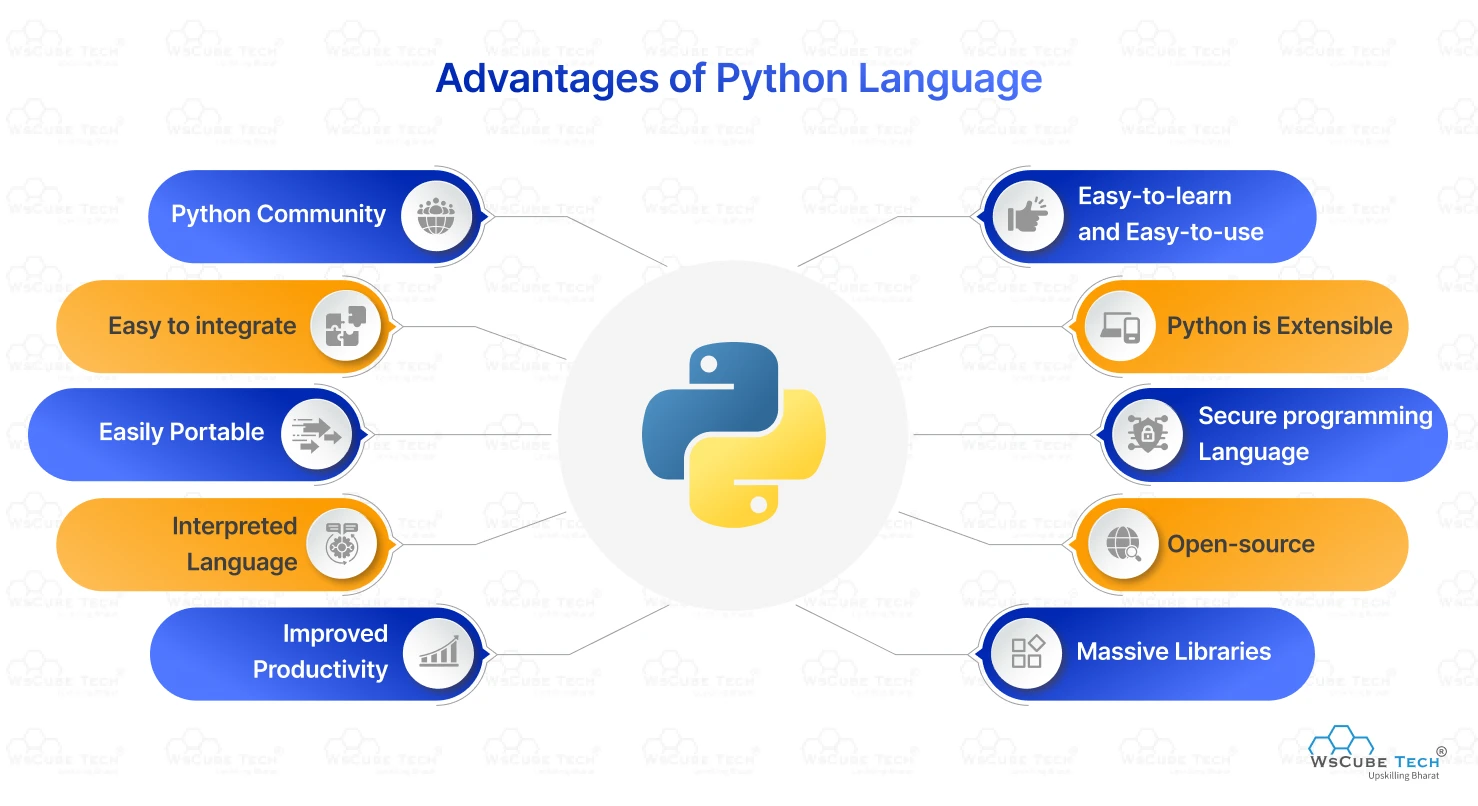
Well, first of all, Python delivers superior readability and simplicity. Python’s clean syntax makes it easy for teams to write, read, and maintain code collaboratively.
That simplicity is critical when working across time zones and team structures. It shortens onboarding time and reduces room for misinterpretation, especially in agile environments.
Second, Python has versatile use cases across industries. This versatile language is a true generalist with specialist potential. Whether you’re building an MVP or a production-grade app, Python can scale with you.
Source: WSCube Tech
Python supports a wide range of domains, including:
- Web Development: With frameworks like Django and Flask for scalable, secure backend systems.
- AI/ML: With powerful libraries like TensorFlow, PyTorch, and scikit-learn leading innovation in artificial intelligence.
- Data Science & Analytics: Leveraging Pandas, NumPy, and Jupyter for everything from data cleaning to predictive modeling.
- Automation & Scripting: Python excels at automating repetitive tasks, integrations, and data pipelines.
- APIs & Microservices: FastAPI and Flask enable lightweight RESTful API development with rapid iteration.
And lastly, Python’s massive global community translates into rich documentation, third-party libraries, and pre-built tools; making offshore collaboration and troubleshooting faster and more efficient.
The language also continues to evolve with growing support for cloud-native development, asynchronous programming (via asyncio), and DevOps tooling.
In short, Python is ideal for offshore development because it bridges complexity and accessibility. But to truly benefit, you need the right developers; which leads us to the next critical discussion.
Benefits of Hiring Offshore Python Development Teams
Hiring offshore Python developers isn’t just a budget decision. It’s a strategic move that helps companies scale quickly, stay agile, and stay competitive in a global tech ecosystem.
Whether you’re building a new product, augmenting your current team, or speeding up delivery, offshore developers can help you move faster without compromising quality.
Here’s why more companies are tapping into global Python talent:
1. Cost-Effective Development Without Sacrificing Talent
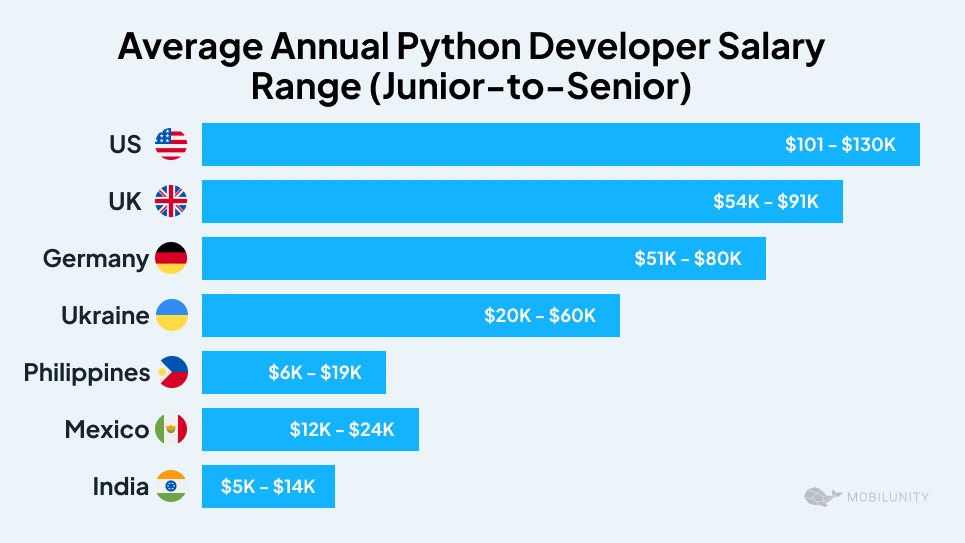
One of the most obvious advantages of hiring offshore python developers is cost savings. Hiring developers in regions like Eastern Europe, South Asia, or Latin America can reduce development costs by 40–70%, compared to hiring locally in the U.S., UK, or Western Europe.
This cost efficiency isn’t about hiring “cheap labor”. It’s about geographic arbitrage. The lower cost of living in offshore regions allows companies to hire senior-level developers at mid-level prices. These savings can be reinvested into marketing, scaling, or additional features; without compromising quality.
Source: Mobile Unity
The result? A whopping 70% of global companies now consider cost-reduction as the driving factor for seeking outsourcing solutions. Many offshore developers bring the same level of skill, experience, and professionalism as the ones in your city, with a significant cost saving as a bonus.
2. Access to a Global Talent Pool
Python is used in a wide variety of applications like AI/ML, web development, automation, data pipelines and many more. As a result, the demand for skilled Python developers often outweighs supply in local markets.
Going offshore gives you access to a broader pool of pre-vetted experts, including developers with deep experience in Laravel, Django, Flask, FastAPI, data science, or AI.
Offshoring gives you the ability to hire the right skillset, not just the nearest. You’re no longer limited to the talent pool within a 50-mile radius.
Instead, you can hire from thousands of experienced developers globally who specialize in exactly what you need, whether that’s Django for web apps, FastAPI for microservices, or Pandas for data science.
Many offshore technology providers/development partners even curate pre-vetted developer pools so you can skip time-consuming screening and get straight to building.
3. Faster Time-to-Hire and Delivery
Local hiring cycles often take 4–8 weeks, or longer if you’re seeking niche skills. Offshore partners, on the other hand, usually have developers ready to deploy within a few days. That’s because they maintain active rosters of available engineers who are pre-screened, onboarded, and ready to go.
What’s more, time zone differences can be an advantage. Offshore teams can work while your local team sleeps, creating a near 24/7 development cycle.

Source: Fively
This way, you can speed up your time-to-market. Bugs are fixed overnight. Features are built faster. And deadlines are hit more reliably.
4. Flexible Engagement Models
- Need a single Python developer for two months?
- A full-stack Django squad for a year?
- Or, looking just for some extra hands during a sprint-heavy launch cycle?
Offshore hiring offers flexible contracts that adapt to your project size, duration, and scope. You avoid the burden of long-term hiring, onboarding, and HR overhead. Offshore hiring allows you to be as lean or as ambitious as you need to be.
You can scale resources up or down without the complications of local employment contracts, benefits, or long-term HR commitments. Most offshore vendors offer hourly, monthly, or project-based models; giving you total control over your resource spend.
5. Built-In Support for Scaling
- Need two more Python developers next sprint?
- Or maybe a DevOps engineer to handle deployment?
With the right partner, you can scale horizontally or vertically in weeks, not months; and without breaking your delivery rhythm.
As your project grows, you can scale your offshore team quickly without re-hiring or restructuring. Offshore vendors can ramp up resources based on sprint cycles, product phases, or release milestones; giving you the ability to grow fast without slowing down.
This flexibility is especially valuable for startups, agencies, or enterprises that run agile teams and can’t afford to slow down during hypergrowth.
Offshore Python Development: Key Challenges to Watch Out For
While hiring offshore Python developers offers many advantages, it’s not without its pitfalls. Businesses that jump in without proper planning often face setbacks that impact timelines, code quality, and even trust.
Here are the most common challenges we’ve faced, and how to stay ahead of them:
1. Communication Gaps
Working across different time zones, cultures, and languages can lead to misunderstandings, delayed responses, and lost context. This is especially problematic in agile environments where rapid iteration and feedback are essential.
To solve this, you’ll need to establish overlapping working hours for real-time check-ins. Async-friendly tools like Slack, Loom, and Notion can help keep your workflow streamlined. You should also prioritize written documentation and daily updates to make sure you have a contingency plan in motion.
For instance, different developers may follow different coding styles, documentation practices, or testing standards; especially if they’re used to working independently or on short-term gigs.
That’s why it’s imperative to bring everybody under the same umbrella. You can do that by enforcing a clear coding standard and review process. As you’re responsible for the project management, assign a lead developer or architect to oversee consistency across channels. Tools like linters, CI/CD, and automated tests can help you streamline the process.
2. Lack of Technical Context or Domain Understanding
Even the most talented offshore Python developers can struggle if they don’t fully understand your business logic, domain, or user goals. This often leads to features that technically “work” but miss the mark functionally.

Source: Aglowid
You can minimize the risk by providing your python developers with detailed product briefs and use cases. You should also share your product vision and customer context, just like you do your internal hires. Include them in sprint planning, review meetings and foster a collaborative culture.
3. Data Security and IP Protection
When working with offshore teams, your codebase, architecture, APIs, proprietary algorithms, and sometimes even sensitive user data are being accessed from another part of the world. If proper safeguards aren’t in place, this opens the door to data breaches, IP theft, or compliance violations; especially in regulated industries like finance, health, or eCommerce.
Beyond legal implications, there’s also reputational risk. A single security lapse could compromise your users’ trust or expose proprietary logic that gives your product its edge.
To mitigate risks, you can sign NDAs, IP transfer agreements, and vendor contracts with clear terms. Also, ensure your partner complies with regulations (GDPR, HIPAA, SOC 2, etc.).
Using secure environments like VPNs, Git access controls, or cloud permission tiers will help your offshore developers only see what they need.
4. Over-Reliance on One Developer or Vendor
It’s common for startups or lean product teams to work with just one offshore developer or a small vendor. While this can work initially, it can become a liability if that person leaves, underperforms, or falls behind.
This creates a single point of failure, where product knowledge and momentum are tied to one individual.
This risk increases if the developer isn’t sharing documentation, pushing code regularly, or participating in your broader product strategy.
When you rely too heavily on a single offshore resource without backups or documentation, you risk losing continuity if they leave or underperform.
To solve this issue, you can insist on good documentation, knowledge sharing, and shared code ownership. Work with partners (like Inument) that offer redundancy and scaling support. Also, build small squads instead of lone contractors, especially for critical developments.
Where to Find Offshore Python Developers
Knowing you want to hire offshore Python developers is one thing. Knowing where to find the right ones; that’s where the real challenge begins. The global talent market is vast, and not all developers (or vendors) are created equal.
Here’s a breakdown of the best places, platforms, and strategies to source reliable offshore Python developers.
Top Offshore Regions for Python Talent
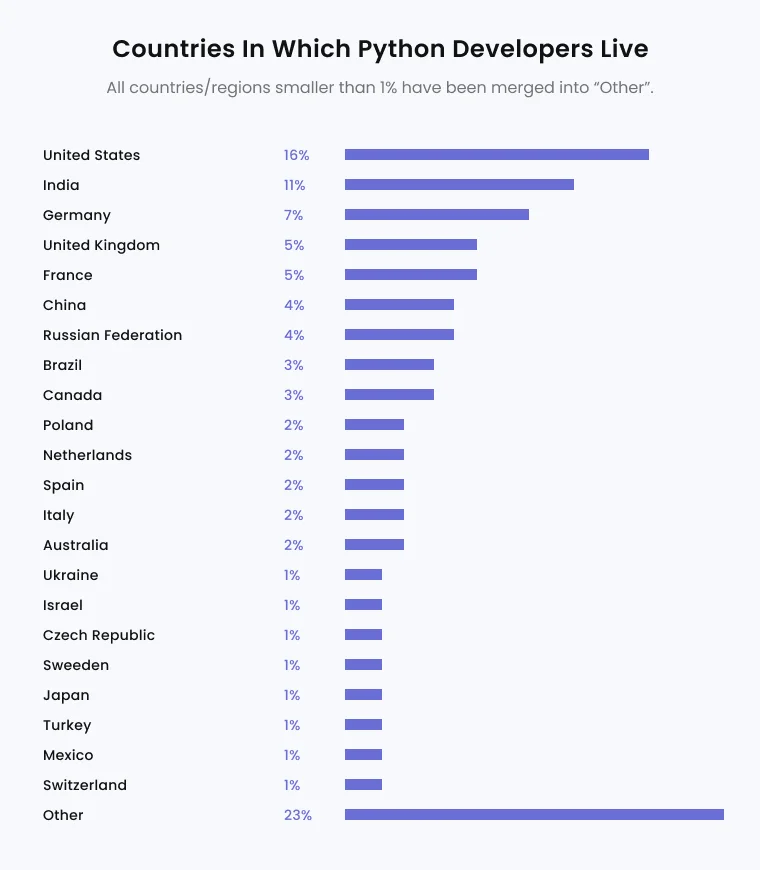
Some regions have become global hubs for Python development due to strong education systems, developer communities, and cost-efficiency.
Here are the top global choices for hiring offshore Python developers:
- India – Massive talent pool, strong STEM education, and competitive rates. Great for web apps, data processing, and automation.
- Eastern Europe (Ukraine, Poland, Romania) – High-quality engineering, strong English, and excellent security/compliance standards.
- Latin America (Brazil, Argentina, Colombia, Mexico) – Time zone proximity to North America, strong Python communities, and growing AI/ML expertise.
- Southeast Asia (Philippines, Vietnam, Indonesia) – Cost-effective, improving quality, and well-suited for back-end support or staff augmentation.
Source: UVIK
Best Platforms to Source Offshore Python Developers
Freelance Marketplaces
The easiest way to find skilled Python developers is to look for them in freelance marketplaces. If you’re searching developers for one-off tasks or short-term roles, you can use platforms like Upwork, Indeed, Freelancer.com, Guru, etc. This approach is useful for budget-sensitive, non-critical work.
If you’re seeking premium networks with rigorous vetting, you can opt-in for premium platforms like Toptal, Arc.dev, Gun.io, Lemon.io, Gaper.io, or CloudDevs. This is ideal when you need high-quality, pre-screened Python experts.
Dedicated Offshore Software Development Teams
Companies like Inument offer full-stack Python developers or dedicated teams for project-based or staff augmentation models. This is ideal if you want end-to-end support, faster ramp-up, and flexible scaling. However, It’s important to make sure that the provider’s services align with your specific business goals.
Key Skills to Look For in Offshore Python Developers
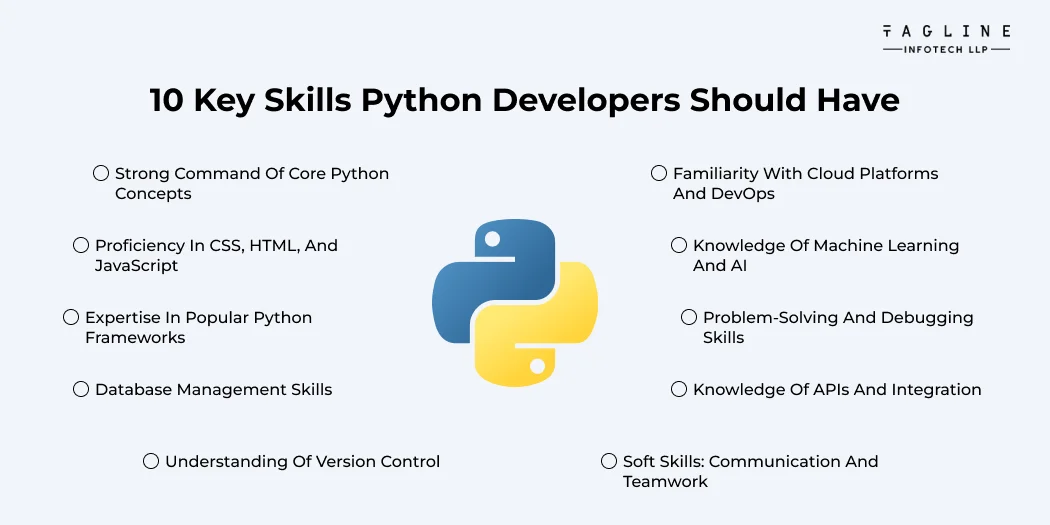
Hiring offshore doesn’t mean lowering your standards. In fact, the best offshore Python developers bring just as much expertise as their onshore counterparts; sometimes even more. But to ensure you get the right fit, it’s critical to know what to look for beyond “just Python experience.”
Here’s a breakdown of must-have technical and soft skills to evaluate when when you intend to hire offshore Python developers:
1. Proficiency in Core Python Concepts
At the foundation, developers should have In-depth knowledge of Python fundamentals, code packaging, release, and deployment. This includes:
- Python syntax and best practices
- Functional programming
- Object-oriented programming (OOP)
- Error handling, file I/O, decorators, and generators
- Working with packages and environments (pip, virtualenv, poetry)
2. Framework Experience (Django, Flask, FastAPI)
Depending on your product, developers should be familiar with relevant Python web frameworks:
- Django – Great for full-featured web apps (admin panels, ORM, authentication)
- Flask – Lightweight for microservices, APIs, or small backends
- FastAPI – Excellent for async APIs and performance-critical services
Source: App Inventiv
3. Testing and Debugging Skills
Reliable developers know how to write and run tests. Look for experience with:
- Unit testing (using unittest or pytest)
- Test coverage tools
- Debugging with breakpoints and logging
- CI/CD pipelines with automated testing stages
4. Database & API Experience
Your offshore Python developer should understand:
- SQL (PostgreSQL, MySQL) and/or NoSQL (MongoDB, Redis)
- Writing and consuming RESTful APIs
- ORM usage (e.g., Django ORM, SQLAlchemy)
- Authentication and security best practices
5. Familiarity with DevOps and Deployment Tools
Bonus if they’ve worked with:
- Docker and containerization
- Git version control workflows (branching, PRs, rebasing)
- Deployment platforms (Heroku, AWS, GCP, Azure)
- CI/CD tools (GitHub Actions, GitLab CI, Jenkins)
How to Hire Offshore Python Development Teams: Step-by-Step
Hiring offshore Python developers can unlock speed, flexibility, and scalability; but only when approached with clarity and structure. Below is a step-by-step guide that ensures you’re hiring the right people (or teams) in a way that aligns with your project and long-term goals:
Step 1. Define Your Project Scope, Goals, and Engagement Model
Before you even speak to candidates or vendors, get clear on what you’re building and how you want to work. Ask yourself:
- What does success look like for this project?
- Are you building a full product, a feature, or solving a specific problem?
- Do you need a full team, a few developers, or a short-term specialist?
Also, choose the right engagement model:
- Staff augmentation: You manage the project and just need extra hands
- Project outsourcing: You want a partner to take full ownership and deliver
- Hybrid: A mix of internal control and external delivery support
The clearer your vision, the better you can identify the right type of Python talent.
Step 2. Create a Clear Job Description
Once you’ve defined your scope and engagement model, the next step is to craft a precise and purposeful job description.
A clear job description should outline the specific Python skills you need (like experience with Django for web apps or FastAPI for building high-performance APIs), as well as any knowledge of related tools such as databases, version control, deployment platforms, or CI/CD pipelines.
You’ll also want to describe the nature of the project, expected deliverables, preferred working hours, time zone overlap, project timeline, engagement model, and any tools or methodologies your team uses (Agile, Scrum, Kanban, etc.).
Being transparent about expectations and responsibilities upfront helps attract candidates who are both technically qualified and operationally aligned with how your team works. Remember, clarity attracts quality. A vague job post leads to mismatched candidates.
Step 3. Shortlist Candidates Based on Experience and Portfolio
Once you start receiving applications or vetting agencies, it’s time to look deeper than resumes or generic sales pitches. Review real project experience. Prioritize candidates or teams who’ve built solutions similar to what you need. Check the tools and frameworks they work with.
For example, if you’re building a data-heavy backend, look for Python developers with experience in PostgreSQL optimization or API design. Don’t just rely on claims; look for tangible proof in portfolios, GitHub repos, or live product links. Ask for references, code samples, or brief walk-throughs of previous work.

Source: Up Tech
If you’re engaging a vendor, request access to the specific developers who will be working on your project, not just project managers or business reps. Your goal here is to find developers whose track record matches your project’s complexity, timeline, and tech stack.
Also, check the stability and scalability of their previous work. For long-term or complex projects, favor teams who’ve shipped production-ready applications over those who only complete short gigs.
Step 4. Conduct Technical Interviews or Assessments
A solid CV doesn’t always equal solid performance, especially in a remote or offshore setup. You need to validate technical skills early in the process. This could mean a live coding interview, a short take-home assignment, or even a system design discussion focused on your actual product needs.
The goal isn’t to trip them up with obscure algorithm questions. It’s to evaluate how they think, write, and structure Python code in real-world situations.
For example, how would they design a scalable API? How do they handle error logging, testing, or database interactions?
To check their competency, give a small paid coding task related to your actual product. You can also conduct a live coding session focused on architecture and problem-solving. Don’t forget, technical validation is non-negotiable if you want long-term success.
Step 5. Evaluate Communication and Cultural Fit
Technical skills alone don’t make for a smooth engagement. Communication quality and cultural alignment can often make or break an offshore relationship. Even top-tier developers can struggle if they don’t communicate well or align with your team’s style.
During the interview process, pay close attention to how well the developer articulates their thoughts, handles feedback, and responds to open-ended or ambiguous questions. Evaluate:
- Are they proactive in seeking clarity?
- Do they show enthusiasm and ownership when discussing past projects?
- Can they explain technical decisions in plain language?
- Are they willing to align with your tools, workflows, and team rituals?
Look for candidates who are not only fluent in English but also comfortable using collaboration tools like Slack, Jira, or Notion. Time zone alignment and responsiveness are key too. Look for someone who can reliably join standups, contribute to async discussions, and adapt to your working rhythm.
You want someone who feels like a natural extension of your team, not a distant outsider.
Step 6. Set Up Tools, Workflows, and Documentation for Collaboration
Once you’ve selected your developer or team, don’t assume they’ll “figure it out.” A smooth collaboration requires intentional setup. Ensure the developer has access to your codebase (via GitHub or GitLab), testing environments, databases, and any internal documentation.
Set up project boards in tools like Trello, Jira, or ClickUp to track tasks, progress, and blockers. Use communication channels like Slack or Discord for quick updates, and schedule recurring check-ins (even if just 15 minutes) to ensure alignment.
Also, provide access to product specs, API docs, UI designs, and any relevant materials. The more clarity and visibility they have, the faster they’ll become productive. Creating a simple onboarding doc that outlines your stack, deployment process, and sprint cadence can save days of back-and-forth.
To streamline the process, you can create an onboarding doc, knowledge base, or wiki that explains how your team works, who to contact for what, and where to find everything. You can also include product specs, design systems, API docs, and testing guidelines on your onboarding doc.
Step 7. Move Onto Onboarding
Onboarding is where your offshore hire transitions from “resource” to “team member.” Introduce them to your full team, not just the person they report to. Give them a walkthrough of the current architecture and help them understand the product vision, user flows, and business logic.
Assign small, non-critical tasks in the first few days to help them get comfortable with your codebase and review process. Check in regularly during the first week to identify blockers, clear up confusion, and establish trust. A strong onboarding process builds trust, clarity, and momentum from day one.
Also, encourage open communication and make it clear that asking questions early is better than fixing assumptions later. Offshore developers perform best when they’re treated like team members, not contractors. A strong onboarding experience sets the tone for how your developer engages with your team, your product, and your goals.
Best Practices for Managing Offshore Python Developers
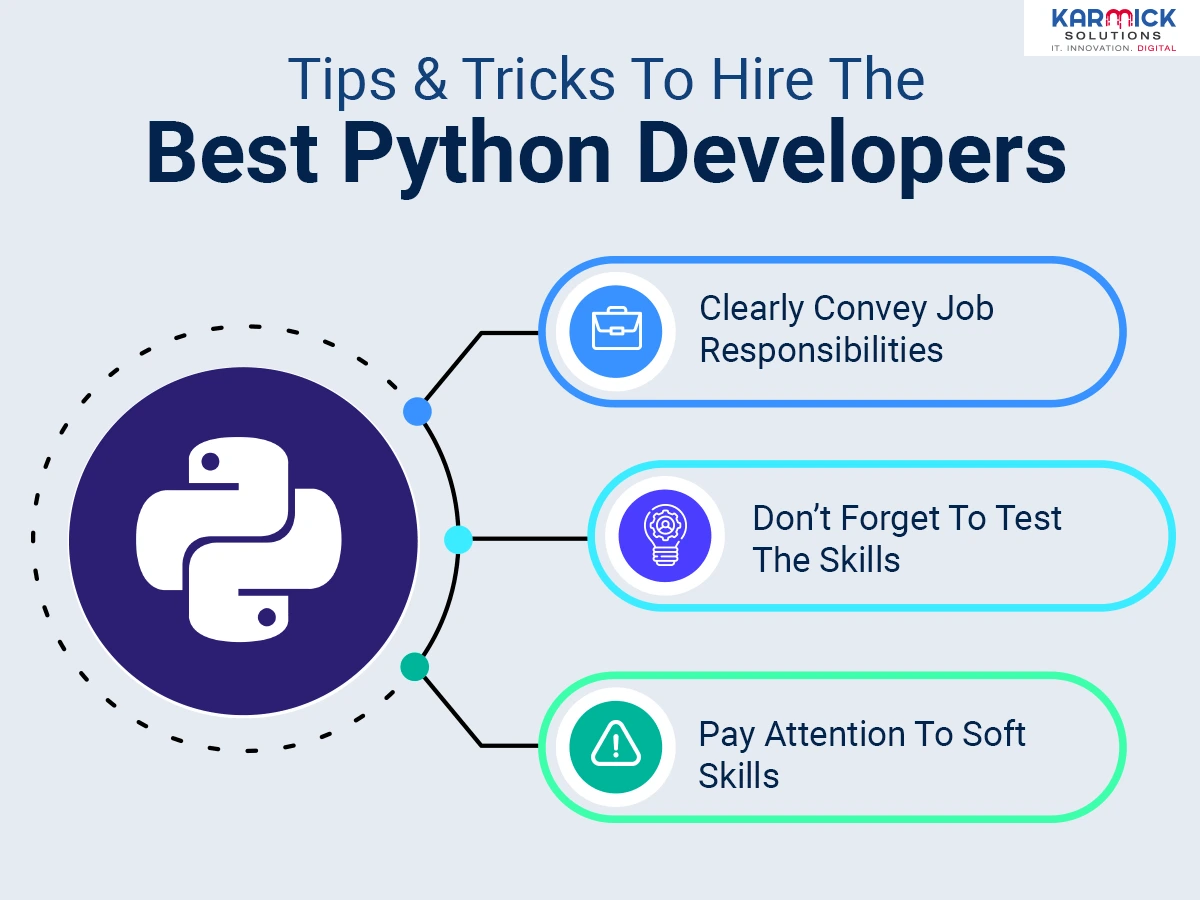
Hiring offshore Python talent is only half the battle. To truly unlock productivity, quality, and long-term value, you need to manage your offshore team with clarity, structure, and trust. Remote or offshore teams thrive when they’re given structure, context, and trust.
Source: Karmick Solutions
Let’s explore are some battle-tested best practices to help you lead with confidence and avoid common pitfalls:
- Start with a Test Project or Onboarding Task. Assign a simple feature or bug fix to help new hires understand your codebase and workflow.
- Set core overlapping hours. Align at least 1-2 hours of working time and regular structured daily/ weekly check-Ins to enable real-time standups, syncs, or urgent issue resolution.
- Use async-friendly communication tools to keep updates flowing and reduce the need for constant meetings. Also, standardize task management with Kanban or agile tools to ensure alignment and visibility into priorities.
- Enforce Git best practices. Use pull requests, branches, and code reviews to maintain consistency and collaboration across time zones.
- Automate testing and deployment. Use CI/CD pipelines and testing frameworks (like pytest) to catch issues early and accelerate delivery.
- Encourage proactive documentation. Ask developers to document modules, setup steps, and decisions. Future you will thank you for that.
- Create a clear escalation path. Make it easy for offshore devs to flag blockers, ask questions, or raise concerns without waiting.
- Include them in product conversations. The more context your offshore team has, the better their decisions and contributions will be.
Cost Expectations and Budgeting Tips
When hiring offshore Python developers, one of the biggest advantages is cost-effectiveness. However, it’s important to understand what drives those costs and how to budget smartly. Developer rates can vary significantly depending on the region, experience level, engagement model, and the complexity of the work involved.
For example, offshore Python developers in regions like India, Pakistan, or the Philippines typically charge between $20 to $40 per hour, while those in Eastern Europe (Ukraine, Poland, Romania) range from $35 to $70 per hour.
Latin America (Brazil, Argentina, Colombia) often falls in the $30 to $60/hour range, with the added benefit of overlapping time zones for North American companies.
However, pricing isn’t everything. A lower hourly rate doesn’t always mean a lower total cost. Developers who produce clean, testable, and scalable code often deliver faster and require less rework; saving you time and money in the long run.

Source: Auxano Global Services
Likewise, a vendor who charges a bit more but offers built-in project management, QA, or DevOps support may deliver far better ROI than hiring a cheaper solo freelancer.
When setting your budget, consider more than just development hours. Factor in onboarding time, code reviews, project management, QA/testing, and any tools or software licenses the developer might need access to.
It’s also smart to build in a 15–20% buffer for unexpected scope changes or new feature requests during development. To avoid surprise costs, align with your offshore partner early on regarding deliverables, deadlines, working hours, and billing structure (hourly vs. milestone-based).
Some vendors offer monthly retainers or full-time-equivalent (FTE) pricing, which can be more predictable than purely hourly billing. Ultimately, cost should be balanced with value. The goal isn’t to find the cheapest developer. It’s to find someone who can help you build faster, better, and with fewer risks.
Why Choose Inument for Offshore Python Development?
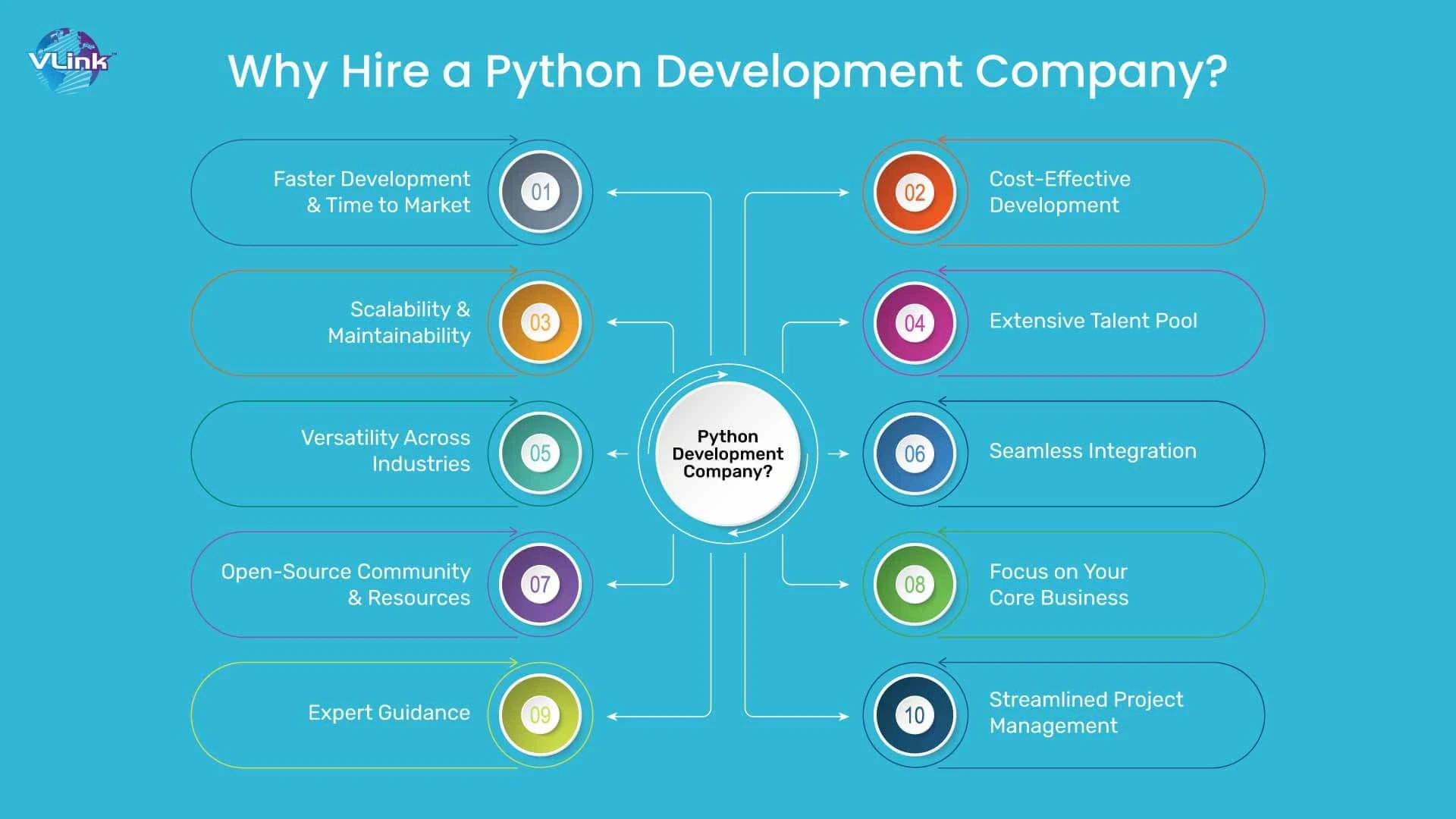
We know that hiring offshore can be risky if you don’t have the right partner. That’s why our approach goes beyond resumes and rates. Inument focuses on fit, reliability, and long-term success.
That’s why Inument doesn’t just fill talent gaps. We empower businesses to build and scale with confidence by connecting them with top-tier offshore Python developers who understand both the code and the context.
Our developers are handpicked for their deep expertise in Python and related frameworks like Django, Flask, and FastAPI, as well as their experience working on real-world products across industries like SaaS, fintech, eCommerce, AI, and more.
Source: Cloudinary
But what truly sets us apart is how Inument integrates seamlessly into your workflow, transforming into the extended version of your internal team. We match our engineers not just to your stack, but to your workflow, time zone, and collaboration style.
Whether you need a single developer for rapid prototyping, a dedicated backend team, or a full delivery squad, Inument offers flexible engagement models:
- Staff Augmentation for rapid team scaling
- Dedicated Teams for long-term product development
- Project-Based Outsourcing for turnkey builds
Inument also provides technical onboarding, code quality oversight, and optional project management to ensure your offshore investment performs from day one.
In short, we make it easy for you to hire smarter, build faster, and scale without compromise. If you’re looking for offshore Python developers you can trust, Inument is your ideal partner.
Wrapping Up: Hire Offshore Python Developers the Right Way
Offshore development is no longer just a way to cut costs. It’s a smart, scalable strategy to accelerate product delivery, access global expertise, and build with agility.
But success depends on more than finding the cheapest rate, or fastest hire. It’s about finding the right fit, setting the right expectations, and creating the right systems to support long-term collaboration.
Ready to hire dedicated resources and level up the way your business solves complex problems?
Let’s talk. Reach out to Inument today, and we’ll not only match you with pre-vetted offshore Python developers, but also help you choose the smartest engagement model for your needs.
Also, feel free to check our blog section for more in-depth guidelines, and actionable insights to help you build smarter and scale faster.
Start your offshore hiring journey with Inument. Build faster, better, and with more confidence.
1 Comments


Your AI Is Faster. Why Is Your Business Still Waiting?
13 October 2026

Your Project Doesn’t Need Agile. It Needs the Right Delivery Model
02 October 2026

Cloud Didn’t Fix Your Architecture. AI Just Exposed It
24 September 2026

AI Reliability Debt: The Hidden Cost of Production AI Systems
14 September 2026

Quality Assurance Isn’t a Cost. It’s What Stands Between You and a Bad Reputation
07 September 2026

Jeffrey J. McClendon
13 February 2026
Offshore Python development can offer a lot of flexibility, but choosing the right team is definitely key. This article does a good job of highlighting what to consider, from skill assessment to communication. While reading, I also came across some helpful insights on Python consulting and development here https://mobisoftinfotech.com/services/python-consulting-development which gave another perspective on managing projects effectively. Very informative and easy to follow!