
 Let’s Talk
 Inument


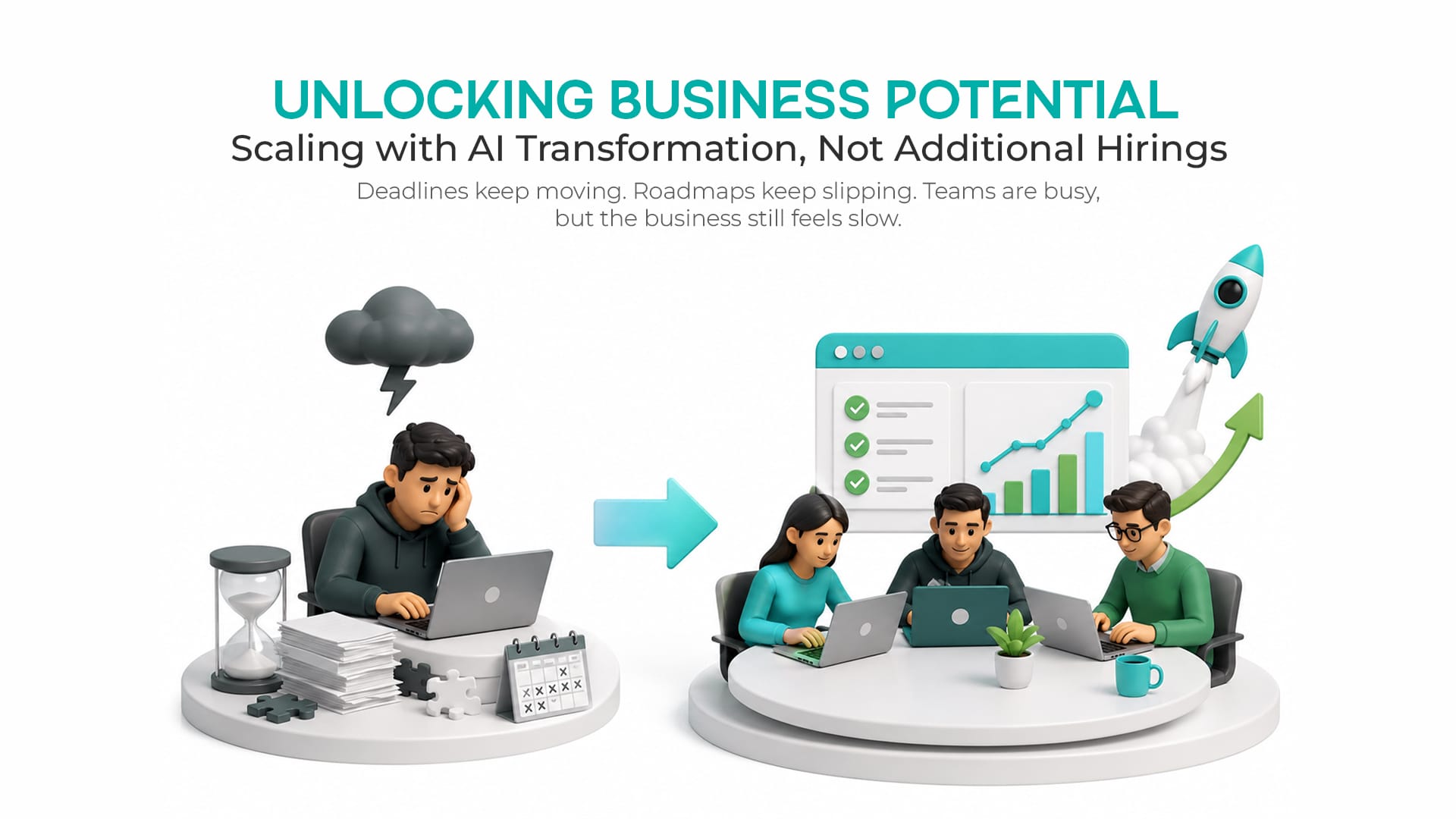
Deadlines keep moving. Roadmaps keep slipping. Teams are busy, but the business still feels slow.
For years, the default answer was simple: hire more engineers.
More people meant more output. More headcount meant more delivery capacity. More developers meant faster execution.
That logic is not completely wrong. But the market has changed.
AI has changed how companies build, operate, scale, and compete. Today, the real question is not just, “How many engineers do we need?”
What parts of our business should be automated, optimized, or transformed with AI?
Because in many companies, the problem is no longer just a lack of people. The problem is that teams are still solving modern business challenges with old delivery models.
Hiring more engineers may add capacity. But it will not automatically create AI transformation.
- It will not redesign your workflows.
- It will not build intelligent automation.
- It will not turn scattered data into decision-making systems.
- It will not create AI agents that can support operations, sales, customer service, or internal productivity.
That requires a different approach.
The Hidden Cost of Solving Every Problem with People
Hiring looks like progress from the outside.
A bigger team feels safer. More engineers feel like they have more control. More people in the delivery pipeline feels like momentum.
But in reality, every new hire brings a cost before they bring value.
- You need time to recruit.
- You need time to interview.
- You need time to onboard.
- You need time to explain your systems, your business logic, your product gaps, your data, and your internal processes.
By the time a new engineer becomes fully productive, months may have already passed.
And in the AI era, time matters even more.
Because your competitors are not only hiring. They are automating. They are building AI agents. They are using machine learning to improve decisions. They are reducing manual work from internal operations. They are making their products smarter.
So if your only answer is “let’s hire more people,” you may still move forward but not fast enough.
The real cost is not just salary.
The real cost is delayed transformation.
Why Traditional Delivery Breaks in the AI Era
Traditional software delivery was mostly about building features.
- A dashboard.
- A mobile app.
- A portal.
- A reporting system.
- An integration.
- A workflow.
These are still important. But AI-led businesses need more than software features. They need intelligent systems.
That is where traditional delivery starts to struggle.
1. Manual workflows stay manual
Many companies have teams doing repetitive work every day: checking documents, responding to the same questions, processing requests, reviewing data, preparing reports, routing tickets, qualifying leads, or making routine decisions.
Hiring more people may reduce pressure temporarily.
But AI can remove the repetitive work from the system entirely.
2. Data exists, but intelligence does not
Most companies already have data.
Sales data. Customer data. Product data. Operational data. Support data. Finance data.
But the data is often scattered across systems, spreadsheets, CRMs, dashboards, and internal tools.
Without AI and ML, that data stays passive. It tells you what happened, but not what to do next.
3. Teams are busy, but decisions are slow
Business teams often wait for reports, approvals, analysis, or manual follow-ups.
AI agents can help here by connecting tools, reading context, taking action, and supporting decisions faster.
This is where Agentic AI becomes important. It is not just about asking a chatbot questions. It is about building systems that can perform tasks, trigger workflows, and support real business execution.
4. AI experiments do not become production systems
Many companies are testing AI. Very few are operationalizing it properly.
- A demo is easy.
- A real AI system is harder.
The real challenge is not creating a prototype. The challenge is integrating AI into actual workflows, business rules, data pipelines, user experience, security, and measurable outcomes.
That is where strong AI engineering matters.
The Shift: From Staff Augmentation to AI Transformation
Staff augmentation still has value when a company needs engineering capacity.
But Inument’s direction has evolved.
The bigger opportunity now is not just helping companies add more developers. It is helping companies become AI-enabled businesses.
That means focusing on:
- AI transformation
- Agentic AI systems
- AI agents
- Machine learning solutions
- AI-powered workflow automation
- Data intelligence
- Intelligent product development
- Production-ready AI integration
This is not about replacing people.
It is about helping people work with better systems.
AI transformation means looking at a business and asking the following:
- Where is time being wasted?
- Where are decisions delayed?
- Where is data underused?
- Where are teams repeating the same work?
- Where can AI improve speed, accuracy, and customer experience?
- Where can intelligent automation create measurable business value?
That is a very different conversation from simply asking how many developers a company needs.
What AI Transformation Looks Like in Practice
AI transformation is not one single product. It depends on the business problem.
For one company, it may mean building an AI agent that supports customer service teams by answering queries, summarizing cases, and routing issues.
For another company, it may mean using machine learning to predict customer behavior, detect fraud, personalize recommendations, or improve operational planning.
For another, it may mean building an internal AI assistant that helps employees find policies, documents, reports, and business information instantly.
For a product company, it may mean embedding AI into the product itself so users get smarter search, better recommendations, automated insights, or faster decision support.
The point is simple:
AI transformation should not be treated as a technology trend.
It should be connected to business outcomes.
Faster operations.
- Lower manual workload.
- Better decisions.
- Smarter products.
- Higher customer satisfaction.
- Reduced cost.
- Stronger competitive advantage.
AI Agents Are Changing How Work Gets Done
AI agents are becoming one of the most practical parts of AI transformation.
A basic chatbot can answer questions.
An AI agent can go further.
It can understand context, connect with business systems, follow rules, complete tasks, generate outputs, and support workflows.
For example, an AI agent can:
- Review incoming customer requests and classify them
- Summarize sales calls and update CRM notes
- Generate internal reports from multiple data sources
- Help HR teams answer policy questions
- Support finance teams with document checks
- Assist operations teams with repetitive coordination
- Guide users through complex business processes
- Trigger actions inside connected tools
This is where companies start seeing real value.
Because the goal is not to “use AI.”
The goal is to remove friction from the business.
Machine Learning Still Matters
With all the attention on AI agents and generative AI, many companies forget that machine learning is still one of the strongest foundations for business intelligence.
ML is especially powerful when the problem involves prediction, classification, scoring, detection, recommendation, or optimization.
For example:
- Predicting customer churn
- Detecting fraud or unusual behavior
- Recommending products or content
- Scoring leads based on conversion potential
- Forecasting demand
- Optimizing pricing or inventory
- Identifying risk patterns
- Personalizing user experiences
Generative AI is powerful for language, reasoning, and interaction.
Machine learning is powerful for patterns, predictions, and decisions.
The strongest AI transformation strategies often use both.
Why AI Transformation Needs Engineering Discipline
AI is not magic. And AI transformation does not happen by simply adding a model into a product.
To make AI work in the real world, companies need strong engineering.
- They need clean data pipelines.
- Secure architecture.
- Proper integrations.
- Reliable APIs.
- Human review layers where needed.
- Monitoring and performance tracking.
- Clear business rules.
- Scalable infrastructure.
- Good UX around AI outputs.
Without this, AI becomes a fancy demo that never creates business value.
This is where Inument’s role becomes clear.
The future is not only about providing engineering hands. It is about combining software engineering, AI, ML, cloud, data, and product thinking to build systems that actually work inside real businesses.
The Right Question to Ask Now
When delivery is slow, many companies still ask:
“Who do we need to hire?”
But in the AI era, the better question is:
“What should we transform first?”
Because sometimes the answer is not another developer.
- Sometimes the answer is an AI workflow.
- Sometimes it is an AI agent.
- Sometimes it is a machine learning model.
- Sometimes it is better data infrastructure.
- Sometimes it is automating a process that should not be manual anymore.
- Sometimes it is rebuilding a product around intelligence, not just features.
The companies that understand this early will move faster than the companies that only keep increasing headcount.
Key Takeaways
- Hiring more engineers can increase capacity, but it does not automatically create transformation.
- AI has changed the business strategy. Companies now need to think beyond people and focus on intelligent systems.
- Agentic AI and AI agents can reduce manual work, speed up decisions, and support real business execution.
- Machine learning remains critical for prediction, personalization, detection, and optimization.
- AI transformation only works when it is connected to real business outcomes, not just demos or experiments.
- The future of delivery is not only about bigger teams. It is smarter systems.
- For Inument, this is the shift.
- From helping companies scale engineering capacity to helping companies build AI-powered businesses.
If your roadmap keeps slipping, the answer may not be another job posting. It may be the workflow, the data, or the manual process slowing your business down. Before adding more people, start by identifying what can be automated, optimized, or transformed with AI. Because the future of scaling is not just bigger teams. It is smarter systems.
About the Author

admin
Related Insights

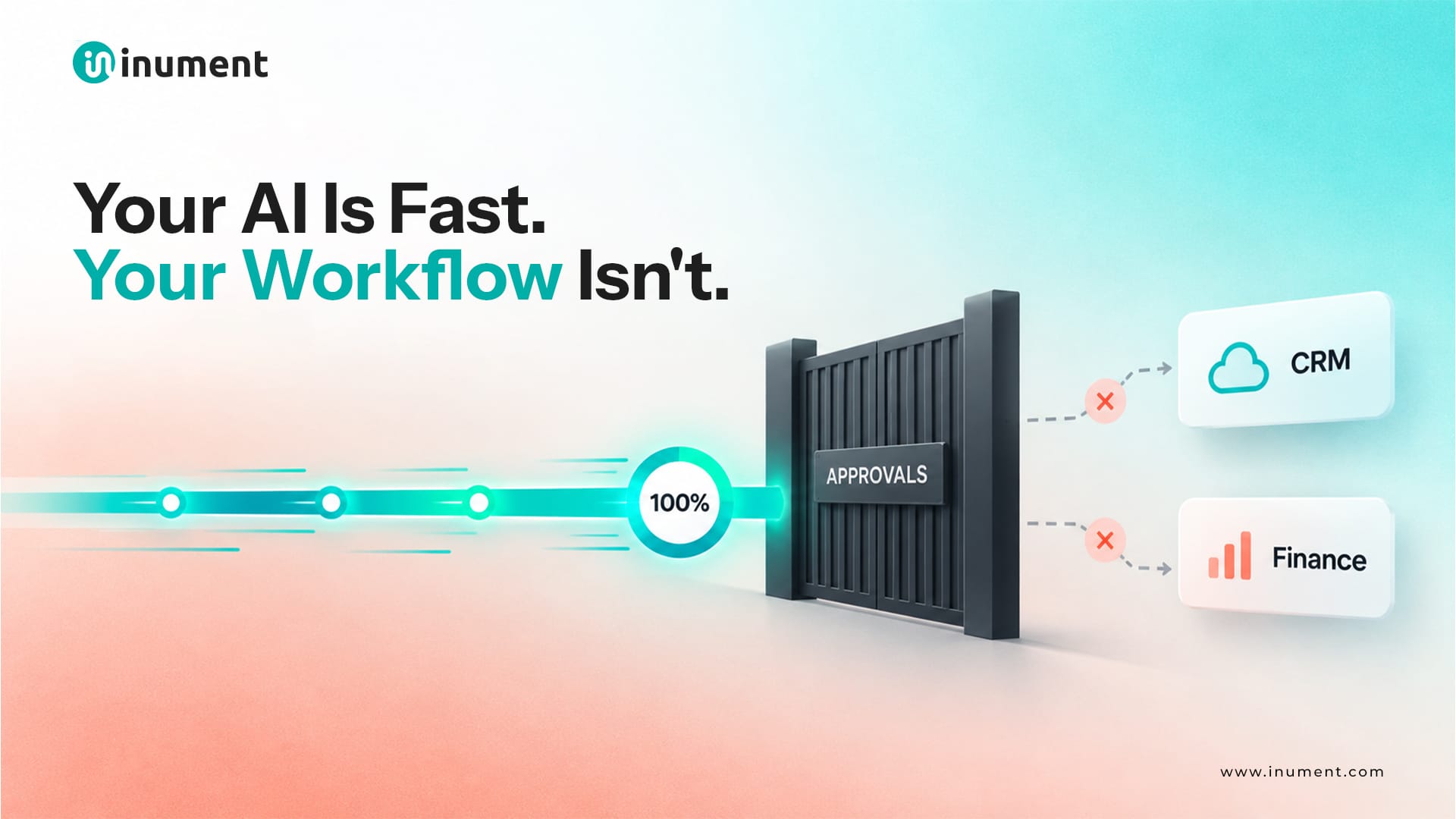
Your AI Is Faster. Why Is Your Business Still Waiting?
13 October 2026

Your Project Doesn’t Need Agile. It Needs the Right Delivery Model
02 October 2026
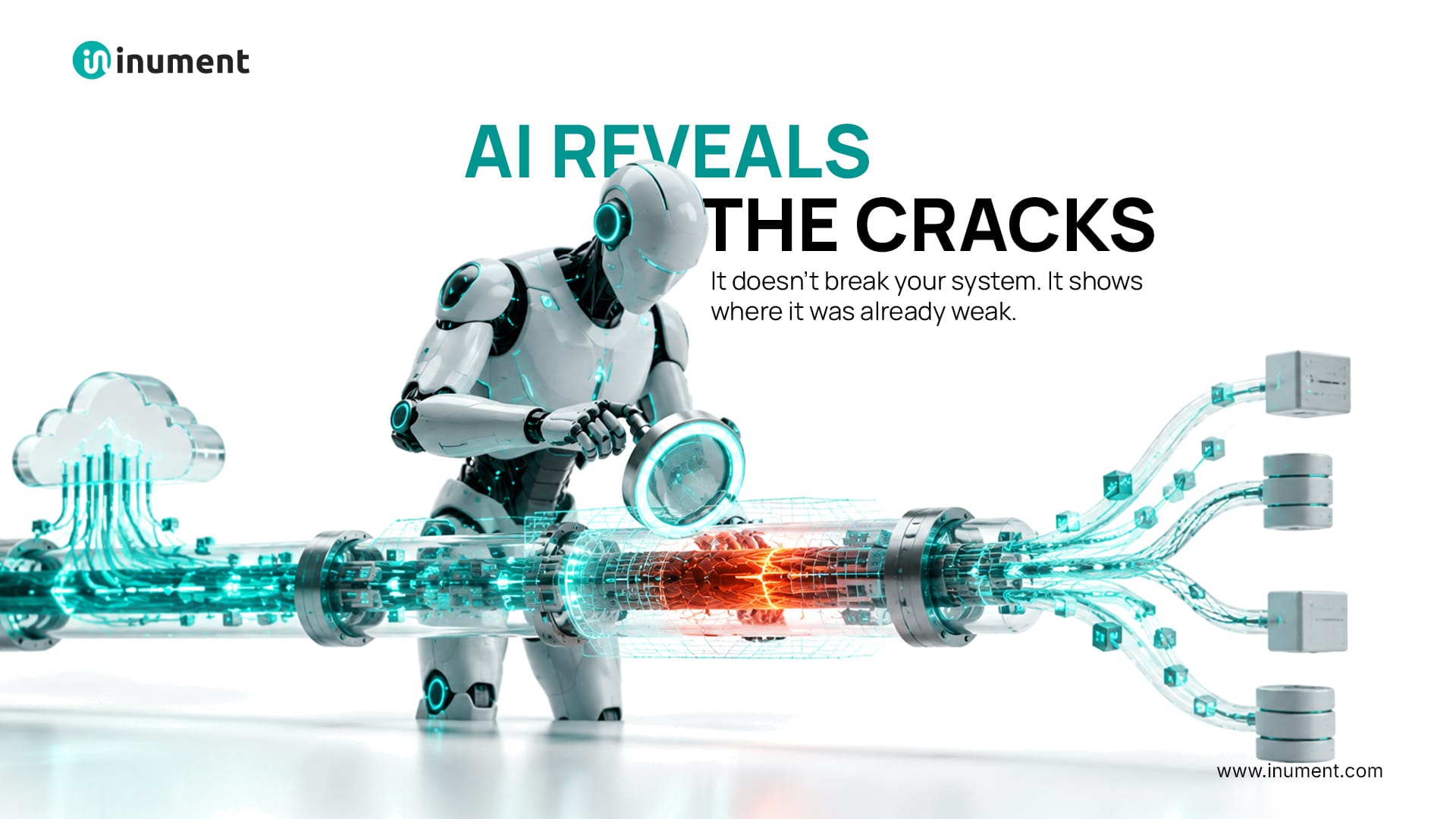
Cloud Didn’t Fix Your Architecture. AI Just Exposed It
24 September 2026
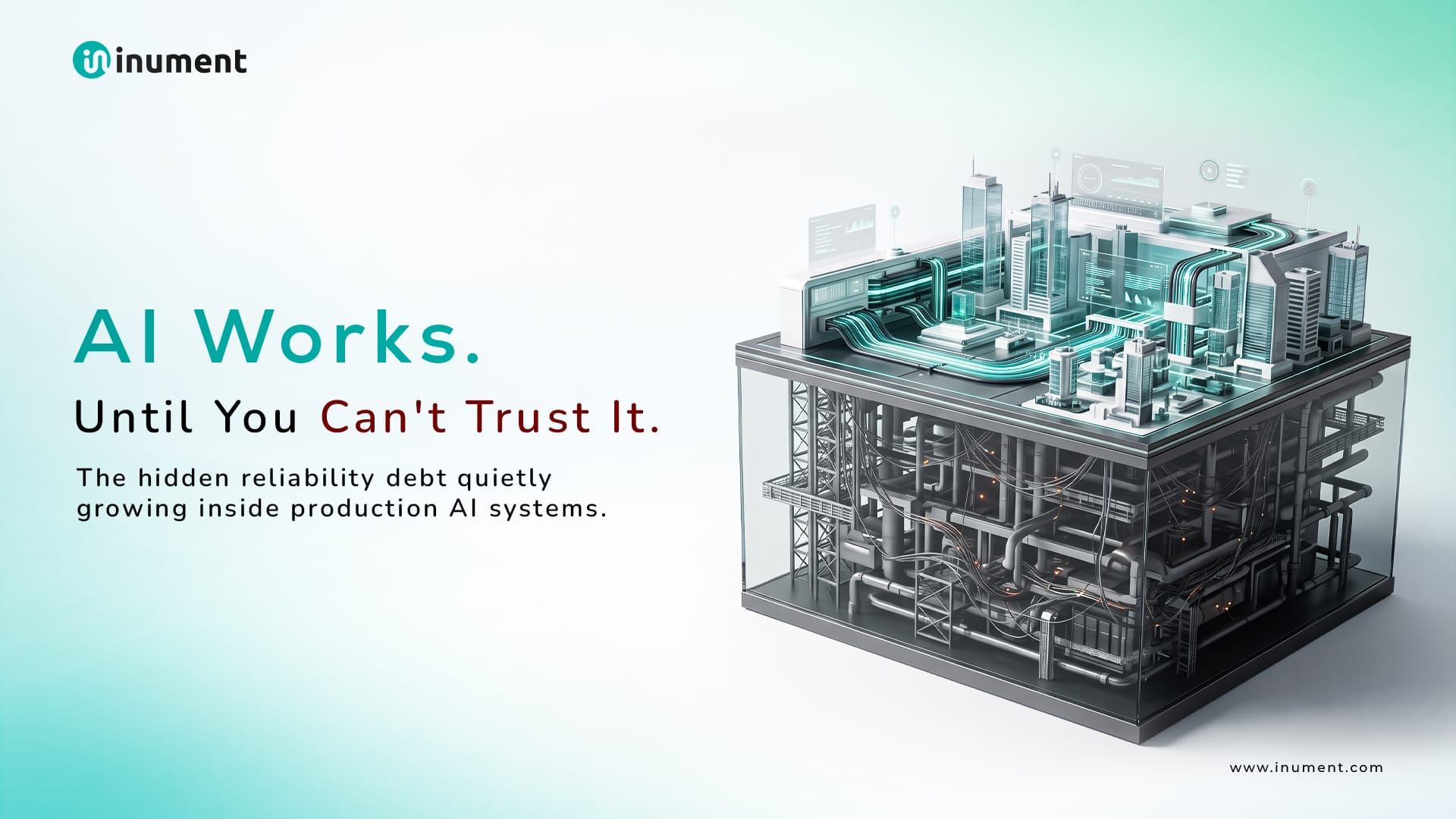
AI Reliability Debt: The Hidden Cost of Production AI Systems
14 September 2026

Quality Assurance Isn’t a Cost. It’s What Stands Between You and a Bad Reputation
07 September 2026
