Beyond AI Agents: How to Build the Operating Model That Makes AI Work at Scale

Beyond AI Agents: How to Build the Operating Model That Makes AI Work at Scale

27 July 2026

|

IconInument

Icon Icon Icon

AI agents are no longer the exciting experiment in the corner of the business.

By 2026, many companies have already tested them. Some have built internal copilots. Some have automated parts of customer support, sales, hiring, finance, or operations. Some have connected AI agents to documents, CRMs, analytics tools, and internal systems.

But a hard truth is becoming clear.

Building AI agents is not the same as making AI work at scale.

Many companies can now create an AI agent. Far fewer can turn that agent into a reliable part of the business. The difference is not only technical. It is operational.

An AI agent can answer questions, summarize documents, trigger workflows, and support decisions. But if the workflow around it is unclear, the agent becomes another disconnected tool. People may try it once, lose trust, and return to the old way of working.

That is why the next stage of AI transformation is not just about building more agents.

It is about building the right AI operating model around them.

AI Agents Are Powerful, But They Need Structure

Most AI projects begin with excitement.

A team sees a manual process. They imagine how AI could make it faster. They build an agent to handle part of the work. The demo looks promising. The output feels useful. Everyone agrees there is potential.

Then real operations begin.

The agent does not always know which data source is correct. The business team is not sure who should approve its output. The engineering team is asked to fix edge cases that were never defined. The compliance team wants more visibility. The operations team wants the agent inside the tools they already use.

Slowly, the project loses momentum.

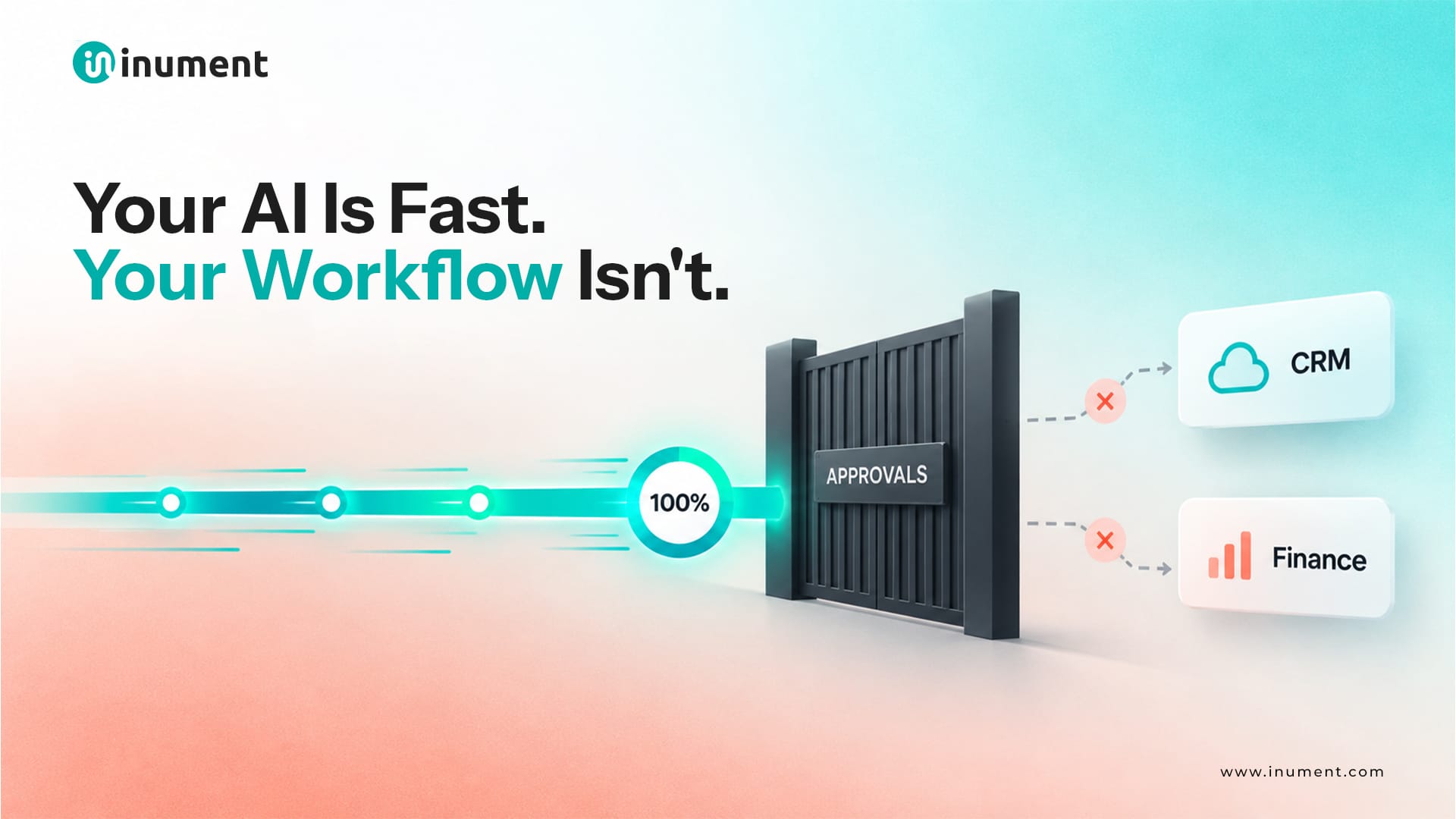
The issue is not always the AI model. In many cases, the model is doing what it was asked to do. The real problem is that no one redesigned the business process around it.

AI agents do not create value simply by existing. They create value when they are placed inside a clear workflow, supported by clean data, connected to business rules, monitored by people, and measured against real outcomes.

This is where an AI operating model becomes essential.

What Is an AI Operating Model?

An AI operating model is the structure that explains how AI works inside the business.

It defines who owns the AI system, where it fits into the workflow, what data it uses, how decisions are reviewed, how errors are handled, and how success is measured.

In simple terms, it answers the questions most AI projects avoid at the beginning.

Who is responsible if the AI output is wrong?

Which team manages the workflow?

Which systems does the AI need to connect with?

What should be automated, and what still needs human review?

How do we know the AI is actually improving the business?

Without these answers, AI implementation becomes fragile. The company may have advanced tools, but the operating structure remains unclear.

That is when AI becomes busy work instead of business value.

A strong AI operating model does not slow innovation down. It gives innovation a path to scale. It helps teams move from isolated experiments to production-ready AI systems that people can trust and use every day.

Why AI Agents Fail Without Workflow Design

One of the biggest mistakes companies make is adding AI to a broken process without changing the process itself.

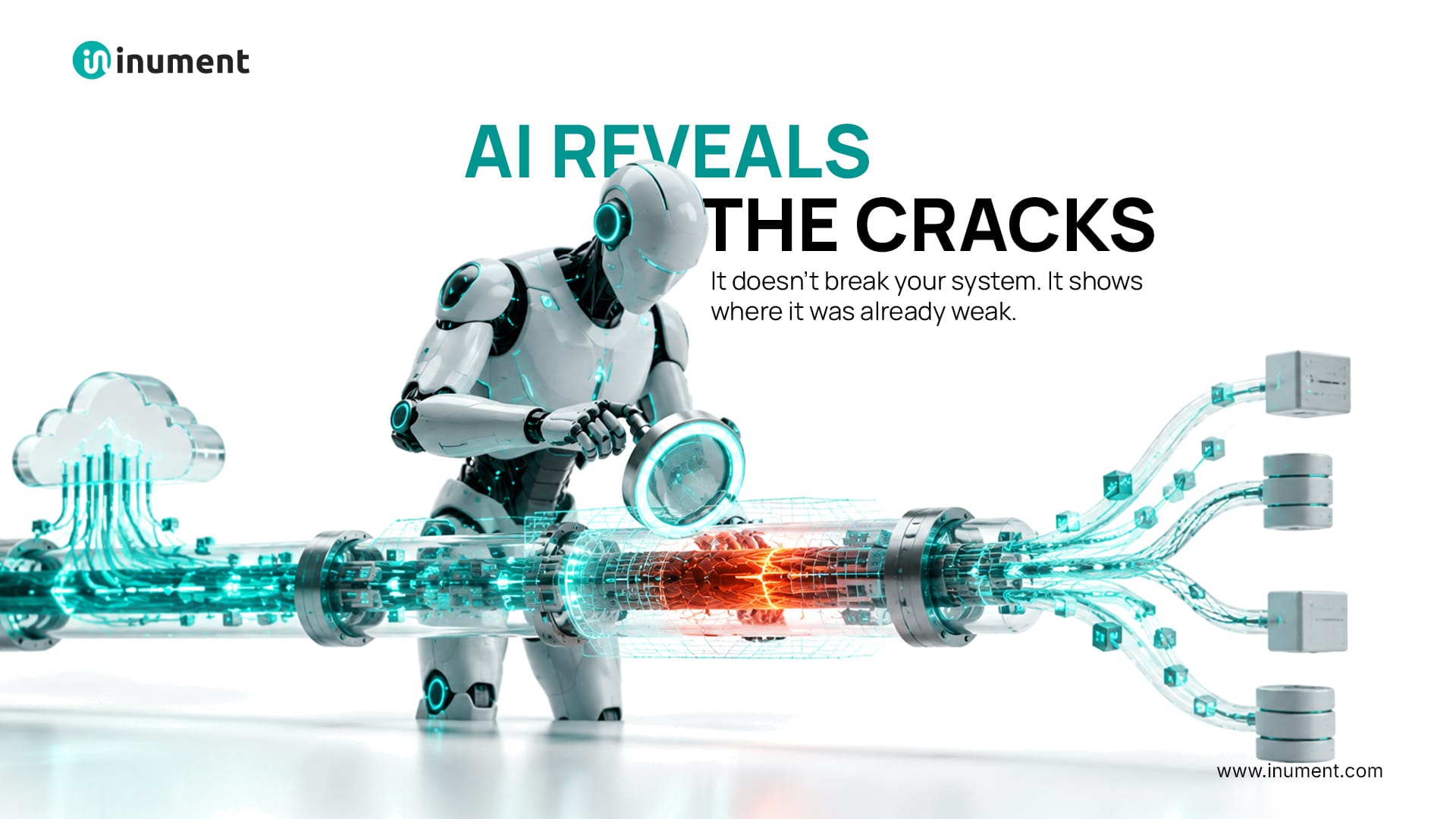
If a workflow is messy, AI will not automatically fix it. It may even make the problem more visible.

For example, a company may build an AI agent to support sales teams by summarizing leads and recommending follow-ups. On the surface, this sounds useful. But if the CRM data is incomplete, lead ownership is unclear, and sales managers do not trust automated recommendations, the agent will struggle to deliver value.

The problem is not the agent.

The problem is the workflow around the agent.

AI workflow automation works best when the process is clearly mapped before automation begins. The business needs to understand each step, each handoff, each decision point, and each source of friction.

Then AI can be placed where it actually helps.

It can reduce repetitive work. It can speed up review. It can organize evidence. It can recommend next actions. It can support teams without replacing the judgment they still need to apply.

But this only works when the workflow is designed with intention.

Ownership Is the Missing Layer

AI projects often fail because everyone is interested, but no one truly owns the outcome.

The product team may define the use case. The engineering team may build the system. The operations team may use it. The leadership team may expect ROI. But when something goes wrong, ownership becomes unclear.

A strong AI operating model fixes this.

It defines business ownership and technical ownership from the start.

Business owners decide what success looks like. They define the process, the rules, and the acceptable level of risk. Technical owners make sure the system is stable, secure, integrated, and maintainable.

Both sides need to work together.

AI cannot scale if it lives only with the innovation team. It also cannot scale if it is treated only as an engineering task. It needs shared ownership across business, product, operations, data, and technology.

That is how AI moves from a promising demo to a reliable business system.

Clean Data Still Decides the Quality of AI

AI agents are only as useful as the information they can access.

If the data is outdated, duplicated, incomplete, or spread across disconnected systems, the agent will produce weak results. It may sound confident, but confidence is not the same as accuracy.

This is why data readiness is a core part of AI implementation.

Companies need to know which data sources matter, who maintains them, how often they are updated, and what rules control access. They also need to decide what the AI can use, what it should ignore, and what requires human validation.

This does not mean every company needs perfect data before using AI.

It means companies need a practical data strategy around each AI use case.

For some workflows, a limited but clean dataset is better than a large messy one. For others, integration across multiple systems may be necessary. The key is to design the AI system around the reality of the business, not around a perfect version of the business that does not exist.

Human Review Is Not a Weakness

Some companies treat human review as a sign that AI is not advanced enough.

That is the wrong way to think about it.

In many business workflows, human review is exactly what makes AI safe, useful, and trusted. AI can process information quickly. It can detect patterns. It can prepare recommendations. But people still need to make judgment calls, especially when the decision affects customers, employees, revenue, risk, or compliance.

The best AI operating model does not remove humans from every step.

It places humans where their judgment matters most.

This is especially important in areas like hiring, finance, legal operations, healthcare support, enterprise sales, and customer experience. In these workflows, AI should organize the evidence, reduce manual effort, and improve decision quality. But the final responsibility should remain clear.

Human-in-the-loop design is not a temporary phase. It is part of building trustworthy AI systems.

Integration Turns AI From a Tool Into a System

A standalone AI agent may be useful for a small task, but it rarely changes the business on its own.

To create real value, AI must connect with the systems people already use. That may include CRMs, ERPs, HR platforms, ticketing systems, document storage, analytics tools, communication platforms, and internal databases.

This is where many AI projects become difficult.

The demo is simple. The real implementation is not.

A production-ready AI system needs secure APIs, workflow triggers, permission controls, monitoring, fallback logic, and performance tracking. It must handle real users, real data, real exceptions, and real business pressure.

This is why an AI engineering team matters.

AI transformation is not just about choosing the right model or tool. It is about engineering the full system around the model. That includes architecture, integration, security, testing, deployment, and continuous improvement.

Without strong engineering, even a good AI idea can stay stuck in prototype mode.

What a Strong AI Operating Model Should Include

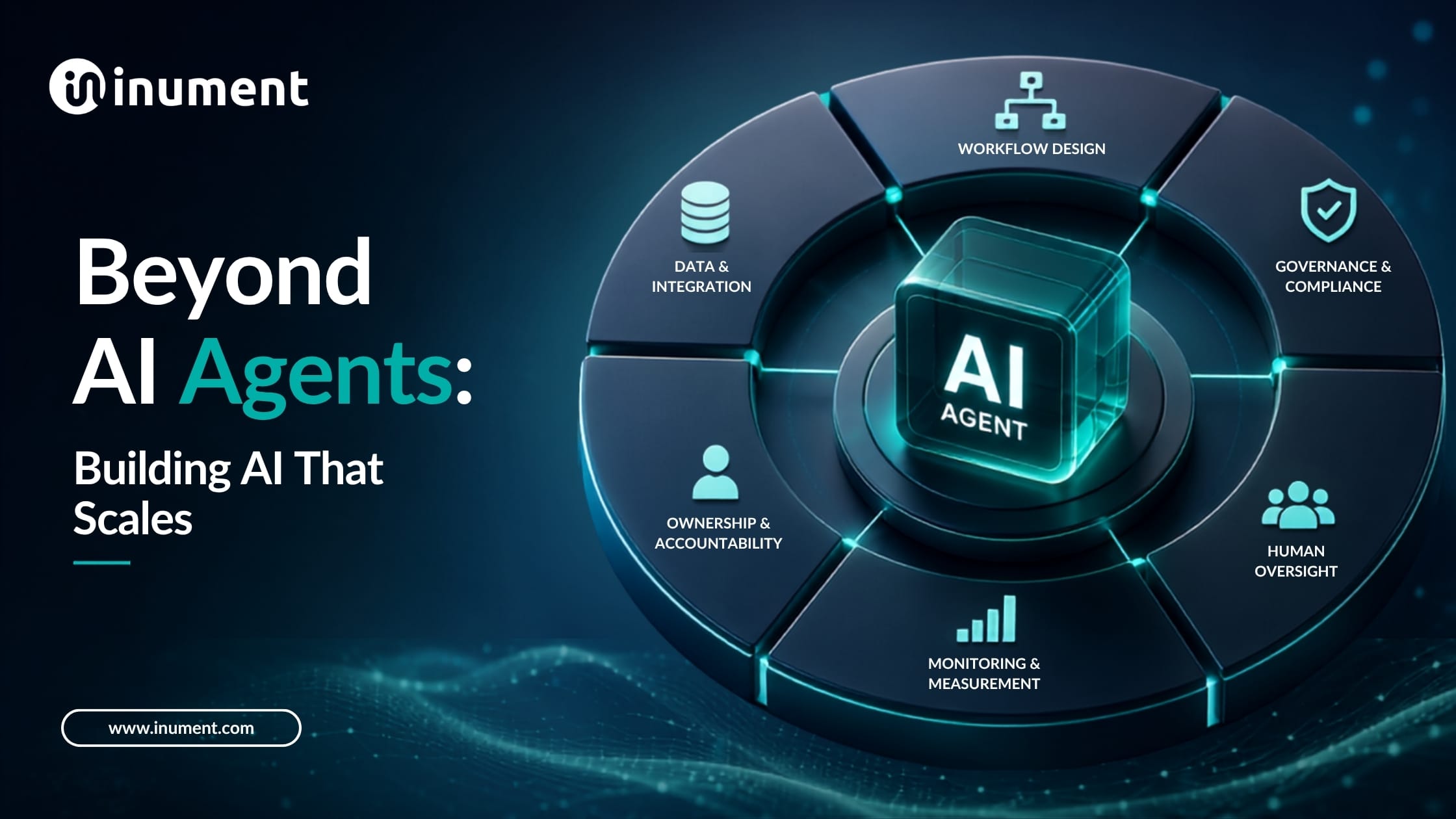
A practical AI operating model should be simple enough for teams to understand and strong enough to support scale.

It should begin with a clear use case. The company needs to know what problem the AI system is solving and why that problem matters.

Then it should define the workflow. The team should map what happens before AI, what AI will do, what happens after AI, and where people need to review or approve the output.

Next, it should define ownership. Business and technical responsibilities must be clear. Someone must own the outcome, not just the tool.

It should also define data rules. The system needs trusted data sources, access controls, update logic, and quality checks.

It should include integration planning. AI must connect with the tools and systems where work already happens.

It should include monitoring. Teams need to track performance, accuracy, usage, errors, and business impact.

Finally, it should include a feedback loop. AI systems should improve over time based on real usage, not assumptions from the first build.

This is how companies move from AI experiments to business automation that actually works.

A Practical Example: From Agent to Operating Model

Imagine a company that wants to use AI to improve customer support.

The first idea may be simple: build an AI agent that answers customer questions.

That may help, but it is not enough.

A better approach starts by looking at the full support workflow. What types of questions come in? Which ones are repetitive? Which ones require human judgment? Where is customer data stored? When should a ticket be escalated? How should the team measure improvement?

Once the workflow is clear, the AI agent can be designed properly.

It may answer simple questions using approved knowledge base content. It may summarize complex tickets before sending them to a human agent. It may detect urgent cases based on customer history. It may suggest responses but requires human approval for sensitive issues. It may update the CRM after a case is resolved.

Now the AI agent is not just a chatbot.

It is part of a support operating model.

The company can measure response time, resolution quality, escalation rate, customer satisfaction, and agent productivity. The support team knows when to trust the AI and when to step in. The engineering team knows how the system is performing. Leadership can see whether the AI investment is creating value.

That is the difference between using AI and operating with AI.

Inument’s Point of View

At Inument, we believe the next phase of AI transformation will be won by companies that combine strong business thinking with strong engineering execution.

AI ideas are easy to discuss. AI agents are easier to build than they were a few years ago. But production-ready AI still requires serious work.

It requires workflow design. It requires system integration. It requires clean architecture. It requires human review points. It requires scalable delivery teams that can move fast without creating fragile systems.

This is where Inument helps companies.

We support businesses that want to move beyond AI experiments and build AI systems that work inside real operations. That may mean designing an AI workflow automation layer, building custom AI agents, integrating AI into existing platforms, or extending an internal team with experienced AI engineers.

The goal is not to chase AI trends.

The goal is to build systems that reduce friction, improve decision-making, and create measurable business value.

That is what production-ready AI should do.

The Companies That Win With AI Will Operate Differently

In 2026, the companies that win with AI will not be the ones testing the highest number of tools.

They will be the ones building the strongest operating models around AI.

They will know where AI fits. They will know who owns it. They will know how data flows. They will know when people review decisions. They will know how systems connect. They will know what success looks like.

AI agents will still matter. But they will not be the full story.

The real advantage will come from turning AI agents into reliable business systems.

So the question for leaders is simple.

Are your AI agents just another set of tools, or are they part of a real AI operating model built to scale?

If the answer is unclear, that is where the next stage of work should begin.

About the Author

Safkat Nirjash

Safkat Nirjash

Want to Build Your Dream Tech Team? Hire Now!

Scale Custom AI Agents in 11 Weeks Without System Friction

Scale Custom AI Agents in 11 Weeks Without System Friction

13 July 2026

|

IconInument

Icon Icon Icon
Most AI Projects Dont Fail They Suffocate

Most AI Projects Don’t Fail. They Suffocate

They suffocate under slow pipelines, under-resourced teams, tangled integrations and infrastructure that never carried the weight of real-world AI workloads.

In 2026, the companies winning with AI are not the ones with the biggest budgets or the boldest vision statements. They are the ones with a repeatable, structured execution system, one that removes friction before it compounds into paralysis.

This is that system.

What follows is Inument’s proven 11-week blueprint built from hundreds of engagements across Europe, the USA, the UK, Australia, and Asia to scale custom AI agent development and permanently eliminate the system friction that is quietly strangling your product’s growth.

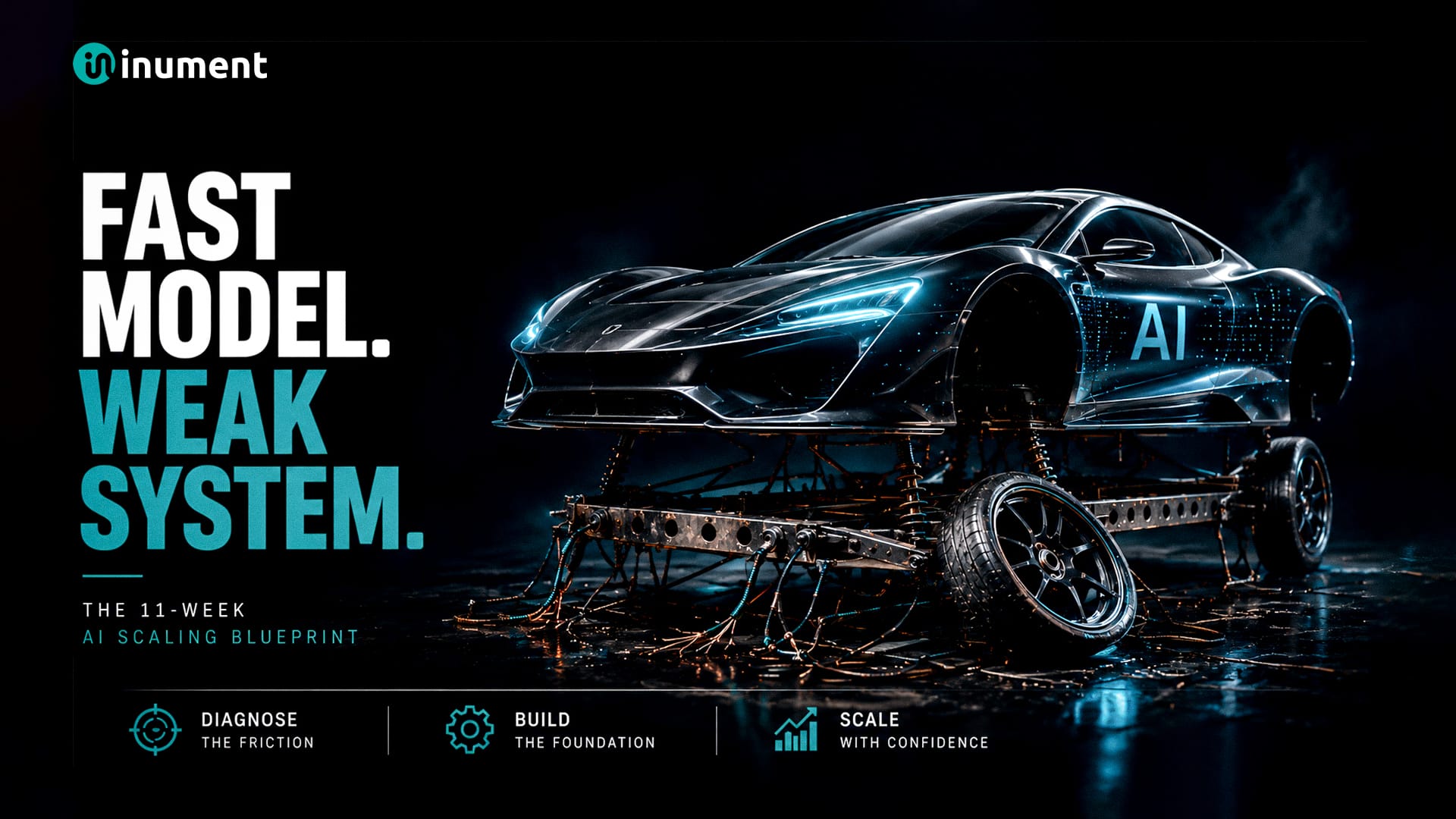
Eleven weeks. Three phases. One operating model that changes everything after it.

Takeaway: Print this blueprint. Share it with your CTO. The gap between AI ambition and AI delivery in 2026 is not a talent problem; it is a structural problem. This document closes that gap.

Why 2026 Is the Year the Blueprint Becomes Non-Negotiable

For the last three years, “move fast” was enough of a strategy.

It no longer is.

Enterprise clients in London, Chicago, Sydney, and Singapore are no longer impressed by demos. They are signing contracts with vendors who can prove operational maturity and teams that can deliver generative AI integration for enterprise workflows reliably, at scale, and within regulatory boundaries.

The numbers tell the story clearly. According to 2026 industry data:

  • 63% of enterprise AI projects fail to reach production not because the model was wrong, but because the surrounding system was not ready.
  • The global market for AI staff augmentation services is projected to exceed $47 billion in 2026, driven entirely by the gap between AI ambition and available in-house execution capacity.
  • Teams that follow a structured scaling framework reduce their time-to-production by an average of 38% compared to teams operating on ad hoc roadmaps.

Think of system friction like rust on a high-performance engine. The engine might still run. But every mile costs more than it should, and eventually the rust wins.

The 11-week blueprint is your rust remover.

Takeaway: Before Week 1 begins, benchmark your current time-to-production for AI features. That number is your baseline. By Week 11, the project should be unrecognisable.

Phase One: Weeks 1-3 Diagnose the Friction and Build the Foundation

Week 1: The Friction Audit

You cannot fix what you have not named.

Week 1 is entirely dedicated to mapping every point of system friction across your current stack infrastructure bottlenecks, integration failures, testing gaps, documentation black holes, and team capability mismatches.

For teams currently running software development outsourcing in 2026 models, this audit also surfaces the handoff friction, the invisible delays that live in the gap between your in-house team and your external partners.

Inument’s friction audit framework covers five dimensions: infrastructure readiness, team capacity, pipeline automation, data quality, and compliance posture. For clients with FinTech software regulatory compliance obligations or ethical AI implementation for FinTech requirements, that last dimension alone typically reveals two to three critical gaps before a single line of new code is written.

Deliverable: A prioritised friction map with each issue scored by impact and remediation cost.

Takeaway: Block the entire first week for this audit. Do not skip it to accelerate delivery. Teams that skip the audit spend Weeks 6 and 7 putting out fires that the audit would have prevented.

Week 2: Team Architecture and Gap Analysis

Once you know where the friction lives, you need to know whether your current team can remove it.

In 2026, the honest answer for most scaling organisations is: not entirely, not quickly enough and not without help.

This is where AI staff augmentation services become a strategic lever rather than a staffing transaction. The question is not “Do we need more people?” The question is “Which specific capability gaps are creating the most friction, and what is the fastest way to close them?”

Common gaps Inument identifies at this stage include:

  • No in-house capacity to hire LLM engineers in 2026 at the speed the roadmap demands.
  • Over-reliance on a single senior developer for MLOps consulting services decisions.
  • No hiring strategy for remote DevOps engineers for CI/CD pipeline ownership.
  • Missing hiring Python AI specialists or vetted Node.js developers for hire to own model serving and API layers.

The benefits of IT staff augmentation in 2026 are measurable here: augmented teams reach full productivity 40% faster than traditional hires, with no notice periods, no onboarding overhead, and full accountability from Day 1.

Deliverable: A team gap matrix mapping each friction point to the required capability and the fastest path to closing it in-house hire, augmentation, or nearshore vs offshore staff augmentation model.

Takeaway: Do not default to hiring full-time for every gap. Augmentation delivers faster results with lower fixed costs for specialist roles, such as hiring AWS-certified cloud architects or augmented reality developers.

Week 3: Infrastructure Baseline and Stack Decisions

Week 3 is where architecture decisions get locked.

This is the most consequential week of Phase One. Stack decisions made here determine your ceiling for the next three years. Teams that choose poorly – selecting low-code platforms without a low-code vs custom software cost analysis, or skipping a serverless architecture consulting reviews build ceilings into their infrastructure before they build their first production feature.

Inument’s infrastructure baseline protocol covers:

  • Scalable cloud-native app development readiness assessment.
  • Multi-tenant SaaS architecture design requirements for enterprise client segregation.
  • Microservices migration strategy for teams still running monolithic legacy systems.
  • Legacy system modernization services scope for inherited technical debt.

For clients building custom AI agent development pipelines, Week 3 also includes a model serving architecture review, ensuring that the infrastructure can handle real-world inference loads without the latency spikes that kill enterprise SLAs.

Deliverable: A locked infrastructure blueprint with documented decisions, trade-off rationale, and a three-year scalability projection.

Takeaway: Bring your dedicated software development team into these decisions, not just your architects. The people who will maintain the system should understand why it was built the way it was.

Phase Two: Weeks 4-8 Build, Integrate, and Harden

Week 4–5: Core Pipeline Development

With the foundation locked, Weeks 4 and 5 move into active development of the core AI pipeline.

For most clients, this means building or refactoring three interconnected layers simultaneously: data ingestion and preprocessing, model training and fine-tuning, and API serving and integration.

Teams deploying natural language processing services, AI-powered automation for logistics, or predictive analytics solutions for retail at this stage share a common challenge: the gap between a model that performs well in evaluation and a model that performs well in production under variable real-world conditions.

Inument’s approach during this phase mirrors the construction of a suspension bridge. The cables your data pipelines and model-serving layers must carry load before the deck your application features are ever attached. Build the cables first. Test them under stress. Then build the deck.

Teams that reverse this order (and many do) discover in Week 9 that their beautiful application is hanging from fraying wire.

Deliverable: A working, tested core pipeline with documented input/output contracts for every integration point.

Takeaway: Invest disproportionately in pipeline observability during these two weeks. Every hour spent on monitoring now saves ten hours of debugging in production later.

Week 6: Integration Sprint Connecting AI to Your Existing Stack

Week 6 is the most technically complex week of the entire blueprint.

This is where the AI pipeline connects to your existing product stack, whether that is a custom SaaS application development platform, a React JS development agency frontend, a React Native development company mobile layer, or an enterprise ERP system that was never designed with AI integration in mind.

Common integration friction points at this stage:

  • Custom mobile app development services for clients needing real-time AI inference on iOS and Android app development platforms with sub-200 ms response requirements.
  • Progressive Web App (PWA) development teams manage state synchronisation between AI agent outputs and frontend UI layers.
  • E-commerce mobile app specialists integrating recommendation engine outputs with legacy inventory and pricing systems.
  • Healthcare mobile app development teams navigating data residency requirements while connecting to cloud-hosted model endpoints.

For clients with blockchain development for supply chain components, Week 6 also includes smart contract integration testing, ensuring that AI agent decisions that trigger on-chain transactions do so with the correct validation logic.

Deliverable: A fully integrated system with end-to-end testing documentation across all integration points.

Takeaway: Do not treat integration as the last 10% of the project. Treat it as a first-class engineering concern from Week 1. The teams that discover integration complexity in Week 6 rather than Week 10 are the teams that deliver on time.

Week 7–8: Security, Compliance, and Quality Hardening

Speed without security is not delivery. It is a liability.

Weeks 7 and 8 are dedicated entirely to hardening the system against the threats and compliance obligations that will define whether your enterprise clients sign long-term contracts or walk away after the first audit.

Inument’s hardening protocol at this stage includes:

  • Cybersecurity audit for small businesses and enterprise-grade penetration testing across all AI API endpoints.
  • Enterprise mobile security solutions implementation for clients with mobile AI agent deployments.
  • Quality assurance and software testing automation, including regression suites, load testing, and adversarial input testing for LLM-powered features.
  • FinTech software regulatory compliance review for clients operating under FCA, SEC, ASIC, or MAS regulatory frameworks.

In 2026, the cost of a security incident involving an AI system is not just financial. It is reputational. A single breach of an AI agent with access to customer data can undo years of Inument reviews and client trust built across multiple markets.

Deliverable: A security and compliance sign-off document with all critical and high-severity findings remediated before Phase Three begins.

Takeaway: Schedule your cybersecurity audit before your go-live date, not after. Audits that happen post-launch find problems that your clients discover first.

Phase Three: Weeks 9-11  Scale, Optimise, and Operationalise

Week 9: Performance Optimisation and Load Testing

Week 9 answers the question every CTO dreads: “What happens when the system actually works?”

Because when a custom AI agent development system works, when it starts delivering real value to real users, usage grows quickly. The infrastructure that handled 500 concurrent users in staging will face 50,000 in production within weeks of a successful enterprise rollout.

Inument’s performance optimisation protocol covers three areas:

  • Scalable cloud-native app development configuration review: autoscaling policies, container orchestration, and cold start elimination for serverless architecture consulting deployments.
  • Mobile app maintenance and support optimisation for clients with hired Flutter developers for cross-platform deployments that handle AI-powered features.
  • Model inference optimisation quantisation, caching strategies, and batching configurations that reduce per-request cost by 30–60% at scale.

Deliverable: A load-tested system with documented performance benchmarks at 1x, 10x, and 100x expected production load.

Takeaway: If your system cannot survive a 10x traffic spike in Week 9, it will not survive a successful product launch. Test now while the cost of failure is a delayed sprint, not a downed production system.

Week 10: Team Handover and Knowledge Transfer

The most overlooked week in every AI scaling engagement.

Inument dedicates Week 10 entirely to structured knowledge transfer ensuring that your internal team fully owns and understands what has been built, why architectural decisions were made, and how to extend the system without creating the technical debt that kills Year 2 products.

For clients running a scale engineering team on demand or temporary IT staffing solutions models, this week also includes documentation of all augmented team contributions so that when contractors roll off, they do not take critical system knowledge with them.

The knowledge transfer package includes architecture decision records, runbook documentation, incident response playbooks, and a model governance framework for teams with ethical AI implementation for FinTech or other regulated AI deployment requirements.

Takeaway: Knowledge transfer is not a nice-to-have. It is the difference between a project and a capability. A project ends. A capability compounds.

Week 11: Go-Live and the Operational Resilience Handshake

Week 11 is not the end. It is the starting line.

Go-live week at Inument includes a structured operational resilience review a formal handshake between the delivery team and the client’s ongoing operations function that covers monitoring protocols, escalation paths, SLA commitments, and the 20% debt-repayment discipline that prevents the Year 2 death spiral.

For clients across the best IT outsourcing countries in Asia, including Inument’s own enterprise software development operations in Dhaka, this handshake also formalises the ongoing support model, whether that is a retained dedicated software development team, a digital transformation consulting advisory engagement, or a hybrid offshore AI development company partnership.

Deliverable: A live, monitored, fully documented production system with an operational playbook that your team can run independently from Day 1.

Takeaway: Celebrate the launch for exactly one day. Then start Week 1 of your next cycle. In Year 2, Inument calls the teams that treat go-live as the end.

Real-World Result: From Friction to Scale in 11 Weeks

One of Inument’s enterprise logistics clients in the UK entered Week 1 with a partially built AI dispatch optimisation system, a team of six engineers carrying an estimated $1.4M in technical debt, and a client contract that required production deployment within 90 days.

By applying this exact blueprint with Inument providing AI staff augmentation services to close three critical team gaps, a microservices migration strategy to decompose a monolithic legacy system, and a full quality assurance and software testing automation layer, the team delivered to production in 76 days.

Post-launch metrics after 60 days in production: 34% reduction in dispatch error rate, 28% improvement in route optimisation efficiency, and a client contract renewal signed at 2.4x the original contract value.

The friction did not disappear on its own. It was systematically removed, week by week, with a blueprint that left no room for ambiguity.

Takeaway: The 11-week blueprint is not theoretical. It has a track record. Search Inument Solution Ltd reviews to read what clients across Europe, the USA, the UK, Australia, and Asia say about the results.

The Closing Statement: Systems Beat Sprints. Always

In 2026, every company is an AI company or it is becoming one, or another company is replacing it.

The question is no longer whether to build custom AI agent development capabilities. The question is whether you build them on a foundation that scales or on a foundation that collapses under its ambition in Year 2.

Eleven weeks is not a long time. But it is exactly long enough to replace system friction with system resilience if you follow the blueprint with discipline, staff the gaps honestly, and treat operational readiness as a first-class engineering concern from Day 1.

At Inument, we do not build projects. We build capabilities. And we build them to last.

The sprint era is over. The systems era has begun. Build accordingly.

Start Your 11-Week Engagement Today

Whether you need a full offshore AI development company partnership, targeted AI staff augmentation services to close critical capability gaps, or a digital transformation consulting engagement to redesign your AI foundation, Inument has the framework, the team, and the 11-week blueprint ready to deploy.

Visit inumentsolution.com to book your Week 1 friction audit.
Search Inument to see what teams across four continents say about the results.

About the Author

Safkat Nirjash

Safkat Nirjash

Want to Build Your Dream Tech Team? Hire Now!