 Let’s Talk
 Inument


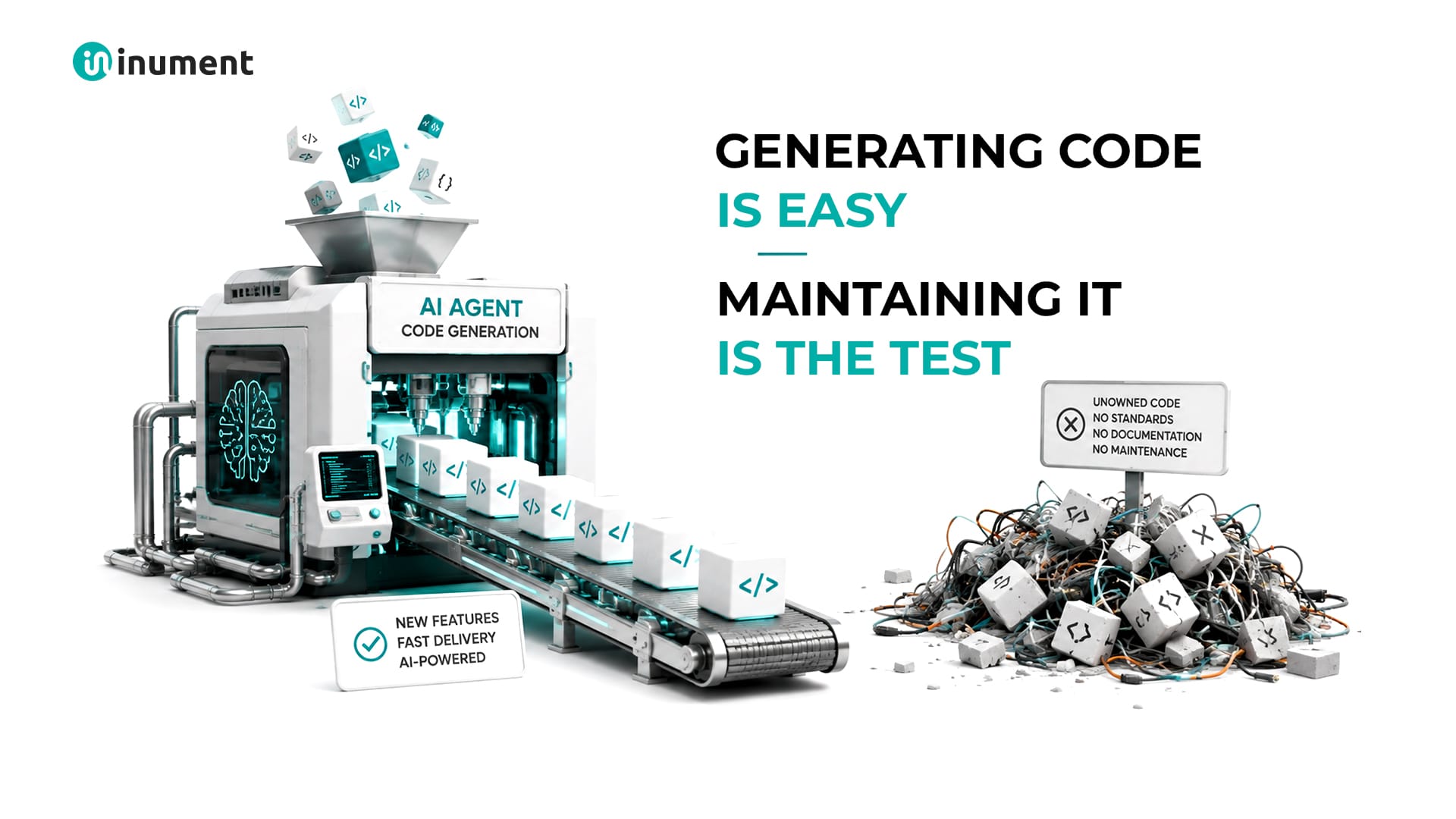
You have probably seen the demo by now. Someone types a prompt, an AI agent writes a working feature in minutes, and the room goes quiet in a good way. It feels like the whole cost of building software just dropped to zero.
Then six months pass.
The person who ran that demo has moved teams. The feature is now tangled into three other systems. A customer reports a bug, a developer opens the file, and nobody in the room can explain why the code was written the way it was. The AI that generated it is long gone from the conversation. What is left is a codebase that works until it doesn’t, and no clear owner when it breaks.
This is the real 2026 question for anyone running a business on software. Generating code was never the hard part. Living with that code, maintaining it, and trusting it inside daily operations is where most companies quietly struggle. And it exposes a truth that a lot of AI conversations skip over: an AI agent that produces output is not the same thing as a system your business can actually run.
The problem is not the AI. It is the missing operating model.
Most companies started their AI journey the same way. They gave a tool or an agent to a few smart people and waited for results. Some of those results were real. Plenty of them turned into a pile of half-finished projects that no one wanted to own.
The instinct is to blame the model. The model was not smart enough, the output needed too much cleanup, the tool was overhyped. Sometimes that is fair. But more often the model did its job and the organization simply had nowhere to put the output. No one redesigned the work around it.
That gap has a name. It is the operating model. And it is the difference between an AI experiment and an AI system that a business can depend on.
An AI operating model is not a piece of software. It is the structure that answers the practical questions every leader eventually asks. Who owns this AI system when it is running in production? Where does it sit in the actual workflow? Who reviews its decisions before they reach a customer? What happens when it gets something wrong? How does data move in and out of it? And how do we know, in numbers, whether it is helping?
If you cannot answer those questions, you do not have an AI system. You have a tool that happens to produce output. Code generation makes this painfully clear, because unowned code does not just sit there quietly. It rots.
Why AI agents fail even when the agent works fine
Think about what it actually takes for AI-generated code to survive past the demo.
It needs an owner. Not the person who wrote the prompt, but a team accountable for that code the way they would be accountable for anything else in production. Without ownership, no one refactors it, no one documents it, and no one notices when it starts causing problems downstream.
It needs to fit a workflow. AI can write a function, but your business does not run on functions. It runs on processes with reviews, approvals, handoffs, and standards. If the AI output skips all of that, it becomes a shortcut that creates work later instead of removing it.
It needs clean data and clear rules. An agent making decisions on messy inputs will produce confident, wrong answers. The same applies to generated code built against assumptions no one wrote down. When those assumptions change, the code breaks in ways that are hard to trace.
It needs integration. A feature that lives on its own island is easy to build and expensive to maintain. Real value shows up when AI output connects to the systems people already use, so the work flows instead of piling up in a corner.
And it needs human oversight built in on purpose, not bolted on after something goes wrong. Someone has to review the important calls, catch the errors, and decide when the AI should hand the decision back to a person.
Notice that none of these are model problems. They are operating model problems. The agent can be excellent and the outcome can still fall apart, simply because nothing was designed to catch the output and put it to work.
What a strong AI operating model actually includes
A working AI operating model is less about the AI and more about the system around it. A few parts show up in every version that holds up over time.
Clear ownership comes first. Every AI system in production needs a named team that is responsible for its behavior, its upkeep, and its results. Ownership is what keeps a smart feature from becoming an orphaned liability six months later.
Workflow design comes next. The AI has to be placed at a specific point in a real process, with a clear before and after. People need to know what the AI does, what it does not do, and where their own judgment takes over.
Then comes data readiness. The system needs reliable inputs, defined sources, and rules for what good data looks like. This is unglamorous work, and it is the difference between an agent you can trust and one you have to double-check constantly.
Human review has to be part of the design. That means deciding in advance which decisions get checked, who checks them, and how mistakes are handled when they slip through. Good oversight is not a lack of trust in the AI. It is what makes the AI safe to rely on.
Integration ties it together, connecting the AI into the tools and systems where work already happens, so nothing depends on one person remembering to move data by hand.
And finally, measurement. If you cannot see whether the AI is reducing effort, cutting errors, or moving a real business number, you cannot improve it and you cannot defend it. Success has to be defined before you build, not guessed at afterward.
From scattered agents to a system you can trust
Picture a mid-sized software company that leaned hard into AI code generation. Their developers used agents to ship features faster, and for a while it looked like a win. Velocity was up. Then the maintenance bills arrived.
Every developer prompted in their own style. Generated code landed in the repository with no shared standards and no consistent review. Six months in, half the team was afraid to touch code they did not write and could not fully explain. The AI had made the easy part faster and the hard part harder.
So they stopped adding tools and started building an operating model. AI-generated code became a first draft, not a finished product, and it entered the same review process as everything else. One team took ownership of the AI-assisted workflow, defined the standards the agents had to follow, and set the rules for what could ship automatically and what required a human sign-off. They connected the agents to their existing testing and deployment systems, so nothing bypassed the checks that already protected production. And they tracked simple, honest numbers: how much rework the code caused, how often it broke, how long fixes took.
The agents did not change. The result did. The same AI that had been creating quiet debt was now producing code the team could maintain, because there was finally a system built around it.
Where Inument fits
This is the work Inument focuses on. Building an AI agent is the part everyone can now do. Turning that agent into production-ready AI that a business can operate, maintain, and trust is where most companies get stuck, and it is exactly the gap we help close.
We help teams move from AI ideas and agent experiments to working AI systems through strong engineering, deliberate workflow design, real integration into existing tools, and scalable delivery teams that stay with the system past the demo. The goal is not more AI activity. The goal is AI transformation that holds up under the weight of daily operations, six months and six years later.
The real test
The companies that win with AI in 2026 will not be the ones that tried the most tools. They will be the ones that built reliable AI systems into how the business actually runs.
So it is worth asking a plain question about your own AI agents. Are they part of a system someone owns, reviews, and measures? Or are they producing output that works today and turns into a maintenance problem no one signed up for?
If you are not sure, that uncertainty is the answer. And it is a much better problem to solve now than to discover six months from now, when the code is already yours to keep.
About the Author

Safkat Nirjash
Related Insights

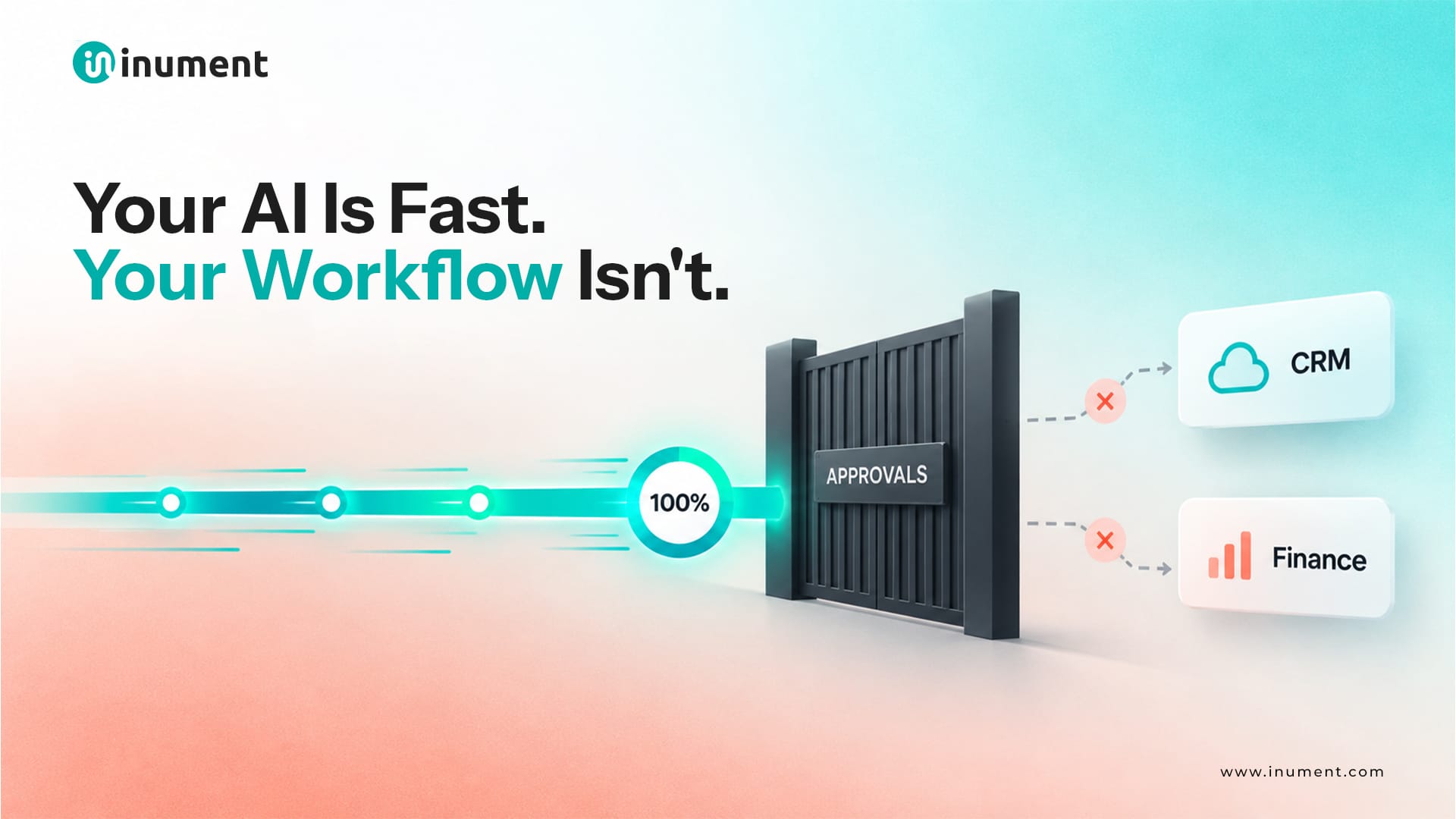
Your AI Is Faster. Why Is Your Business Still Waiting?
13 October 2026

Your Project Doesn’t Need Agile. It Needs the Right Delivery Model
02 October 2026
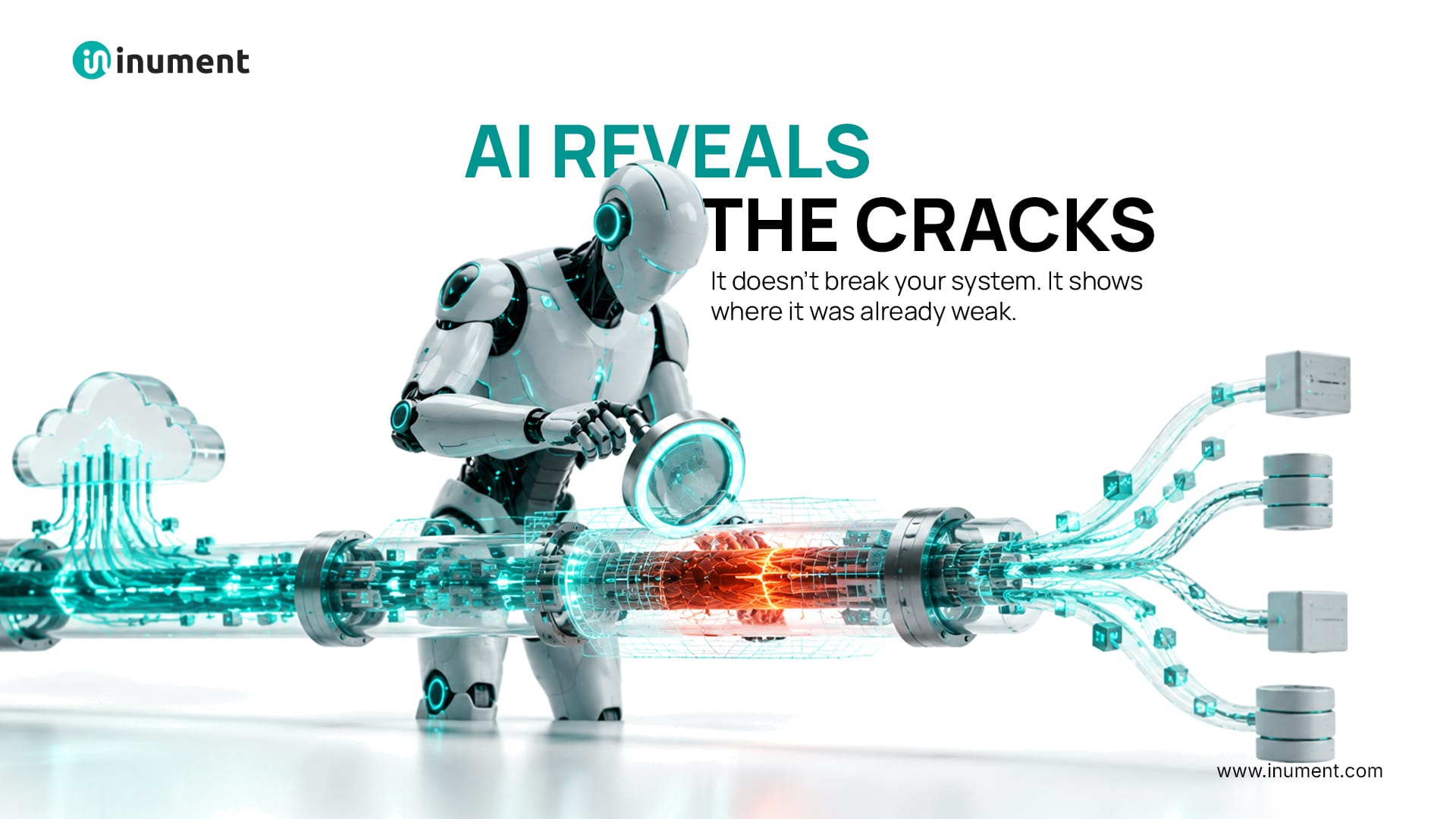
Cloud Didn’t Fix Your Architecture. AI Just Exposed It
24 September 2026
AI Reliability Debt: The Hidden Cost of Production AI Systems
14 September 2026

Quality Assurance Isn’t a Cost. It’s What Stands Between You and a Bad Reputation
07 September 2026
