
 Let’s Talk
 Inument


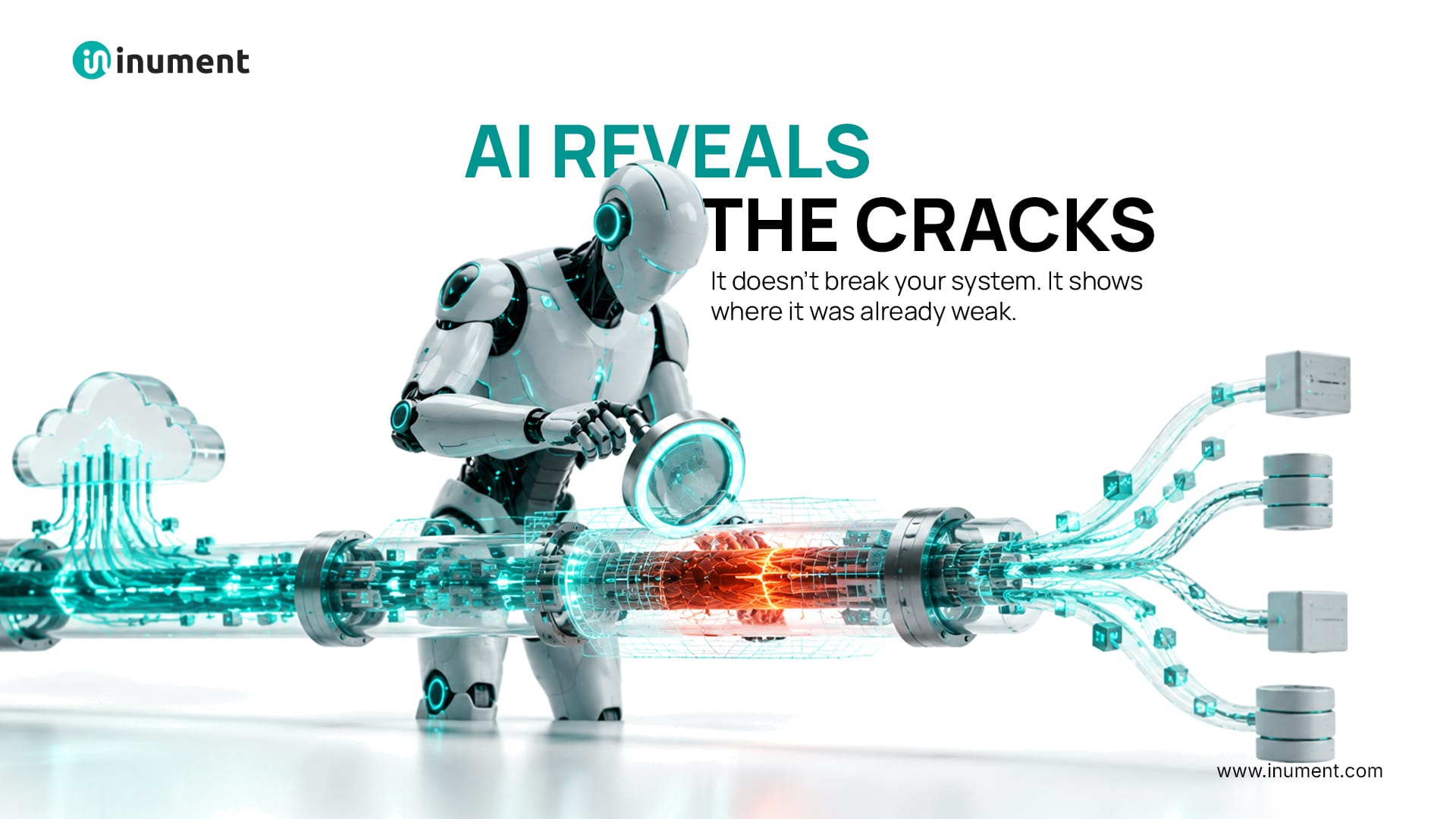
AI didn’t create the need for scalable infrastructure. It exposed which systems were never built for scale in the first place.
For years, enterprises treated cloud migration as the finish line and AI as a series of isolated experiments. That period is over. The bill for undisciplined experimentation has arrived, and it’s landing in two places: prototypes that work in a demo and collapse in production, and cloud environments quietly draining operating budgets.
The lesson underneath all of it is simple. Moving a workload to the cloud doesn’t make it scalable. Re-architecting it does. Real scale is what happens when infrastructure, AI workloads, data flow, cost control, compliance, and developer velocity finally operate as one connected system instead of six competing ones.
The diagnosis: why pilots die in production
Enterprise AI projects are failing to deliver their promised returns, and the cause is almost never the model. It’s the engineering around it. AI performs beautifully in a controlled development environment, then meets the compute, storage, and latency demands of real traffic and falls over.
The money involved makes this more than an engineering footnote. Synergy Research put enterprise cloud infrastructure spending at $419 billion in 2025, with generative AI as the primary driver. Gartner forecasts worldwide AI spending will reach $2.52 trillion in 2026. Capital is pouring into modern systems at a scale the industry has never seen.
But capital without structural precision buys expensive friction, nothing more. Companies aren’t re-architecting because the cloud is fashionable. They’re doing it because business speed now depends directly on infrastructure maturity, and most infrastructure isn’t mature.
The waste is an architecture choice, not an accident
Here’s the uncomfortable proof. Flexera’s 2026 State of the Cloud Report found that 29% of IaaS and PaaS cloud spend is now wasted, the first increase after five straight years of decline.
What makes that number striking is everything sitting next to it. In the same report, 81% of enterprises use generative AI, 71% run hybrid cloud, 63% have dedicated FinOps teams, and 71% operate a Cloud Center of Excellence. The governance structures are in place. The waste went up anyway.
That’s the tell. When maturity practices exist and money still leaks, the problem isn’t discipline. It’s the foundation those practices are sitting on. Teams are treating symptoms while the root cause of poorly structured architecture keeps generating new ones.
AI tools don’t fix this. They amplify whatever is already there. Google found roughly 90% of software professionals now use AI tools, but the outcome splits along one line: well-architected teams use them to ship faster, while fragmented teams use them to produce low-quality code faster, exposing the cracks they already had.
Match the architecture to the workload, not the trend
Consider Prime Video’s well-known correction. Their team re-architected a video-quality monitoring service, moving from a heavily distributed, serverless design back to a focused, consolidated one on Amazon ECS and EC2. The result was a cost reduction of over 90% and higher scaling capacity at the same time.
The lesson isn’t “monoliths beat microservices.” That’s the wrong takeaway, and chasing it just trades one mismatch for another. The real lesson is that architecture has to match the actual behaviour of the workload, how data moves, where the bottlenecks are, and what it costs to run. Distributed isn’t automatically better. Neither is consolidated. Fit is what matters, and fit is a decision most migrations never actually make.
The harder limits: compute, power, and data lineage
Beyond software design, the physical limits of infrastructure are now setting the ceiling on how fast a business can move. McKinsey estimates data centres will require around $6.7 trillion in global capital spending by 2030 to meet demand, with roughly $5.2 trillion of that tied specifically to AI workloads. Global data-centre capacity is projected to triple by 2030, most of it consumed by AI.
When that pressure hits systems that were never optimised, the failures are specific and expensive. Machine-learning models saturate standard storage during checkpointing and stall entire GPU clusters burning compute without completing a single training step. Autonomous AI agents deployed without decision transparency run straight into emerging regulation, exposing the business to real legal liability.
And the value gap is stark. McKinsey estimates disciplined cloud adoption could unlock around $3 trillion in value across the world’s largest companies by 2030 yet only about 10% of cloud transformations capture their full intended value. The other 90% stay trapped by the legacy structure they never re-architected.
The treatment: what re-architecting actually looks like
The companies getting this right treat infrastructure as a product, not a one-time migration.
Capital One is one of the clearest examples. They exited eight on-premises data centres and moved entirely to AWS but not as a lift-and-shift. They rebuilt roughly 80% of about 2,000 applications from the ground up on modern stacks. The payoff was operational: disaster-recovery testing times dropped 70%, critical incident resolution improved by 50%, and developer environment provisioning went from three months to minutes. They became a technology company that happens to do banking.
Shopify turned the same discipline into revenue. By replatforming onto a distributed, cloud-native engine, they carried the extreme concurrency of a peak Black Friday–Cyber Monday event without an outage sustaining billions in merchant sales and millions of requests per second at peak. At that scale, reliability isn’t a technical nicety. It’s the revenue.
A practical way to get there
Moving from fragile to production-ready doesn’t happen in one leap. It works as a sequence, and the order matters.
Start with governance, not compute. Before scaling a single AI workload, map every data source feeding your production models and put verifiable data lineage in place. Any system that can’t show where its data came from should be isolated before it becomes a compliance problem, not after.
Then fix the structure. Audit how your services actually communicate. Find the distributed components bleeding time and cost to data-transfer latency and consolidate them where consolidation fits. Build a central control plane so workloads can shift across zones based on availability and cost instead of being pinned in place.
Then make discipline permanent. Put continuous monitoring across the infrastructure layer aimed squarely at that 29% waste. Trigger scaling on real signals like data throughput, not just CPU. And treat the whole system as a product you keep improving, not a project you finished.
The mandate
The organisations pulling ahead aren’t the ones that spent the most on AI models or cloud credits. They’re the ones that built systems where reliability, cost, and performance behave predictably at scale because that predictability was engineered in, not hoped for.
That’s the shift underway right now: from buying AI dreams to demanding systems that actually run. Your infrastructure is either accelerating the business or quietly holding it back, and cloud spend alone won’t tell you which. The architecture underneath will.
This is the work Inument focuses on the senior engineering judgment to move an enterprise from fragile, expensive infrastructure to a system that scales on purpose. Not another migration. A foundation that stops leaking value every time you try to grow.
Eliminate the structural fragility. Build something that scales.
About the Author

Safkat Nirjash
Related Insights

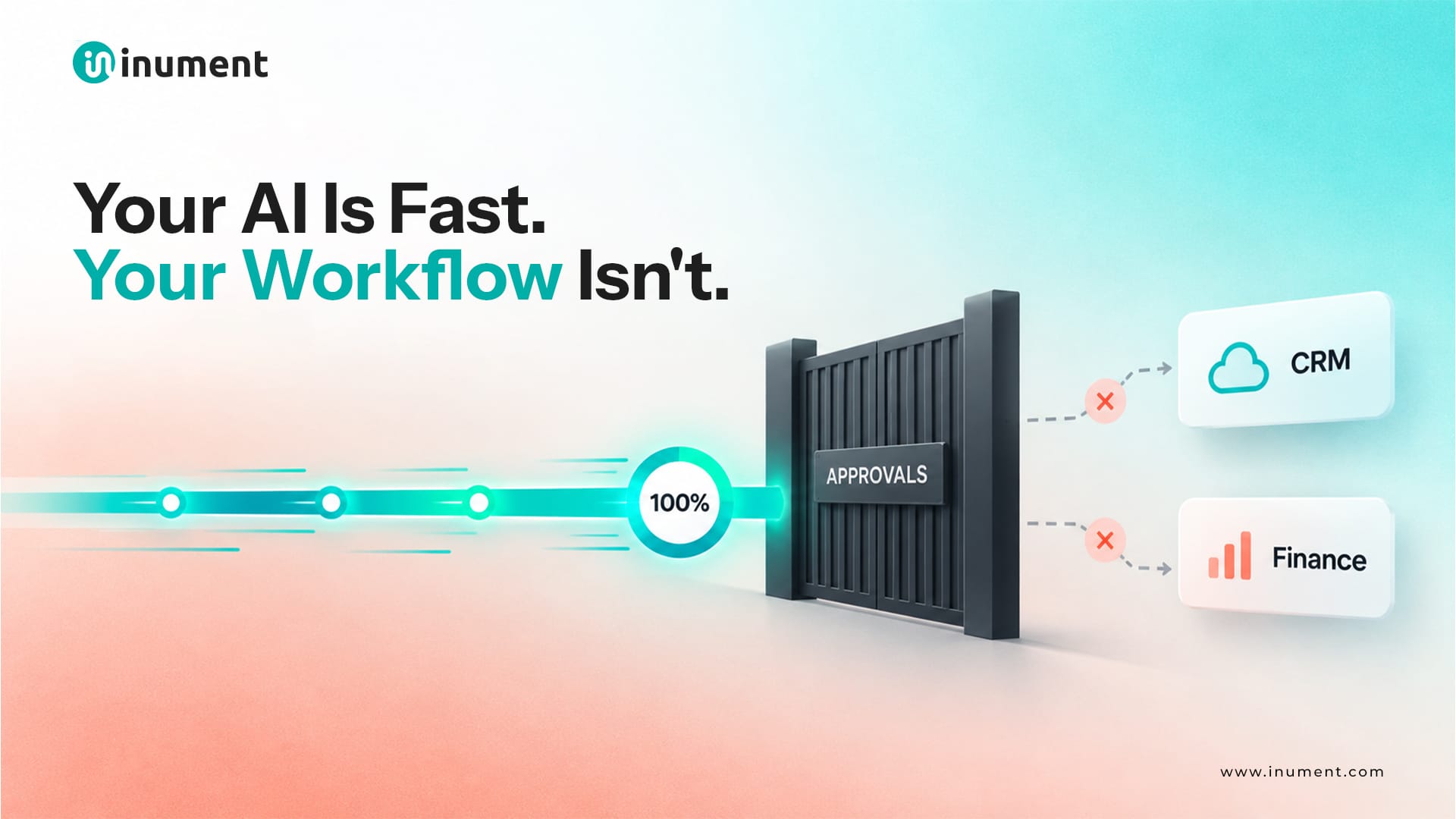
Your AI Is Faster. Why Is Your Business Still Waiting?
13 October 2026

Your Project Doesn’t Need Agile. It Needs the Right Delivery Model
02 October 2026
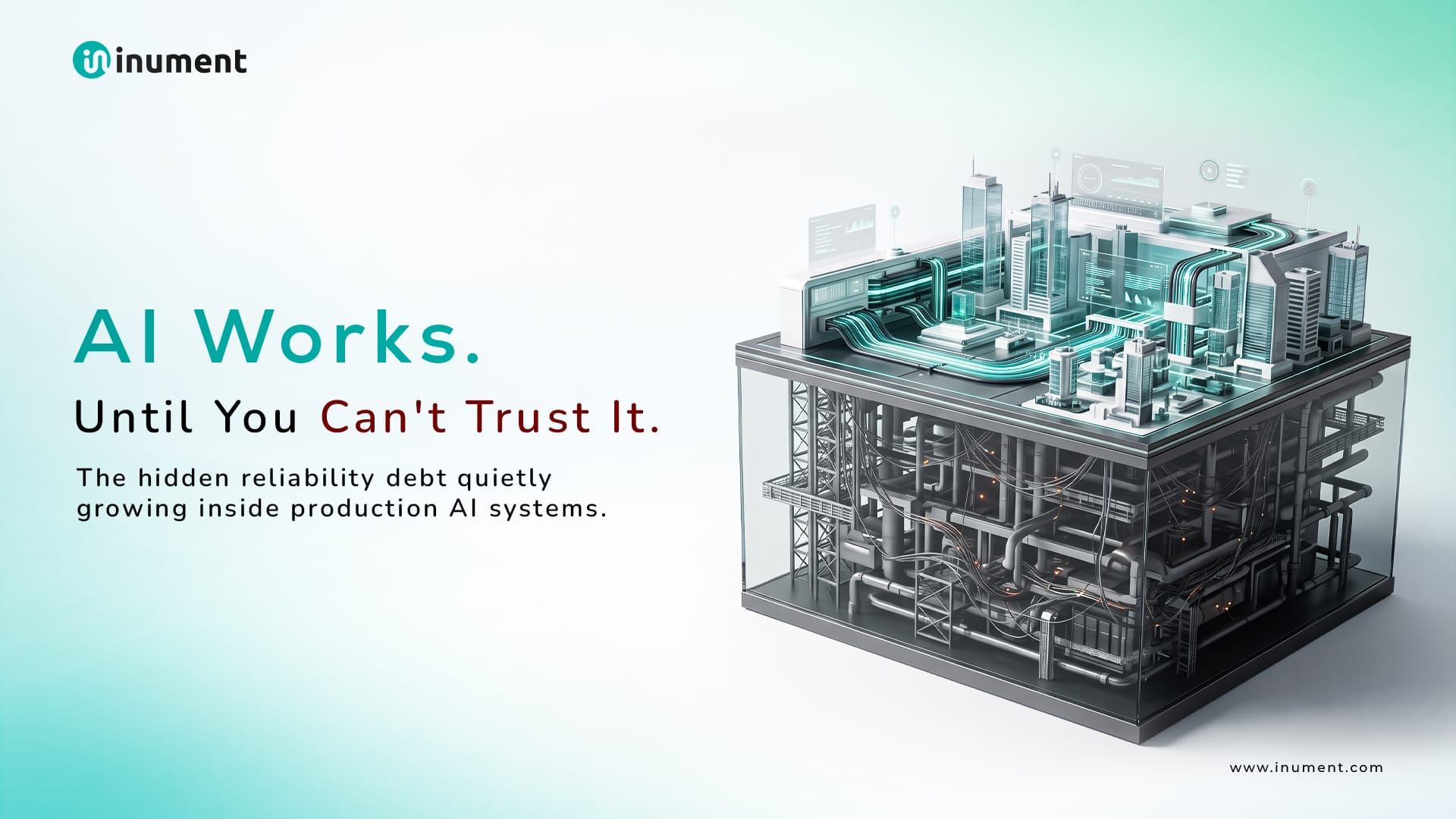
AI Reliability Debt: The Hidden Cost of Production AI Systems
14 September 2026

Quality Assurance Isn’t a Cost. It’s What Stands Between You and a Bad Reputation
07 September 2026

AI Can Generate Code. Can It Maintain the Codebase Six Months Later?
17 August 2026
