
 Let’s Talk
 Inument


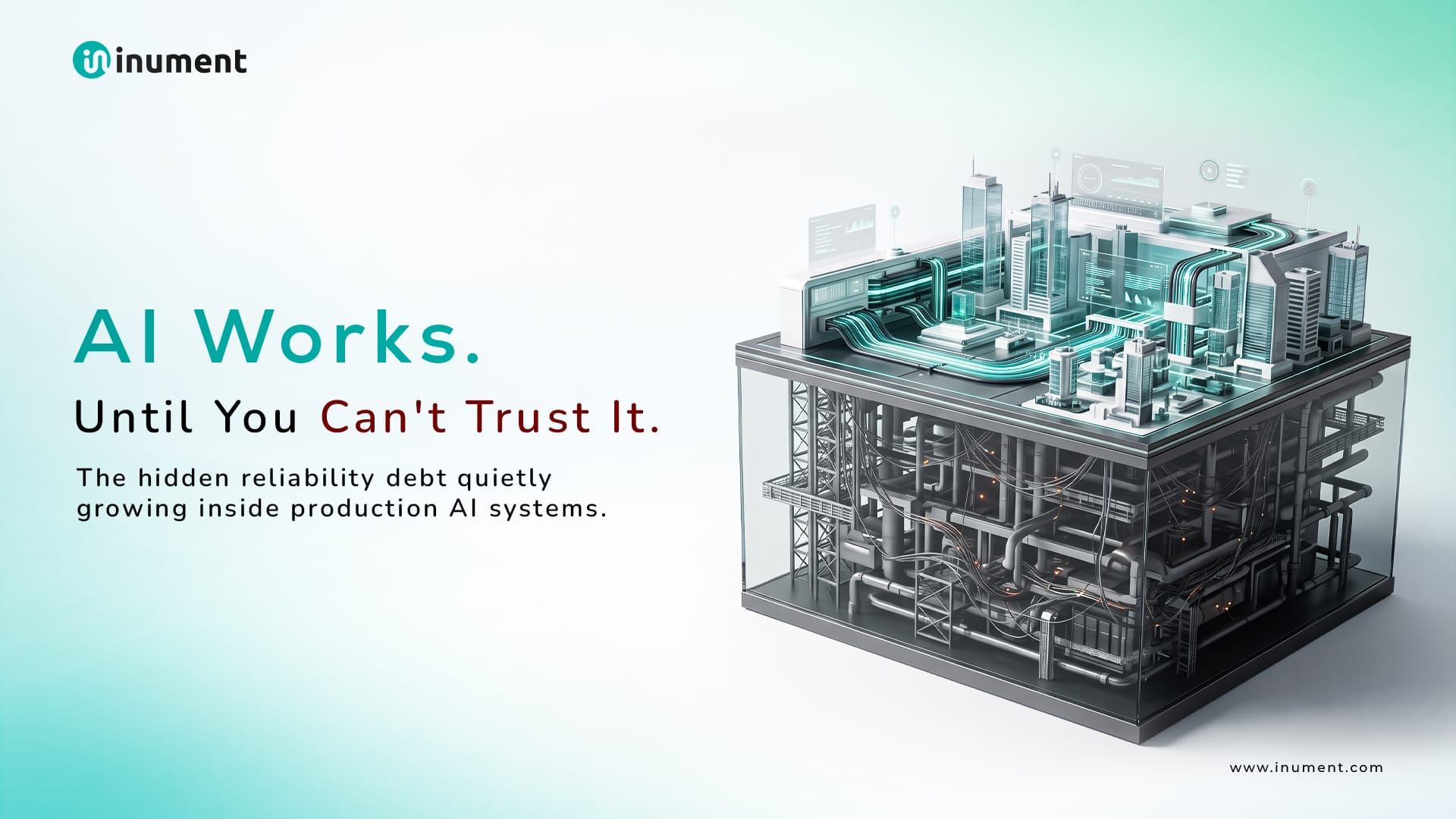
Your AI didn’t crash. It just quietly stopped being trustworthy and no one noticed for weeks.
That’s how this failure works. It doesn’t announce itself.
A model performs well in a demo. Leadership is impressive. It ships. For a while, it looked like a win.
Then real users arrive, and the cracks open in places nobody was watching.
The AI gets incomplete context from an upstream system. A connected API times out, and the workflow degrades instead of stopping. Someone tweaks a prompt to fix one case and silently breaks another. Output quality drifts down so slowly that no single person catches it. An agent takes an action it shouldn’t have and when the team digs in, they can’t reproduce why.
The model is technically running. But the system around it is getting harder to trust, debug, update, and scale.
That slow build-up of weakness is AI reliability debt.
A familiar problem in an unfamiliar place
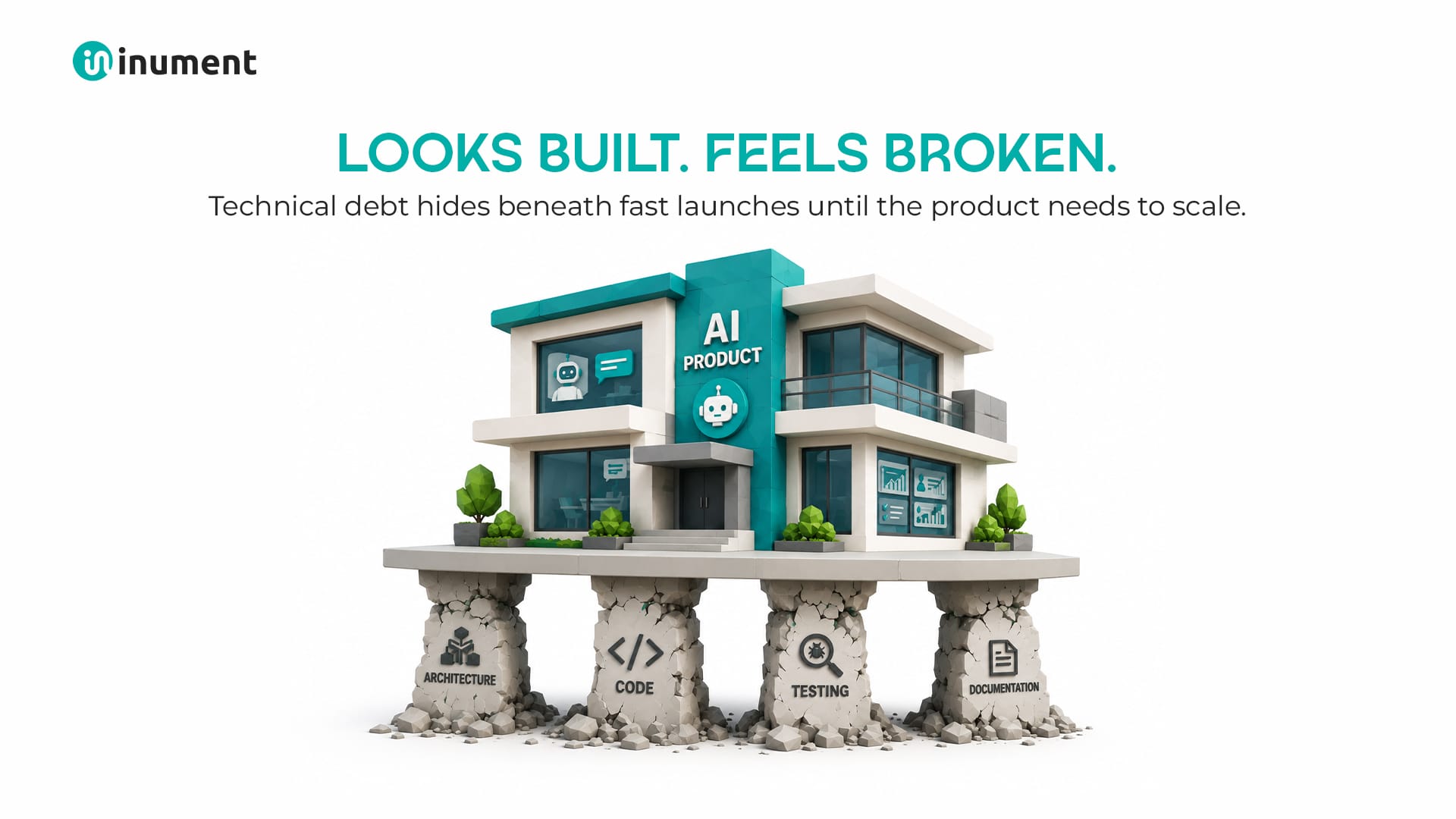
Engineers already know its older cousin. Technical debt, the cost of shipping quick, imperfect code and paying interest later is a normal part of building software.
AI reliability debt works the same way. It just hides somewhere new.
It rarely comes from the model. It comes from everything the model depends on, and everything that depends on the model:
- No systematic way to evaluate AI output
- Weak observability, so failures can’t be reconstructed
- Poor context and data architecture feeding the model
- Too much agent autonomy, too few guardrails
- No fallback when a step fails
- Unreliable third-party integrations
- Prompt and model changes shipped without regression testing
- No human escalation path when the AI is unsure
- No monitoring of output quality over time
- No clear owner when an AI decision goes wrong
Each gap looks minor on its own. A missing test here, an unwatched output there.
Together, they decide whether the system holds up when it matters.
Why you don’t see it at launch
Here’s the trap: the debt is invisible on day one.
The demo works. The first users are happy. The dashboards look clean. The debt is already there, it just hasn’t come due.
It comes due at scale. Volume rises, and edge cases multiply. More workflows lean on the same model, and one small prompt change ripples further than anyone expected. The system runs long enough that quality drift shows up in business results, not error logs.
By the time it’s obvious, it’s expensive because it’s now wired into live operations.
A system can pass every launch test and still start accumulating this debt the moment it meets messy, real-world input.
Why this reaches past engineering
It’s tempting to call this an engineering problem. It isn’t. That’s the point.
An unreliable AI system doesn’t just make errors. It makes confident errors.
It can push a wrong recommendation into a real decision. It can frustrate customers with behaviour that changes day to day. It can create operational risk when an agent acts in a bad context and nobody catches it.
There’s a slower cost underneath. Every hour spent firefighting an opaque AI failure is an hour not spent building the next thing. Reliability debt raises maintenance cost, slows future AI work, and quietly erodes trust.
And once leadership stops trusting an AI initiative, more investment is almost impossible to justify however good the model is.
So the real question for a CEO or CTO isn’t “does our AI work?”
It’s “can we trust what it does when no one’s watching, and explain it when it’s wrong?”
From “works in a demo” to “trusted in production”
Closing that gap isn’t about a smarter model. It’s about engineering the system around it to behave under real conditions.
Evaluation that measures output quality continuously, not once. Observability detailed enough to reconstruct any decision. Data pipelines that deliver clean, complete context. Integrations that fail gracefully instead of silently. Guardrails that keep agent autonomy inside safe limits. A human escalation path for the calls the AI shouldn’t make alone. A clear owner when something breaks.
This is the work that turns a sharp prototype into a system a business can depend on. It’s also the easiest work to postpone because none of it shows up in a demo, and all of it shows up at scale.
Helping companies make that exact move from AI that works in a demo to AI that can be trusted in production is where much of Inument’s engineering sits: AI architecture, evaluation and observability, data and integration pipelines, cloud infrastructure, guardrails, and human-in-the-loop workflows.
The next edge in AI won’t come from the smartest model.
It’ll come from the most reliable system built around it.
And once leadership stops trusting an AI initiative, more investment is almost impossible to justify however good the model is.
So the real question for a CEO or CTO isn’t “does our AI work?”
It’s “can we trust what it does when no one’s watching, and explain it when it’s wrong?”
About the Author

Safkat Nirjash
Related Insights


Quality Assurance Isn’t a Cost. It’s What Stands Between You and a Bad Reputation
07 September 2026
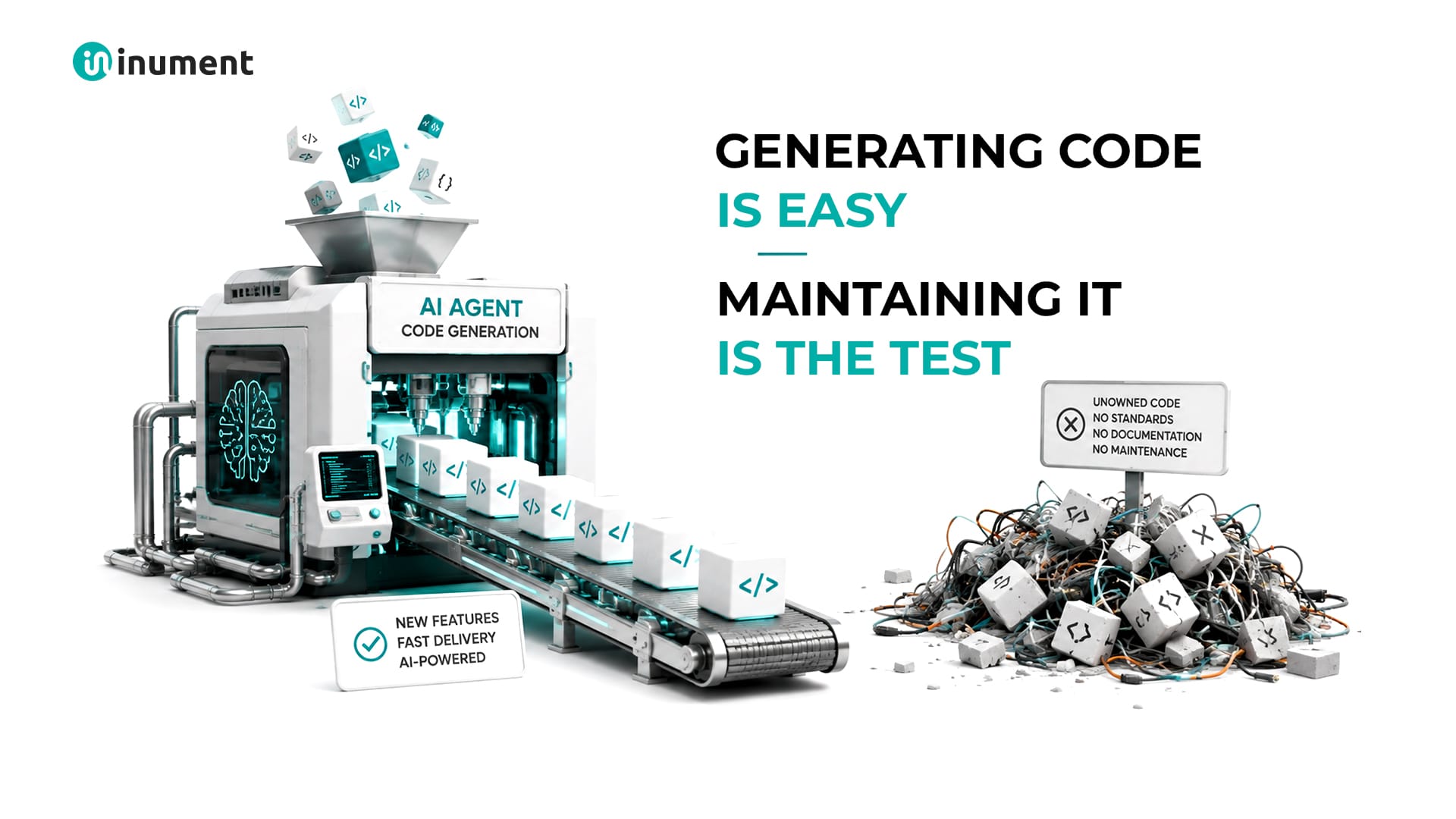
AI Can Generate Code. Can It Maintain the Codebase Six Months Later?
17 August 2026
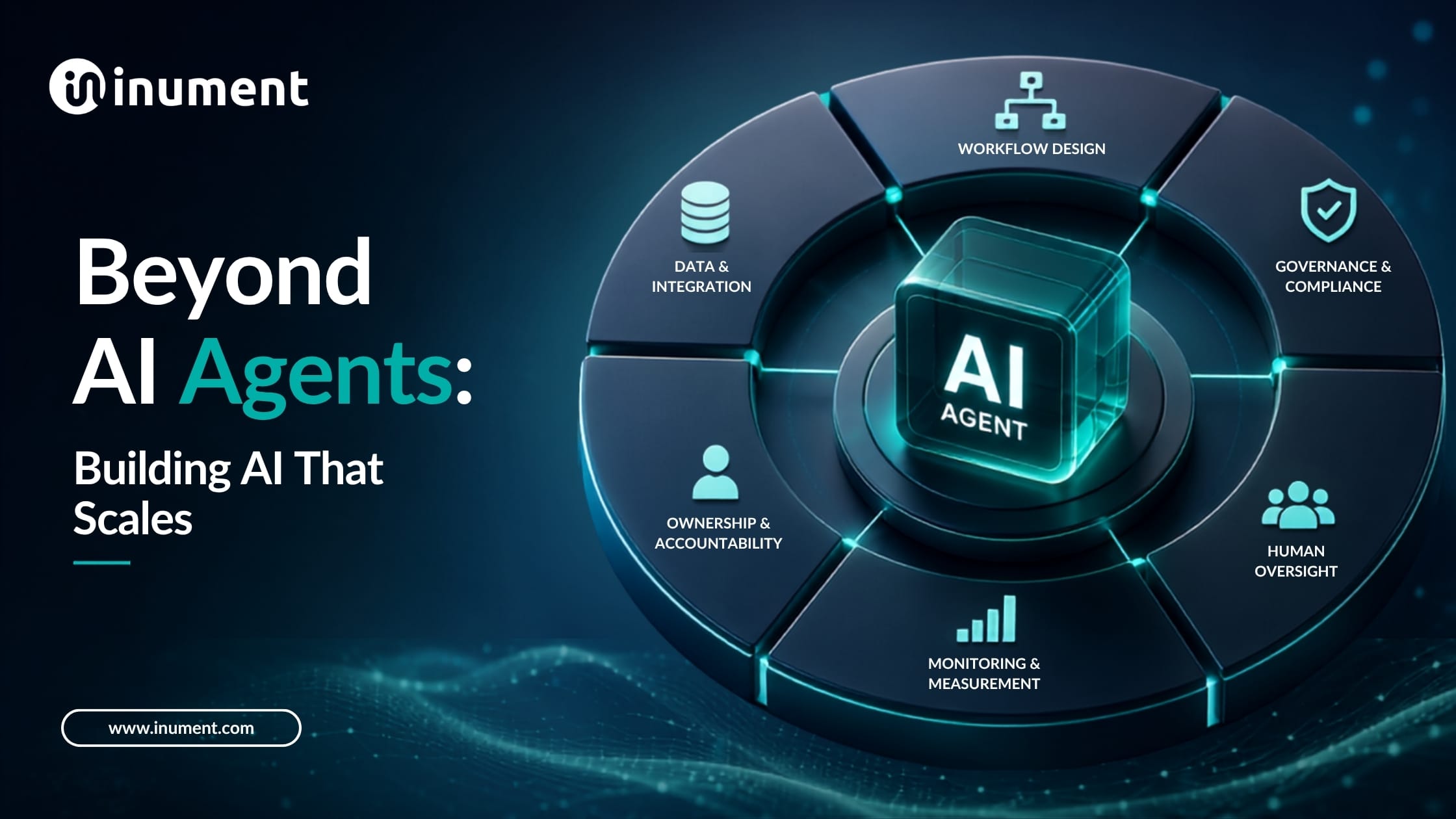
Beyond AI Agents: How to Build the Operating Model That Makes AI Work at Scale
27 July 2026
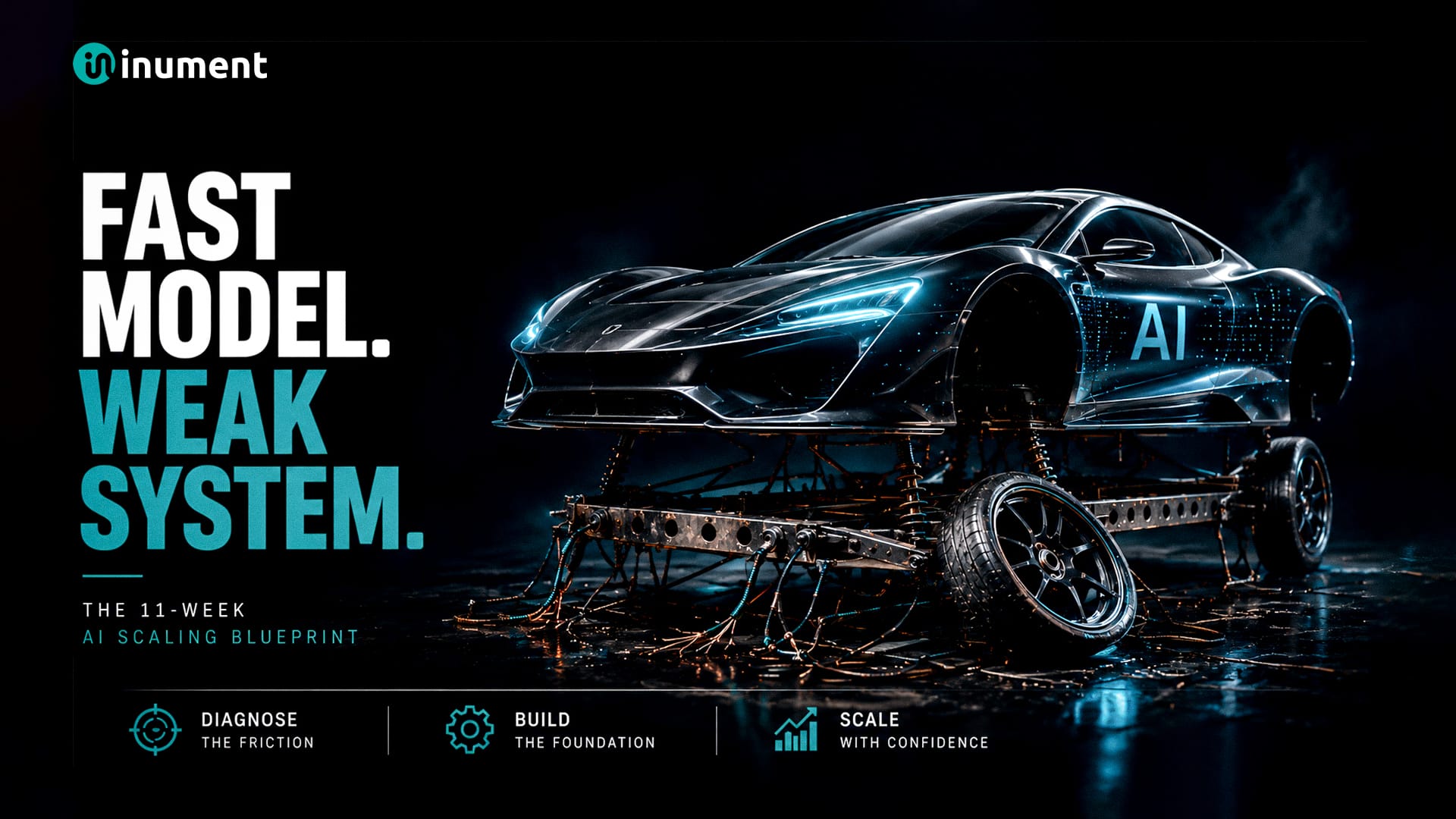
Scale Custom AI Agents in 11 Weeks Without System Friction
13 July 2026
Why ‘Move Fast, Break Things’ Is Killing Your Custom AI Agent Development Before Year 2?
19 June 2026
