 Let’s Talk
 Inument


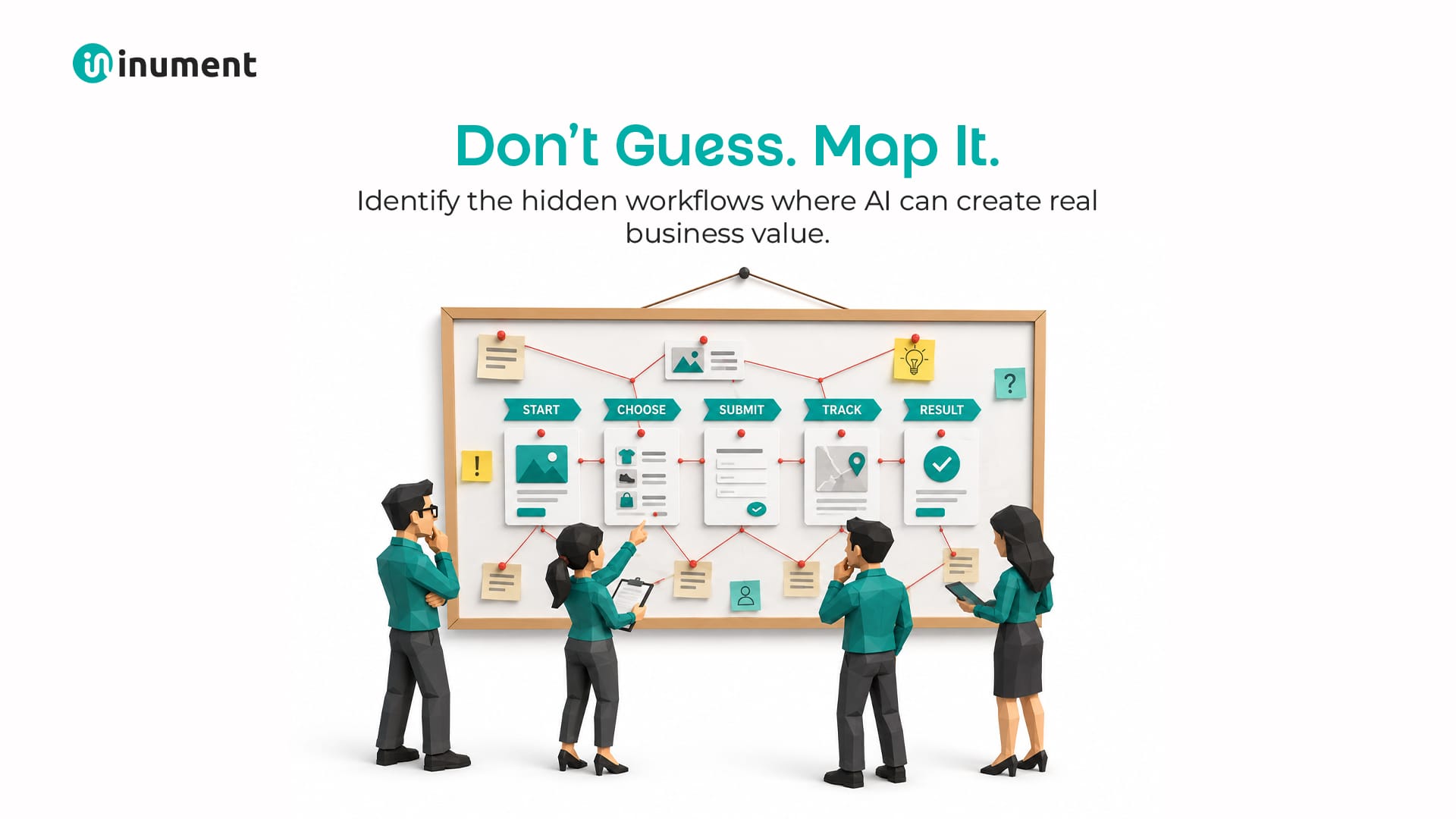
The biggest software risk in 2026 is not bad code. It is building the wrong thing beautifully.
Companies across Europe, the USA, the UK, Australia, and Asia are investing heavily in AI, cloud, SaaS, automation, and remote engineering teams. But the market has changed. A few years ago, a new app, dashboard, AI chatbot, or automation tool could sound impressive simply because it felt innovative. Today, leaders are asking harder questions.
- Will it reduce cost?
- Will it improve revenue?
- Will it make the team faster?
- Will customers actually use it?
- Will it reach production and create measurable ROI?
This is why great code is no longer enough. A dedicated software development team must communicate clearly, understand business priorities, and connect every technical decision to a real outcome.
At Inument, this matters deeply because the work often begins with AI staff augmentation services, custom AI agent development, custom SaaS application development, or support as an offshore AI development company. But behind every technical request, there is always a business question.
Takeaway: In 2026, software teams are not judged only by what they build. They are judged by what the business gains from it.
Why This Topic Matters in 2026
The software market is entering an ROI reckoning. IT spending is growing, AI investment is rising, and enterprises are moving faster. But bigger budgets do not automatically create better products.
The real challenge is alignment.
A company may hire LLM engineers in 2026, hire Python AI specialists, hire remote React developers in 2026, or bring in vetted Node.js developers for hire. These are smart moves when the skills are missing internally. But skilled developers still need strong direction.
A React developer needs to understand the user journey. A Node.js developer needs to understand the workflow behind the API. A Python AI specialist needs to know which decision the model should improve. A DevOps engineer needs to know the uptime, cost, and release expectations.
Without that context, even a strong dedicated software development team can produce output without creating value.
This is especially important for companies comparing nearshore vs offshore staff augmentation. Location, cost, and time zone overlap matter. But communication quality matters more. A low-cost team that does not understand your business can become expensive rapidly.
Takeaway: Before you scale the engineering team on demand, make sure the team understands why the work matters.
The Hidden Problem: Conceptual Bugs
Software teams are trained to find technical bugs. They check broken logic, API failures, slow load times, security gaps, and poor user flows.
But one of the most expensive problems is not a technical bug. It is a conceptual bug.
A conceptual bug happens when the software works, but it solves the wrong problem.
- The code runs.
- The interface looks clean.
- The deployment succeeds.
- But the feature does not improve the business.
Such scenarios happen more often than teams admit.
A retailer builds a dashboard, but decision-makers still rely on spreadsheets. A logistics company invests in AI-powered automation for logistics, but the manual process behind it remains unclear. A FinTech company adds AI scoring, but ethical AI implementation for FinTech and FinTech software regulatory compliance were not considered early enough. A SaaS startup launches quickly but later discovers that the system needs a multi-tenant SaaS architecture design before it can grow.
In 2026, AI makes this risk bigger. Generative AI can speed up coding, testing, and documentation. But it is less useful when requirements are vague. That means unclear thinking becomes expensive faster than before.
This is why communication must come before development.
Takeaway: Do not only ask, “Can we build it?” Ask, “Are we solving the right problem?”
Correct Code Can Still Fail
Correct code can still fail if the team is misaligned.
One team understands the requirement one way. Another team understands it differently. A business stakeholder assumes one workflow. The developer builds another. A model performs well in testing but fails with real users. A deployment works technically but creates operational confusion.
The software did what it was asked to do. The problem is that the team asked it to do the wrong thing.
This matters even more in advanced technology projects such as generative AI integration for enterprise, custom AI agent development, natural language processing services, predictive analytics solutions for retail, and MLOps consulting services.
These solutions can create real value. But they need clarity.
A custom AI agent should have defined boundaries.
An NLP system should have a clear use case.
A predictive analytics platform should improve a business decision.
An MLOps setup should support monitoring, retraining, governance, and safe deployment.
AI does not remove the need for communication. It increases it.
Think of software like a high-performance car. Great code is the engine. Communication is the steering wheel. Without steering, speed only helps you reach the wrong destination faster.
Takeaway: The more powerful the technology, the more important the alignment.
The Code-First Trap
Many teams think starting development quickly means moving fast.
In reality, starting too early often creates rework.
A product manager requests a feature. Engineers begin building. Then stakeholders add new requirements. Then users behave differently than expected. Then QA finds gaps. Then the architecture needs to change. Then the release date slips.
The team was busy the whole time, but the business did not move forward.
This is the code-first trap.
It affects startups, scale-ups, and enterprises. It also affects companies looking for IT staff augmentation for startups, temporary IT staffing solutions, dedicated software development team support, or software development outsourcing in 2026.
The benefits of IT staff augmentation in 2026 are clear: faster access to talent, flexible scaling, specialized skills, and lower hiring commitment. But staff augmentation should not mean adding random developers to a backlog.
The real value comes when augmented engineers become part of the product thinking.
They should understand the business goal, customer pain, technical risk, release priority, and success metric. That is when AI staff augmentation services become more than capacity. They become a strategic delivery advantage.
Takeaway: Do not add people only to move faster. Add clarity so the team moves in the right direction.
Architecture Should Match the Business Stage
Good engineering is not about using the most fashionable stack. It is about choosing what the business actually needs right now.
A startup may need SaaS MVP development for entrepreneurs, not a complex enterprise system. A growing SaaS company may need scalable cloud-native app development and multi-tenant SaaS architecture design. An established business may need services to modernize legacy systems because old systems are slowing down operations.
Some companies need serverless architecture consulting to reduce infrastructure complexity. Others need a microservices migration strategy because the current platform has become too large and fragile. Some need to hire AWS-certified cloud architects to control cost, security, and scalability.
The same logic applies to mobile.
A company may need custom mobile app development services, an iOS and Android app development agency, a React Native development company, or to hire Flutter developers for cross-platform delivery. But the discussion should not stop at the framework.
The team must also think about mobile app UI/UX design trends in 2026, enterprise mobile security solutions, mobile app maintenance and support, performance, retention, and future scalability.
Healthcare mobile app development needs extra care around privacy, trust, and usability. E-commerce mobile app specialists need to think about conversion, checkout friction, loyalty, and personalization. An augmented reality developer for hire may be useful for certain use cases, but you should only add AR when it improves the user experience.
The best technical decision is not the most advanced one. It is the one that fits the business stage.
Takeaway: Choose architecture based on business reality, not technology fashion.
Quality Is Part of ROI
Quality assurance and software testing are often treated as final steps. That is a mistake.
Quality protects ROI.
A broken release damages trust. A slow app reduces conversion. A weak security model creates risk. A poorly tested SaaS platform increases support costs. A badly monitored AI model can produce unreliable decisions.
In 2026, speed without reliability is not an advantage.
Testing should cover business logic, user experience, performance, integrations, security, and maintainability. For AI systems, it should also include data quality, model drift, accuracy, explain ability, and human review. For cloud-native systems, it should include observability, uptime, rollback planning, and disaster recovery.
This stage is also where services like cybersecurity audits for small businesses, enterprise mobile security solutions, and MLOps consulting services become important. Security, reliability, and governance should not be added after launch. They should be part of the build process.
Even emerging areas such as blockchain development for supply chains need the same discipline. The technology may sound advanced, but the question remains simple: does it reduce fraud, improve traceability, or create operational value?
Takeaway: Software is not finished when it is deployed. It is finished when it performs reliably in the real world.
Practical Breakdown: How to Build with Clarity
Strong communication does not mean endless meetings. It means creating a shared understanding before the team spends expensive engineering time.
Here is a simple framework. Inument recommends:
1. Define the business problem
Before writing code, ask what is currently slow, expensive, risky, or painful. This helps avoid building features that look useful but do not change outcomes.
2. Map the user journey
Every technical feature should connect to a real user action. This is important for SaaS, mobile, retail, healthcare, logistics, and FinTech products.
3. Choose the right delivery model
Compare low-code vs custom software costs carefully. Low-code may work for internal workflows. Custom software may be better when scalability, security, user experience, or competitive advantage matters.
4. Match talent to the roadmap
You may need to hire remote DevOps engineers, hire Python AI specialists, hire LLM engineers in 2026, or hire remote React developers in 2026. But hire based on roadmap needs, not buzzwords.
5. Set success metrics early
Define what should improve after launch: cost, speed, conversion, adoption, uptime, customer satisfaction, or revenue.
6. Review communication weekly
A dedicated software development team should review not only tasks, but also assumptions, blockers, risks, and business changes.
Takeaway: Clear communication is not a soft skill. It is an ROI control system.
Mini Case Study: From AI Idea to Business Outcome
Imagine a retail company wants predictive analytics solutions for retail. The first request sounds simple: build a dashboard to forecast demand.
A code-first team may immediately start designing charts, connecting data sources, and building the interface.
A communication-first team asks different questions.
- Who will use the forecast?
- Which decision will it improve?
- Is the data clean enough?
- How often should the model update?
- What happens when the forecast is wrong?
- How will the business measure success?
After discovery, the team may realize the real problem is not the dashboard. The real problem is delayed inventory decisions across regions. The better solution may include clean data pipelines, demand forecasting, role-based alerts, and integration with existing planning tools.
This is how a dedicated software development team creates ROI. Not by writing more code, but by building the right system.
The same approach works for AI-powered automation for logistics, natural language processing services, custom AI agent development, progressive web app development, and digital transformation consulting.
This is also why many companies searching for the best IT outsourcing countries in Asia should not look only at cost. They should look for communication maturity, technical depth, process discipline, and business understanding.
Takeaway: The right partner does not just accept requirements. The right partner improves them.
The Inument Way
Inument’s approach is simple: communicate before building, validate before scaling, and connect every technical decision to business value.
When clients come to Inument for AI staff augmentation services, enterprise software development in Dhaka, React JS development agency support, custom SaaS application development, legacy system modernization services, or scalable cloud-native app development, the work does not begin with code.
It begins with questions.
- What business problem are we solving?
- Who will use this system?
- What process is currently slow or expensive?
- What metric should improve?
- What should we avoid building?
- What risks should we remove early?
- How will success be measured after launch?
This is how Inument reduces conceptual bugs, prevents feature bloat, and helps engineering become a strategic function instead of only a production function.
For companies searching for Inument Solution Ltd reviews, the better question is not only, “Can this team build software?” The better question is, “Can this team understand our business and help us build the right software?”
That is where Inument aims to distinguish itself as an offshore AI development company and remote engineering partner.
Takeaway: The best engineering partners do not only provide developers. They help you make better technical decisions.
Conclusion: Build With Clarity, Not Just Speed
Great code still matters. Clean architecture matters. Strong developers matter. AI, cloud, SaaS, DevOps, mobile, and automation all matter.
But none of them matter enough if the team is solving the wrong problem.
A company can have a fast CI/CD pipeline, modern infrastructure, beautiful UI, and advanced AI models. But if the product does not improve the customer experience, reduce cost, increase revenue, or improve operations, the business still loses.
Communication is what keeps engineering on the right track.
- It connects strategy with execution.
- It connects product ideas with user needs.
- It connects architecture with growth.
- It connects AI ambition with operational reality.
Great code is the engine. Communication is the steering wheel.
At Inument, we help companies build technology that does not just launch. We help them build systems that perform, scale, and create measurable business value.
Whether you are building an AI product, modernising a legacy system, scaling a SaaS platform, strengthening a mobile app, or growing your engineering team, the rule for 2026 is clear:
Do not just build faster. Build with clarity. Build with purpose. Build for ROI.
About the Author

admin
Related Insights


Your Project Doesn’t Need Agile. It Needs the Right Delivery Model
02 October 2026
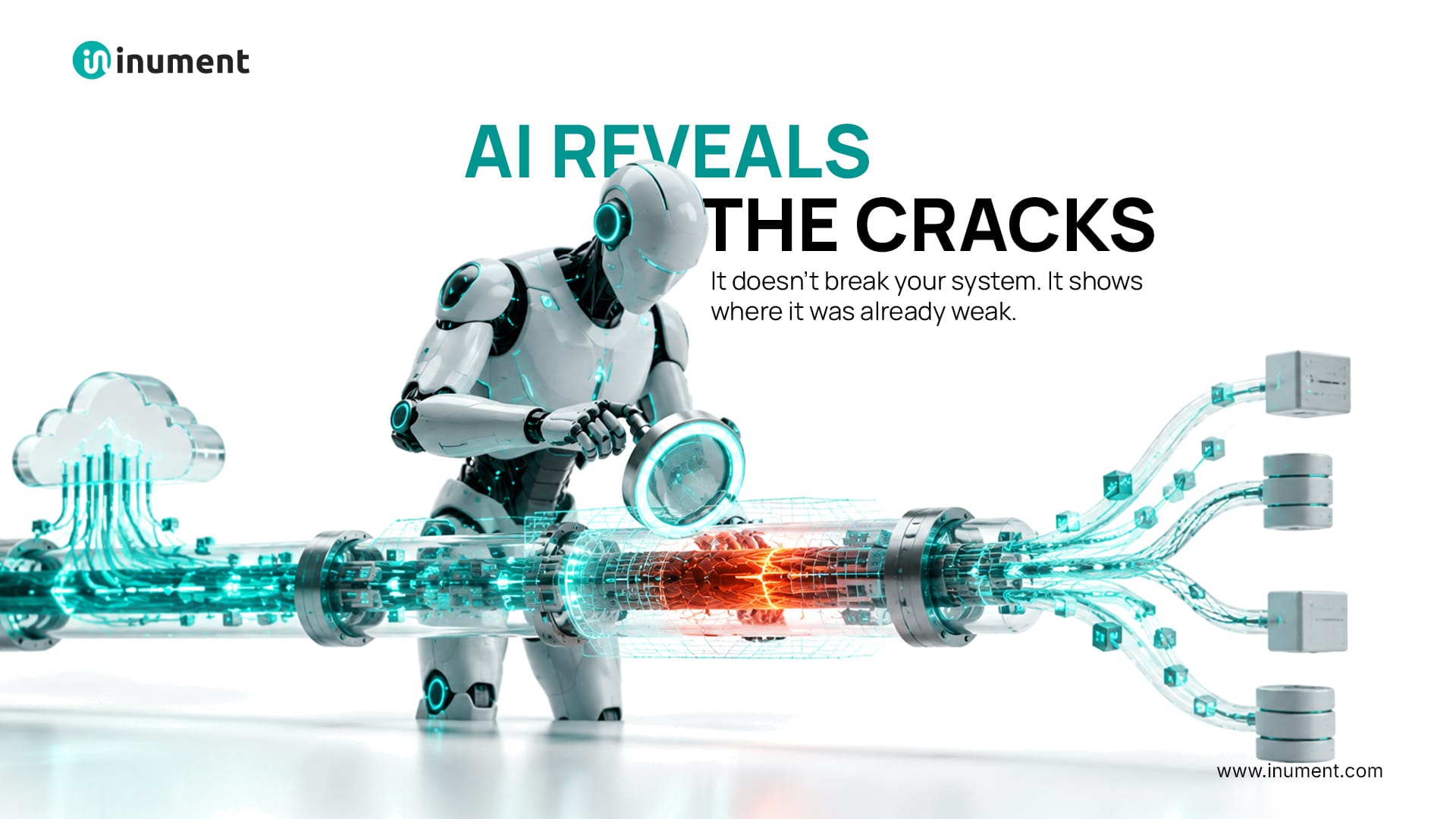
Cloud Didn’t Fix Your Architecture. AI Just Exposed It
24 September 2026
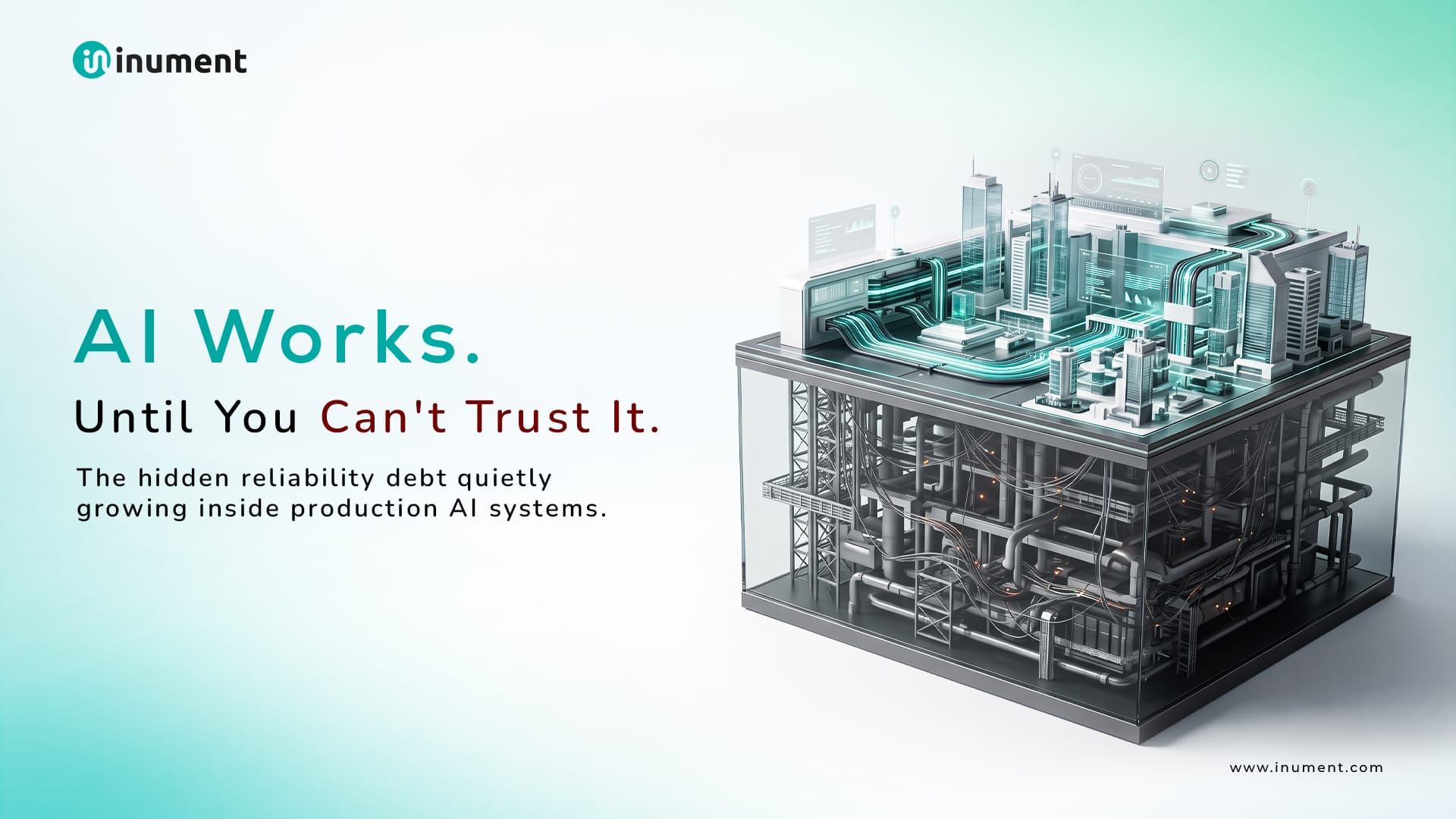
AI Reliability Debt: The Hidden Cost of Production AI Systems
14 September 2026

Quality Assurance Isn’t a Cost. It’s What Stands Between You and a Bad Reputation
07 September 2026
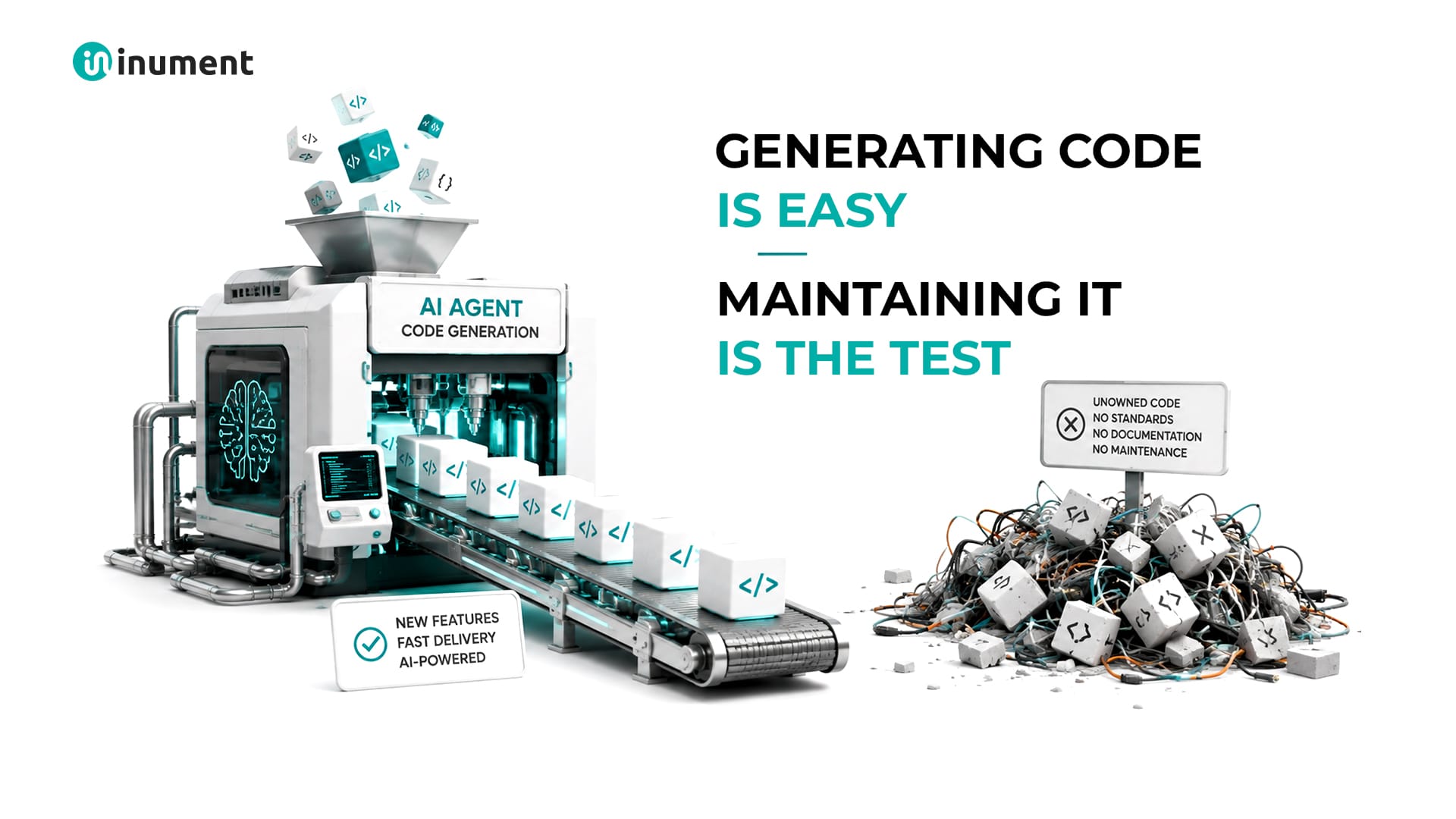
AI Can Generate Code. Can It Maintain the Codebase Six Months Later?
17 August 2026
